Advertisement






What really powers the cloud? Behind every Google search, A...
A lot of what defines a home isn’t visible at handover. I...
Private equity has played a significant role in shaping Indi...
Luxury real estate is one of the most talked-about segments ...
Airports play a much bigger role than just enabling travel -...
The Union Cabinet has approved the construction of the 117.7-km Kanpur–Kabrai access-controlled greenfield highway in Uttar Pradesh at an estimated cost of INR 7,145.14 crore. The project, to be implemented by the National Highways Authority of India (NHAI) under the Build-Operate-Transfer (BOT-Toll) model, forms a key section of the Bhopal–Kanpur Economic Corridor. Designed for future six-laning, the highway is expected to significantly reduce travel time, strengthen freight movement, improve regional connectivity and support industrial growth across Uttar Pradesh and Madhya Pradesh.
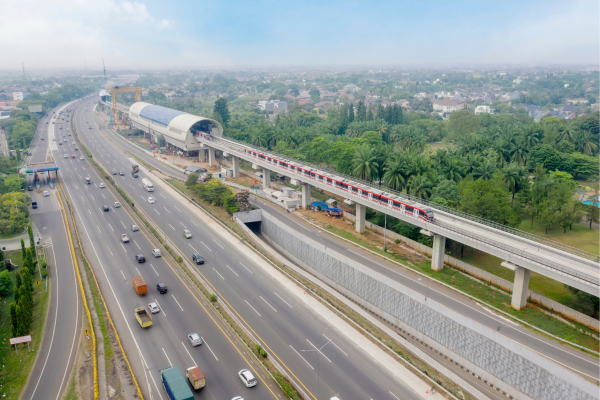
India's highway expansion programme has received another major boost with the approval of a strategically important greenfield corridor connecting Kanpur and Kabrai. By adopting the BOT (Toll) model, the Centre aims to encourage greater private sector participation while accelerating the development of high-speed transport infrastructure. Beyond improving mobility, the project is expected to enhance logistics efficiency, integrate industrial clusters with national transport networks and strengthen economic linkages across Bundelkhand and neighbouring regions.
The Cabinet Committee on Economic Affairs has approved the construction of the 117.7-km Kanpur–Kabrai Access-Controlled Greenfield Highway in Uttar Pradesh at a total capital cost of INR 7,145.14 crore. The National Highways Authority of India (NHAI) will implement the project under the BOT (Toll) model, which also includes the operation and maintenance of the existing Kanpur–Kabrai stretch of NH-34. The proposed four-lane highway has been designed with provisions for future expansion to six lanes.
The corridor forms an important segment of the Bhopal–Kanpur Economic Corridor and is intended to provide faster connectivity between Kanpur and Kabrai while improving onward access to Sagar, Bhopal and other parts of Madhya Pradesh. By linking industrial centres in Uttar Pradesh with mineral-rich and manufacturing regions of Madhya Pradesh, the project is expected to strengthen regional trade and economic integration.
Designed for operating speeds of 80–100 kmph, the highway will reduce travel time between Kanpur and Kabrai from approximately 3.5 hours to 1.5 hours, representing a reduction of nearly 58%. Improved road geometry, access control and modern infrastructure are also expected to enhance road safety, reduce vehicle operating costs and improve the efficiency of passenger and freight movement.
The project will integrate with several major transport corridors, including NH-34, NH-35, the Bundelkhand Expressway, Kanpur Ring Road, and state highways SH-46, SH-91, SH-10B and SH-42. It will also improve connectivity to the Kabrai mining belt, facilitating smoother transportation of minerals, construction materials, industrial goods and agricultural produce while strengthening supply chains across the region.
In line with the PM GatiShakti National Master Plan, the highway will improve access to 16 economic nodes, including industrial areas at Unnao, Banther, Pankhi, Rania, Jainpur, Rooma, Chakeri, Sumerpur and Bhuragarh, along with the Trans Ganga Integrated Township and other growth centres. It will also enhance connectivity to nine social nodes, including key religious, recreational and tourist destinations, besides linking 10 logistics nodes, such as major railway stations and airports at Kanpur, Chakeri and Khajuraho.
According to the government, the project is expected to generate nearly 1.2 crore person-days of direct and indirect employment during construction. Traffic projections estimate an Annual Average Daily Traffic (AADT) of about 18,069 Passenger Car Units (PCUs) by FY2028, highlighting the corridor's long-term significance in supporting freight movement, industrial development and economic growth across Bundelkhand and adjoining regions.
Source PIB
Advertisement













 Facebook
 Whatsapp
