Advertisement






What really powers the cloud? Behind every Google search, A...
A lot of what defines a home isn’t visible at handover. I...
Private equity has played a significant role in shaping Indi...
Luxury real estate is one of the most talked-about segments ...
Airports play a much bigger role than just enabling travel -...
India has assessed a floating solar photovoltaic (PV) potential of more than 102 gigawatt-peak (GWp), taking the country's total estimated solar energy potential to 3,445 GWp. The Ministry of New and Renewable Energy (MNRE) is preparing a dedicated scheme to promote floating solar projects on reservoirs and other water bodies. The initiative aims to optimise land use, expand renewable energy capacity and support India's clean energy transition by encouraging large-scale deployment of floating solar infrastructure.
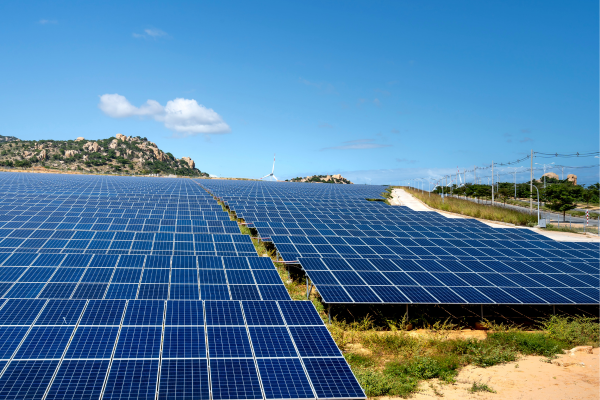
India has identified a floating solar photovoltaic (PV) potential of more than 102 GWp, with the Ministry of New and Renewable Energy (MNRE) now working on a dedicated scheme to promote the development of floating solar projects across the country. The assessment was announced by Union Minister for New and Renewable Energy Pralhad Joshi during the release of the Report on Floating Solar PV Potential Assessment of India.
The report, prepared by the National Institute of Solar Energy (NISE), estimates India's floating solar potential at 102.18 GWp. When combined with the previously assessed ground-mounted solar potential of approximately 3,343 GWp, the country's total assessed solar potential reaches 3,445 GWp.
Floating solar projects involve installing photovoltaic panels on reservoirs, lakes and other water bodies rather than on land. The government believes this approach can help address land availability constraints while making productive use of existing water infrastructure. Such projects can also reduce water evaporation and improve the efficiency of solar panels due to the cooling effect of water.
The minister stated that the MNRE is preparing a dedicated policy framework to accelerate floating solar deployment nationwide. While detailed guidelines are yet to be announced, the proposed scheme is expected to provide targeted support for the development of projects on suitable reservoirs and other water bodies.
The assessment represents another milestone in India's renewable energy expansion strategy. According to the ministry, the country's energy transition is increasingly extending beyond conventional solar parks to innovative technologies that maximise available natural resources without requiring significant additional land acquisition. (
During the event, the government also launched an online portal for the Small Hydro Power Development Scheme to improve transparency and streamline implementation. In addition, the National Institute of Solar Energy and the Military Engineering Services exchanged a memorandum of understanding to promote renewable energy adoption across defence establishments.
India has significantly expanded its renewable energy capacity over the past decade, with solar power emerging as one of the fastest-growing segments. The identification of more than 102 GWp of floating solar potential adds a new avenue for capacity creation and supports the country's broader objective of increasing non-fossil fuel energy generation.
For infrastructure developers and investors, the proposed floating solar scheme could create new opportunities around reservoirs, dams and other water bodies owned by utilities and public agencies. As policy support evolves, floating solar is expected to become an increasingly important component of India's renewable energy portfolio and its long-term decarbonisation strategy.
Source - PTI
Advertisement













 Facebook
 Whatsapp
