Advertisement






The Gulf conflict has disrupted global supply chains, pushed...
REITs have changed the way commercial real estate is owned a...

What does it take to preserve a real estate legacy while bui...
What really powers the cloud? Behind every Google search, A...
A lot of what defines a home isn’t visible at handover. I...
A catastrophic flash flood swept through Nepal's Rasuwa district on 26 August, killing at least 95 people, according to Nepal's Prime Minister's Office, with three further deaths reported across the border in Tibet. The flood, which surged suddenly through the Bhotekoshi River without preceding rainfall, devastated the towns of Timure and Syabrubesi, damaged multiple hydropower stations, and swept away bridges, roads and border infrastructure along the Nepal-China crossing at Rasuwagadhi. Hundreds remain missing, including at least 403 foreign nationals and 93 Nepali tourists, according to the Prime Minister's Office, with dozens of security personnel from the Nepali Army, Nepal Police and Armed Police Force also unaccounted for.
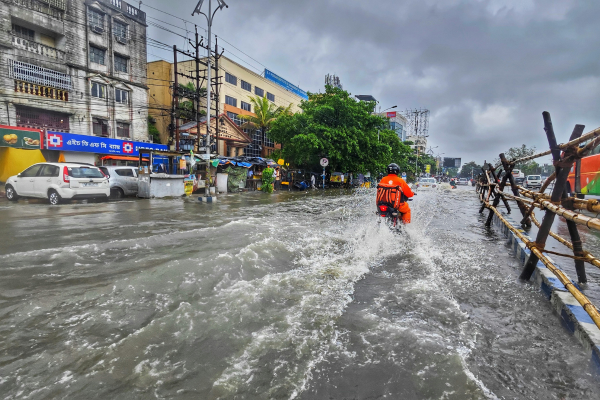
A catastrophic flash flood tore through Nepal's northern Rasuwa district on Wednesday, 26 August, killing at least 95 people and leaving hundreds more missing in one of the deadliest disasters to strike the Himalayan nation's border region with Tibet in recent years.
The flood struck suddenly at around 8:40 am local time, surging through the Bhotekoshi River without any preceding rainfall in the area, according to Rasuwa's Chief District Officer Narendra Pariyar. Officials said the sun had been shining over the district when the wall of water hit, and it remained unclear at the time whether the flood had been triggered by a glacial lake outburst or a landslide-induced river blockage upstream in Tibet. Nepal's Flood Forecasting Division later received informal reports suggesting a landslide may have dammed a river across the border before the resulting surge broke through.
The flood devastated the main market areas of Timure and Syabrubesi, close to the Nepal-China border crossing at Rasuwagadhi, and swept downstream through the Trishuli River into the neighbouring Nuwakot district, inundating riverside settlements and burying buildings under mud and debris. According to Nepal's Prime Minister's Office, 95 bodies have been recovered so far, though the identification of the deceased remains incomplete. A further three deaths have been reported across the border in Tibet's Gyirong county, taking the combined toll to at least 98.
Hundreds of people remain missing, with the scale of those unaccounted for continuing to rise as rescue teams gain access to previously isolated areas. According to Nepal's Prime Minister's Office, at least 403 foreign nationals and 93 Nepali tourists have been reported missing, while Chinese media have separately reported 265 people missing on their side of the border. Nepal's Tourism Board said the missing included at least 47 American tourists who lost contact after the flood struck the Rasuwa region, along with British and Australian nationals.
Security forces have borne heavy losses in the disaster. According to the Prime Minister's Office, 85 security personnel remain missing, comprising 44 from the Nepali Army, 28 from Nepal Police and 13 from the Armed Police Force, many of whom were stationed at security posts in Timure near the border. Workers from hydropower projects, customs offices and local banks have also been reported out of contact, including dozens of engineers, drivers and tunnel workers associated with the Langtang Khola Hydropower Project.
The flood caused extensive damage to Nepal's hydropower infrastructure, with the Nepal Electricity Authority reporting damage to at least half a dozen stations, including the Rasuwagadhi, Chilime, Trishuli 3A, Trishuli 3B, Trishuli and Devighat hydropower stations, along with a 220 kV substation. The resulting power disruption has left several districts without electricity. Roads, bridges and communication networks across the affected region have also been extensively damaged, with the epicentre of the disaster in parts of Rasuwa and Nuwakot rendered inaccessible after connecting roads were swept away.
Rescue and relief operations have been mounted on a large scale, with the Nepali Army, Nepal Police and Armed Police Force deploying up to 14 helicopters for search-and-rescue efforts, though operations have been repeatedly disrupted by poor weather in the mountainous terrain. The Nepali Army said it had rescued 88 people from the flood, with 13 of them admitted to Tribhuvan University Teaching Hospital in Kathmandu for treatment and others moved to safe locations, including a relief camp at Trishuli.
Nepal's government has appealed to both India and China for assistance with rescue efforts. In a statement, the Office of the Prime Minister expressed deep sorrow over the loss of life, offering condolences to bereaved families, while Chinese President Xi Jinping called for all-out efforts to search for the missing and for strengthened monitoring of the region going forward. The disaster follows a similar flash flood that struck the same Rasuwa-Bhotekoshi corridor in July 2025, which killed at least eight people and destroyed the Nepal-China Friendship Bridge, underscoring the region's continued vulnerability to sudden, transboundary flooding events originating in the fast-changing Himalayan cryosphere.
Authorities have warned residents living along the Trishuli River downstream to move away from riverbanks and seek higher ground, as officials continue to assess the full extent of the disaster's human and economic toll across the affected districts.
Advertisement













 Facebook
 Whatsapp
