Advertisement






The Gulf conflict has disrupted global supply chains, pushed...
REITs have changed the way commercial real estate is owned a...

What does it take to preserve a real estate legacy while bui...
What really powers the cloud? Behind every Google search, A...
A lot of what defines a home isn’t visible at handover. I...
Renewable energy developers may exercise penalty-free exit options from several plain solar and high-tariff hybrid projects that are struggling to secure power purchase agreements (PPAs), Ministry of New and Renewable Energy (MNRE) Secretary Santosh Kumar Sarangi said at the BloombergNEF Summit in New Delhi. Renewable Energy Implementing Agencies (REIAs) have been asked to explore ways of getting distribution companies (DISCOMs) to procure power from stalled projects, including by modifying their project profiles within discovered tariffs. Around 42 GW of renewable energy capacity is currently without PPAs, according to Sarangi.
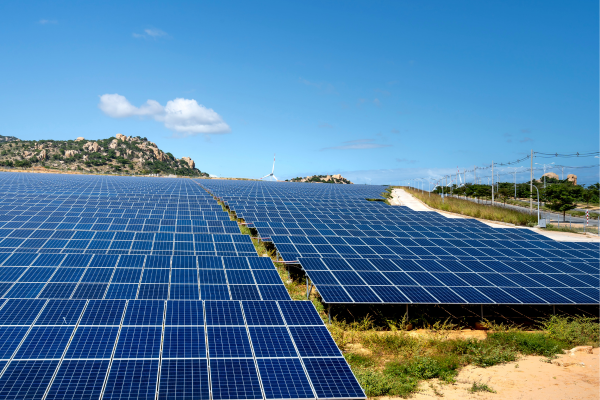
Renewable energy developers may have to exit contracts for plain solar and some high-tariff hybrid projects that are finding it difficult to secure buyers, MNRE Secretary Santosh Kumar Sarangi said at the BloombergNEF Summit in New Delhi in the past week. He said Renewable Energy Implementing Agencies (REIAs) were exploring measures to help stalled projects secure power purchase agreements (PPAs) with distribution companies (DISCOMs), including changes to their project profiles.
Sarangi said a significant portion of conventional or ‘vanilla’ solar bids may not ultimately be sold because of difficulties in securing buyers. Some hybrid tenders where the discovered tariff was higher are also facing similar challenges. If projects cannot secure offtake, developers may exercise the penalty-free exit option available to them, while REIAs could eventually cancel the affected tenders.
The ministry is continuing discussions with DISCOMs to facilitate procurement from these projects. Sarangi said changes to project configurations could be considered within the tariffs already discovered as part of efforts to improve their prospects of securing PPAs.
Around 42 GW of renewable energy capacity is currently awaiting PPAs. The issue has emerged as demand from DISCOMs and other procurers shifts towards renewable power configurations that can provide electricity during periods of higher demand rather than conventional standalone solar generation.
Developers have consequently begun adding battery energy storage systems (BESS) to plain solar projects to make the electricity more attractive to DISCOMs. The storage component can alter the profile of solar generation and make it more suitable for procurement requirements.
A regulatory option for projects facing delays in signing PPAs was also introduced by the Central Electricity Regulatory Commission (CERC) in July. Projects that obtained transmission connectivity on the basis of Letters of Award (LoAs) but have not signed PPAs within 12 months of receiving the LoA can exit the LoA route without surrendering their transmission connectivity. Their existing bank guarantees remain valid until the project reaches commercial operation.
The CERC mechanism addresses a broader pipeline of renewable projects that have secured grid connectivity but have not progressed to PPAs. A CERC staff paper cited by Business Standard had put the capacity in this category at more than 45 GW.
The government has been encouraging REIAs to move towards solar-plus-storage, peak-power and firm and dispatchable renewable energy configurations as demand for plain solar declines. Official government material has also noted growing preference among DISCOMs and end procurers for solar-plus-storage and dispatchable renewable power as their costs decline.
Sarangi said vanilla wind projects were increasingly being procured by REIAs, with DISCOMs receiving more such projects for procurement, while the immediate difficulty was concentrated in plain solar and some higher-tariff hybrid projects.
The MNRE secretary also said the government expects the renewable energy sector to attract around USD 500 billion in investment by 2030. The ministry is simultaneously working on measures related to energy storage and renewable energy manufacturing as the sector moves towards more dispatchable forms of generation.
Advertisement













 Facebook
 Whatsapp
