Advertisement






The Gulf conflict has disrupted global supply chains, pushed...
REITs have changed the way commercial real estate is owned a...

What does it take to preserve a real estate legacy while bui...
What really powers the cloud? Behind every Google search, A...
A lot of what defines a home isn’t visible at handover. I...
Author, philanthropist and Rajya Sabha MP Sudha Murty visited the ancient Barabar Caves in Bihar's Jehanabad district on Sunday and called for their inclusion in the UNESCO World Heritage list. Murty, who arrived in Patna a day earlier after more than two decades, praised the rock-cut caves' construction techniques, polished interiors and acoustic properties as evidence of advanced ancient Indian engineering and craftsmanship. She was accompanied by district officials during the visit.
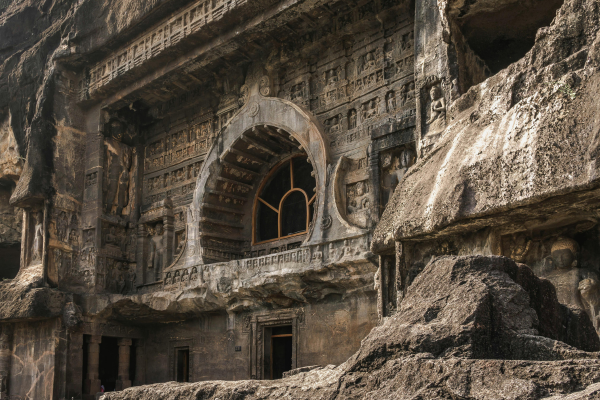
Philanthropist, author and Rajya Sabha MP Sudha Murty visited the ancient Barabar Caves in Bihar's Jehanabad district on Sunday, where she advocated for the site's inclusion in the UNESCO World Heritage list, according to officials. Murty had arrived at Jay Prakash Narayan International Airport in Patna a day earlier, marking her first visit to the state capital in more than two decades, and remarked on her arrival that she was pleased to see the progress the city had made over the intervening years.
During her visit to the caves, Murty examined the site's construction techniques and artistic detailing, according to a statement issued by the Jehanabad district administration. She singled out for particular praise the mirror-like polish achieved on the interior cave walls, as well as the distinctive sound and echo effects produced within the chambers, describing both as evidence of the advanced engineering, scientific understanding and craftsmanship that characterised ancient Indian construction.
Murty went on to appeal for the Barabar Caves to be recognised on the UNESCO World Heritage list, stating that such recognition would help the site secure greater visibility and appreciation on the global stage. She was accompanied during the visit by the sub-divisional public grievance redressal officer and the district's art and culture officer.
The Barabar Caves, located roughly 24 kilometres north of Gaya, are widely regarded as among the oldest surviving examples of rock-cut architecture in India, with several of the chambers dating to the Mauryan period and bearing inscriptions attributed to the reign of Emperor Ashoka. The caves have long drawn scholarly attention for their sophisticated craftsmanship, particularly the smooth, reflective polish achieved on granite surfaces using techniques that continue to be studied by archaeologists and conservationists. The site has also featured prominently in literary and cultural references, including as an inspiration for the Marabar Caves depicted in E M Forster's novel "A Passage to India."
Calls for greater recognition of the Barabar Caves have periodically surfaced in heritage and conservation circles, with advocates pointing to the site's historical significance and architectural distinctiveness as grounds for stronger protective status and international visibility. A UNESCO World Heritage designation, if pursued and granted, would place the caves alongside a small number of other Indian sites recognised for their outstanding universal value, potentially bringing increased conservation attention, research interest and tourist footfall to the region.
Murty's visit adds a prominent voice to this ongoing conversation around the caves' heritage status, coming at a time when Bihar has been working to strengthen its profile as a destination for cultural and heritage tourism, alongside its more established pilgrimage and spiritual tourism circuits centred around sites such as Bodh Gaya and Rajgir.
Source PTI
Advertisement













 Facebook
 Whatsapp
