Advertisement






The Gulf conflict has disrupted global supply chains, pushed...
REITs have changed the way commercial real estate is owned a...

What does it take to preserve a real estate legacy while bui...
What really powers the cloud? Behind every Google search, A...
A lot of what defines a home isn’t visible at handover. I...
Successive heatwaves have increased the risk of subsidence across London, with prolonged hot and dry conditions shrinking the clay soil beneath homes and destabilising building foundations. Insurance claims linked to subsidence reached a record level in the latest quarter, with households claiming an average of GBP 20,000 (USD 27,200), 15% more than during the corresponding period in 2025. Victorian and Edwardian homes built directly on upper layers of London clay are particularly exposed, while areas including Westminster, Kensington and Chelsea are among those identified as higher-risk locations. The impact is extending beyond repair costs, with subsidence capable of reducing property values and increasing insurance premiums. Engineering repairs can cost from GBP 20,000 to more than GBP 100,000.
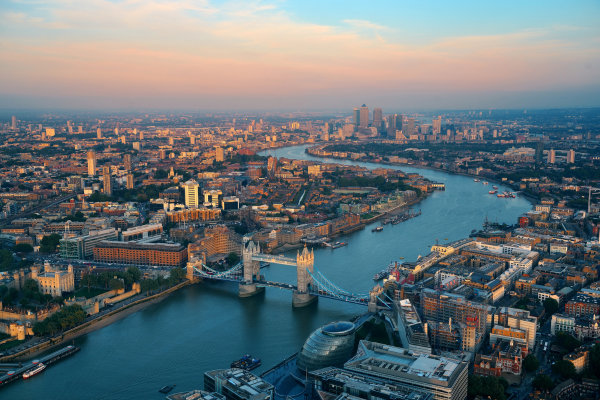
London homeowners are facing increased subsidence risks after five successive heatwaves dried out the clay soil beneath large parts of the city, with insurers recording a record quarter for claims linked to the movement of building foundations. The development is affecting residential properties across London, particularly homes constructed directly on the city’s clay, as prolonged hot and dry weather causes the soil to contract and destabilise foundations.
Data from the Association of British Insurers (ABI) showed that households claiming for subsidence received an average of GBP 20,000 (USD 27,200), the highest level recorded for any quarter and a 15% increase from the same period in 2025. Laura Hughes, head of general insurance at ABI, said the trend was expected to continue as hot weather contributed to more subsidence cases.
The effects are already being reported by homeowners, with residents describing substantial cracking and doors becoming difficult to open or close as properties move. Engineering firm Geobear, which specialises in subsidence repairs, said it had received more homeowner enquiries this summer than at any previous point. One insurance client reportedly recorded 180 claims in a single day, significantly above its normal level.
London clay is particularly sensitive to changes in moisture, expanding when wet and contracting during dry periods. Although subsidence has affected the capital for decades, climate change is increasing the severity of the risk. Insurance payouts for subsidence across the UK rose by roughly 90% in the four years through 2025, reaching a record GBP 297 million.
Properties most vulnerable to the problem include Victorian and Edwardian houses built directly onto the upper layers of London clay. Modern office developments in the City of London and Canary Wharf are considered less exposed because they generally have much deeper foundations. Aviva data identified Westminster, Kensington and Chelsea among London’s areas facing the highest risk.
The consequences extend to property values and insurance costs. According to the Federation of Master Builders, subsidence can reduce a property’s value by an average of 20% to 25%. Homeowners can also face significant repair bills, with underpinning a conventional engineering solution for subsidence costing between GBP 20,000 and more than GBP 100,000.
The risk is also becoming a concern for insurers. Deloitte partner Cherry Chan described subsidence as a significant challenge for UK home insurers and an increasingly material climate-related risk, alongside flash flooding and wildfires. She said extreme weather in 2026 could generate new claims as well as worsen unsettled subsidence claims from previous years.
British Geological Survey estimates indicate that under the RCP 4.5 emissions scenario, 1.8 million UK properties, equivalent to around 5% of the national total, could be highly or extremely likely to experience shrink-swell subsidence by 2070. Under a higher-emissions scenario, the number could rise to 4.2 million properties, or 11% of the total, with densely populated areas of London, Kent and south-east England among the most exposed.
The British Geological Survey has warned that the trend could contribute to higher insurance premiums, weaker house prices and increased spending on engineering works, utility pipe replacement and unstable transport infrastructure. London Mayor Sadiq Khan’s office has separately estimated that the capital could face an annual cost of up to GBP 36 billion into the 2050s to prepare for the effects of rising temperatures.
Advertisement













 Facebook
 Whatsapp
