Advertisement






The Gulf conflict has disrupted global supply chains, pushed...
REITs have changed the way commercial real estate is owned a...

What does it take to preserve a real estate legacy while bui...
What really powers the cloud? Behind every Google search, A...
A lot of what defines a home isn’t visible at handover. I...
In a landmark ruling, the Supreme Court has held that pedestrians are entitled to safe, clearly demarcated and obstruction-free walking spaces on every road, describing the right to walk as a fundamental constitutional right. The court directed the Centre and urban local bodies to prioritise pedestrian infrastructure while planning and maintaining roads. It also called for a comprehensive legal framework to safeguard pedestrian rights, a move that could reshape road design, urban planning and public infrastructure development across India.
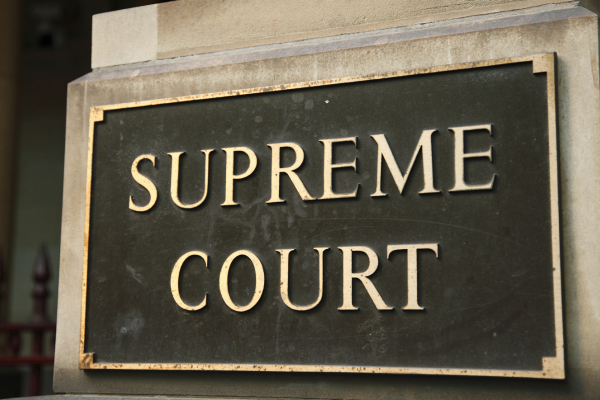
The Supreme Court has issued a landmark judgment directing governments and civic authorities across the country to ensure that roads include safe, clearly marked and obstruction-free spaces for pedestrians. Stressing that walking is a basic mode of mobility, the court observed that public infrastructure must be designed in a manner that protects those travelling on foot and not solely those using motor vehicles.
The observations were made while the court was hearing a case arising from the death of a five-year-old child in a road accident. Although the matter concerned compensation, the bench broadened its examination to address the wider issue of pedestrian safety and the lack of adequate walking infrastructure in many parts of the country.
The court held that the right to walk safely flows from the constitutional guarantees of life, personal liberty and freedom of movement. It observed that these rights cannot be effectively exercised unless citizens have access to usable footpaths and designated pedestrian areas. According to the judgment, providing safe walking infrastructure is not optional but a public responsibility.
The bench said every authority responsible for constructing or maintaining roads—including municipal corporations, municipalities, urban development bodies and village-level local governments—must ensure that pedestrian facilities are incorporated into road infrastructure. It added that roads should be planned and maintained with equal consideration for pedestrians, particularly vulnerable groups such as children, senior citizens and persons with disabilities.
The judgment further noted that failure to provide safe pedestrian infrastructure could amount to a violation of constitutional rights. Citizens affected by the absence of safe walking spaces would be entitled to pursue legal remedies independently of any compensation claims arising from road accidents under existing laws.
Recognising the absence of a dedicated legal framework for pedestrian rights, the Supreme Court directed that copies of its judgment be sent to the Ministries of Housing and Urban Affairs, Road Transport and Highways, Rural Development, as well as the Law Commission. The court suggested that these institutions examine the need for comprehensive legislation and policy measures that formally recognise and protect pedestrians within India's transport and urban planning systems.
The ruling is expected to have significant implications for future infrastructure projects, road redevelopment initiatives and city planning. Urban planners and policymakers may now be required to treat footpaths, pedestrian crossings and accessible walking corridors as essential elements of road infrastructure rather than supplementary features.
The judgment is also likely to strengthen accountability among civic agencies by placing greater emphasis on pedestrian safety in urban governance. As cities continue to expand and traffic volumes increase, the Supreme Court's decision establishes that creating safe and inclusive streets is an integral part of fulfilling citizens' constitutional rights and promoting sustainable urban development.
Source PTI
Advertisement













 Facebook
 Whatsapp
