Advertisement






What really powers the cloud? Behind every Google search, A...
A lot of what defines a home isn’t visible at handover. I...
Private equity has played a significant role in shaping Indi...
Luxury real estate is one of the most talked-about segments ...
Airports play a much bigger role than just enabling travel -...
India is planning to invest approximately INR 45,000 crore (USD 4.7 billion) in railway infrastructure upgrades along its borders with China, Pakistan and Bangladesh, according to people familiar with the matter. The spending, to be rolled out over the next 18 to 24 months, will fund new tracks, platforms and network strengthening across Punjab, West Bengal, Himachal Pradesh, Rajasthan, Assam and several north-eastern states. The border-focused programme accounts for roughly 22 per cent of all railway infrastructure outlay planned over the next two years. The Railway Ministry did not respond to requests for comment on the plan.
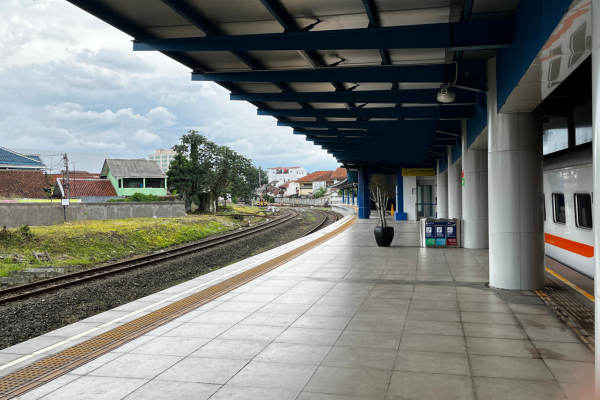
India is planning to invest approximately INR 45,000 crore, or around USD 4.7 billion, in railway infrastructure along its borders with China, Pakistan and Bangladesh, according to people familiar with the matter, in what has been described as one of the country's most significant strategic infrastructure pushes in recent years, undertaken amid shifting regional dynamics.
The investment, expected to be rolled out over the next 18 to 24 months, will support the construction of new tracks and platforms, along with broader network strengthening, across Punjab, West Bengal, Himachal Pradesh, Rajasthan, Assam and several other north-eastern states, according to people cited in the report, who spoke on condition of anonymity as the discussions remain private. The Railway Ministry did not respond to a request for comment on the investment plan, according to the report.
The border-focused railway programme is estimated to account for close to 22 per cent of the country's total planned railway infrastructure outlay over the next two years, underlining the scale of the initiative relative to overall spending in the sector. The plan builds on an earlier reported commitment of approximately USD 3.4 billion for constructing rail lines, including bridges and tunnels, in the north-eastern region, indicating that the government's broader border-connectivity ambitions extend well beyond the newly reported figure.
The push for stronger frontier rail connectivity comes against the backdrop of India's shifting relationships along its sensitive border regions. Ties with China have stabilised in recent years following a deadly military clash roughly six years ago, while India engaged in a brief conflict with Pakistan last year. Relations with Bangladesh have also grown more complex following the political upheaval that country experienced in 2024, having previously been comparatively stable. The timing of the investment plan reflects the government's ongoing recalibration of its infrastructure posture across these varied and sensitive frontiers.
According to the report, the planned investment is intended to create dual-use infrastructure, civilian railway networks capable of supporting military logistics, while simultaneously improving connectivity in border regions that have historically remained underdeveloped. The approach is aimed at strengthening high-capacity, all-weather rail links into sensitive frontier areas, including the Himalayan region, the Siliguri Corridor, and the north-eastern states, with the broader objective of reducing troop mobilisation timelines and improving supply-line resilience against regional rivals.
The government has separately prioritised connectivity improvements in sensitive border zones in recent years, including approximately 1,450 kilometres of new roads along the Pakistan border and infrastructure upgrades near Doklam, a plateau claimed by both China and Bhutan. It also inaugurated what has been described as the world's tallest railway bridge, connecting the Kashmir Valley with the rest of the country, in the past year. In the north-eastern region, roughly 1,700 kilometres of new rail lines have been added over the past decade, according to people familiar with the government's infrastructure planning.
The report also noted that India has reactivated a number of dormant Advance Landing Grounds, airside facilities last used in 1962, for helicopter and military aircraft operations in its north-eastern territories. China, meanwhile, has continued to expand its own dual-use infrastructure, including airports and heliports, along the border region since an earlier military stand-off in 2017, a build-out that has strengthened the logistical capacity of its armed forces stationed in the area, according to the report.
Advertisement













 Facebook
 Whatsapp
