Advertisement






What really powers the cloud? Behind every Google search, A...
A lot of what defines a home isn’t visible at handover. I...
Private equity has played a significant role in shaping Indi...
Luxury real estate is one of the most talked-about segments ...
Airports play a much bigger role than just enabling travel -...
The Telangana government has accelerated its investigation into alleged irregularities linked to the Dharani land records portal while initiating a comprehensive land survey across the state. Authorities will prioritise inquiries into disputed land transactions, unauthorised mutations and suspected encroachments through a fast-track mechanism. Alongside the investigation, the government plans to introduce a unique Bhudhar identification system and strengthen land record management under the Bhu Bharati framework, aiming to improve transparency, restore public confidence and prevent future instances of land fraud.
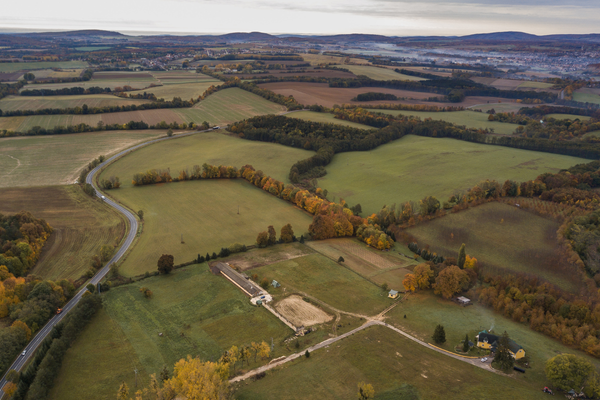
The Telangana government has intensified its efforts to address alleged irregularities in land transactions by launching a fast-track inquiry into cases associated with the Dharani portal while simultaneously undertaking a comprehensive land survey across the state. The initiative forms part of the government's broader strategy to improve land governance, resolve long-pending ownership disputes and strengthen the integrity of property records through administrative and technological reforms.
Revenue Minister Ponguleti Srinivasa Reddy said the government is examining complaints related to land transactions carried out through the Dharani portal, particularly those involving disputed ownership, alleged illegal mutations and the transfer of government land. According to the minister, cases where irregularities are established will be pursued through an expedited process to ensure that corrective action is taken without prolonged delays. The government has maintained that individuals found responsible for fraudulent transactions or unauthorised alterations to land records will face legal action in accordance with applicable laws.
Alongside the investigation, the state has commenced a large-scale land survey aimed at updating and verifying ownership records across Telangana. Officials believe the exercise will help identify discrepancies that accumulated over the years while providing a more accurate foundation for future land administration. The survey is also expected to assist in resolving boundary disputes, correcting revenue records and improving the overall reliability of the state's land database.
As part of the reform programme, the government has announced plans to introduce a unique Bhudhar identification system for land parcels. The proposed identifier is intended to function as a permanent digital identity for every parcel of land, enabling authorities to maintain consistent ownership records while reducing the possibility of duplication, manipulation or fraudulent transactions. Officials have indicated that the system will complement the Bhu Bharati framework, which is being positioned as a more transparent and secure mechanism for managing land records.
The government has also stated that the ongoing review is not intended to disrupt legitimate property ownership but rather to rectify irregularities that may have occurred during previous transactions. Authorities have encouraged landowners to cooperate with survey teams and provide relevant documentation wherever required to facilitate timely verification and correction of records.
The latest measures come amid continued concerns over transparency and accuracy in land administration, an issue that has significant implications for property ownership, infrastructure development and investment across the state. By combining a statewide land survey with targeted investigations into disputed transactions, the Telangana government aims to establish a more robust land management system capable of supporting future urban expansion and rural development. Officials believe the reforms will enhance public confidence in the state's land records framework while creating a stronger institutional foundation for property governance and reducing the scope for future land-related disputes and fraudulent transactions.
Advertisement













 Facebook
 Whatsapp
