Advertisement






What really powers the cloud? Behind every Google search, A...
A lot of what defines a home isn’t visible at handover. I...
Private equity has played a significant role in shaping Indi...
Luxury real estate is one of the most talked-about segments ...
Airports play a much bigger role than just enabling travel -...
A consortium led by Swiss-Japanese waste management company Kanadevia Inova plans to begin construction of a USD 1.5 billion waste-to-energy plant in Casablanca later this year, with full operations expected by mid-2030. The project, developed in partnership with Morocco's Nareva and Japan's Itochu, aims to process around 1.5 million metric tons of waste annually while generating 115 megawatts of electricity. The facility is expected to reduce methane emissions from the Mediouna landfill, improve waste management in Morocco's largest city, and supply electricity to nearly one million people.
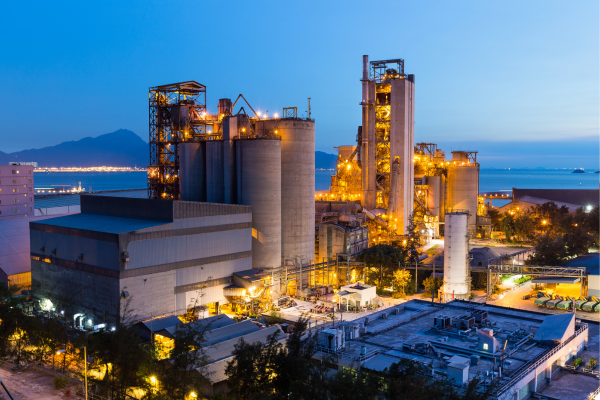
Casablanca is set to develop a USD 1.5 billion waste-to-energy plant, with construction expected to begin by the end of this year after the project secures debt and equity financing. Full commercial operations are targeted for mid-2030. The project is being developed by a consortium led by Swiss-Japanese waste management company Kanadevia Inova, along with Moroccan energy company Nareva and Japan's Itochu.
The concession agreement for the project was awarded by the Casablanca city government and was signed in the past week. Once completed, the facility will become only the second waste-to-energy plant in Africa. The project is designed to generate electricity while addressing long-standing environmental concerns linked to the Mediouna landfill, the largest landfill site in Morocco.
According to Kanadevia Inova, the plant will be capable of processing around 1.5 million metric tons of municipal waste every year. It is expected to generate about 115 megawatts of electricity using a combination of municipal waste, solar power and landfill gas. The electricity produced is expected to be sufficient to meet the needs of nearly one million people.
Kanadevia Inova's Chief Executive Bruno-Frederic Baudouin told Reuters that construction would begin after financing is fully secured during the fourth quarter of this year. He also said Moroccan construction company Somagec will build the facility, with the construction period expected to take around three and a half years. However, waste processing and electricity generation could begin six to ten months before the project reaches full completion.
The company also confirmed that the consortium has signed a power purchase agreement with Morocco's state-owned electricity utility, ONEE, ensuring that electricity generated by the plant will be supplied to the national grid. Baudouin added that the project will seek funding from Moroccan financial institutions and indicated that the debt financing will come entirely from local lenders.
The Mediouna landfill, located on the outskirts of Casablanca, has been a major environmental concern for decades. The landfill has been associated with foul odours, groundwater contamination and pollution affecting nearby agricultural land. It is also a significant source of methane emissions, a greenhouse gas with a much higher warming potential than carbon dioxide.
Kanadevia Inova said the new facility is expected to significantly reduce greenhouse gas emissions by diverting waste from landfill and converting it into energy. According to the company, the emissions reduction could be equivalent to around 20% of Switzerland's annual greenhouse gas emissions. Baudouin told Reuters that the environmental impact would be comparable to removing around 300,000 cars from the roads.
While waste-to-energy projects are increasingly being considered as part of integrated waste management strategies across several countries, they continue to face criticism from environmental groups, climate activists and researchers. Opponents argue that many such facilities depend on waste incineration, which can release particulate matter and greenhouse gases, and they believe these plants may discourage recycling and waste reduction efforts if not supported by strong segregation and recycling systems.
Source Reuters
Advertisement













 Facebook
 Whatsapp
