Advertisement






The Gulf conflict has disrupted global supply chains, pushed...
REITs have changed the way commercial real estate is owned a...

What does it take to preserve a real estate legacy while bui...
What really powers the cloud? Behind every Google search, A...
A lot of what defines a home isn’t visible at handover. I...
Wildfires burning around Spokane, Washington, have destroyed more than 700 buildings and forced nearly 64,000 people to evacuate as firefighters continue battling three major blazes. The fires have spread across more than 8,000 acres, making them the highest firefighting priority in the United States amid widespread wildfire activity across the Pacific Northwest. Officials have warned that the number of damaged structures could rise as inaccessible areas are assessed. While no deaths or injuries have been confirmed, authorities expect the situation to become clearer once search teams are able to safely enter affected neighbourhoods.
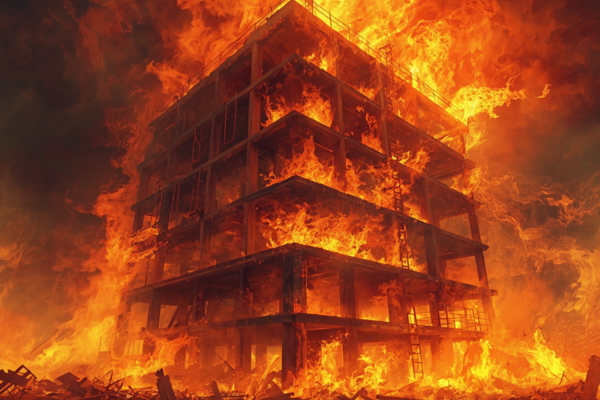
Wildfires burning around Spokane, Washington, entered their third day this week, destroying more than 700 buildings and forcing about 64,000 people to leave their homes as firefighters continued efforts to control the rapidly spreading flames. Authorities said the group of three fires has become the top firefighting priority in the United States as multiple large wildfires continue to burn across the drought-hit Pacific Northwest.
The fires have scorched more than 8,000 acres (3,200 hectares) since breaking out over the weekend on the northern edge of Spokane, Washington's second-largest city, which has a population of around 230,000. The affected areas are located near the foothills of the Rocky Mountains close to the Idaho border.
Television footage from the affected region showed large smoke columns rising above forests while aerial firefighting aircraft dropped fire retardant to slow the spread of the flames. Thick smoke covered the skies north of Spokane as the fires advanced through forest land located about 10 kilometres from the city's downtown area.
Among those displaced was 58-year-old resident Kami Fehlig, whose home was destroyed after the fire crossed the Spokane River and spread into her neighbourhood. She said her family realised the fire was approaching and began gathering essential belongings before evacuating. The family managed to leave with only a few personal items, including wedding photographs, baby books and supplies for their dog, before electricity was cut off. They later discovered that their home, chicken coop and much of the surrounding neighbourhood had been destroyed.
Emergency officials said evacuation orders expanded sharply from around 4,000 residents a day earlier to nearly 64,000 people as the fire spread rapidly into residential communities.
Benjamin Cossel, spokesperson for the incident command centre, said more than 700 structures, most of them homes, had already been destroyed. Infrared aerial surveys also indicated that another 400 buildings could have been damaged or destroyed, although detailed assessments are still underway. The cause of the fires remains under investigation.
Authorities have not confirmed any deaths or injuries so far. However, Cossel said there was a high possibility that casualties could be discovered once firefighters gain access to heavily damaged areas that remain unsafe because of ongoing fire activity. He also confirmed that several people have been reported missing as flames moved from forested land into residential and commercial areas, effectively turning what began as a wildfire into a large urban fire.
Around 1,100 firefighters have been deployed to battle the Spokane fires. According to the National Interagency Fire Center, more than 29,000 firefighting personnel are currently assigned to wildfire operations across the United States, with the highest concentration in Washington, Oregon and Idaho.
The National Interagency Fire Center also reported that more than 100 new large wildfires broke out across 15 states over the weekend, stretching firefighting resources across the region. Washington alone is battling 15 major fires, with more than 250,000 acres affected. State Public Lands Commissioner Dave Upthegrove said the Pacific Northwest is experiencing an exceptionally severe wildfire season.
Wildfire activity has also intensified across neighbouring British Columbia in Canada, where prolonged drought conditions have resulted in what officials described over the weekend as explosive fire behaviour.
Fire managers said weather conditions offered a brief opportunity to strengthen firefighting efforts as cooler temperatures and lighter winds were expected to continue until Tuesday. However, forecasts indicate that extreme heat, low humidity and strong winds are likely to return later in the week, increasing the risk of further fire spread.
Officials confirmed that none of the three Spokane-area fires had been contained as of the latest update.
According to the National Interagency Fire Center, the United States has recorded 44,722 wildfires so far this year, the highest number for this stage of the year in at least a decade. Nearly 5.2 million acres have burned nationwide, marking the largest area affected between January and early August since 2022.
Scientists have consistently linked the growing frequency and intensity of wildfires across North America, Europe and other parts of the world to human-driven climate change, with prolonged droughts, rising temperatures and more frequent extreme weather creating conditions that allow fires to spread faster and burn more intensely.
Source Reuters
Advertisement













 Facebook
 Whatsapp
