Advertisement






What really powers the cloud? Behind every Google search, A...
A lot of what defines a home isn’t visible at handover. I...
Private equity has played a significant role in shaping Indi...
Luxury real estate is one of the most talked-about segments ...
Airports play a much bigger role than just enabling travel -...
A growing segment of homeowners across India's Tier-II cities is moving from independent houses to professionally managed residential communities, signalling a shift in homebuying priorities from ownership alone to lifestyle, convenience and long-term value. Improved infrastructure, stronger local economies, changing family structures and rising buyer awareness are encouraging households to upgrade to branded developments offering security, amenities and professional maintenance. As organised developers expand beyond metropolitan markets, this emerging 'upgrade buyer' is reshaping residential demand across cities such as Mohali, Ludhiana, Jaipur, Indore, Lucknow and Coimbatore, reflecting the increasing maturity of India's regional housing markets.
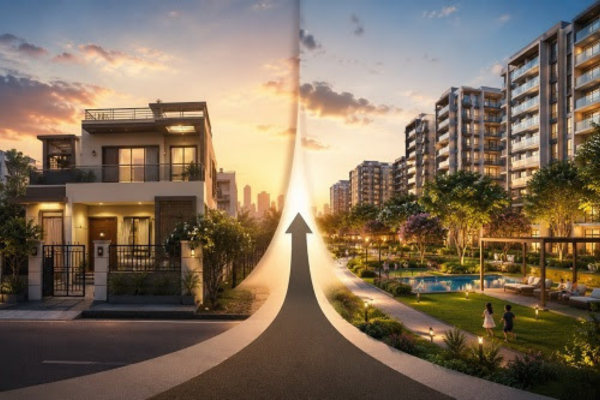
For decades, owning an independent house on a self-owned plot represented the ultimate housing aspiration for families in India's Tier-II and Tier-III cities. It symbolised financial security, social standing and an asset that could be passed down through generations. Today, however, a gradual but significant shift is underway. Across regional cities, an increasing number of homeowners are choosing to move from standalone houses into professionally developed residential communities, not because they require more space, but because they are seeking a different quality of living.
Industry stakeholders describe this emerging segment as the 'upgrade buyer'—homeowners who already possess residential property but are now prioritising convenience, security, community living and long-term asset quality over traditional notions of ownership. The trend is becoming increasingly visible across cities including Mohali, Ludhiana, Jaipur, Indore, Lucknow and Coimbatore, where improving infrastructure and stronger economic activity are reshaping residential preferences.
The transformation of Tier-II cities has played a significant role in this evolution. Over the past decade, investments in highways, airports, educational institutions, healthcare facilities and commercial infrastructure have substantially improved the quality of urban living beyond metropolitan centres. Growing employment opportunities, expanding business ecosystems and enhanced connectivity have reduced the need for families to relocate to larger cities in search of better prospects.
As a result, housing decisions are increasingly being influenced by lifestyle considerations rather than location alone. Homebuyers now evaluate factors such as professionally managed maintenance, landscaped open spaces, security systems, recreational facilities, sustainability features and the long-term appreciation potential of a development alongside traditional parameters such as price and size.
The broader residential market reflects this shift towards premium, lifestyle-oriented housing. According to the CREDAI–Liases Foras Indian Real Estate CY 2025 Report, homes priced above INR 1 crore accounted for nearly 78 per cent of the total value of primary residential sales across 50 major Indian cities during 2025, indicating that buyers are increasingly willing to invest in better-quality housing and organised developments.
Abhay Jindal, Managing Director of Homeland Group, believes changing aspirations rather than affordability are driving the trend. He says today's buyers are upgrading because they seek a superior residential environment rather than simply additional living space. According to him, secure communities, green landscapes, recreational amenities and professional maintenance have become essential considerations, while greater exposure to global lifestyles and improving urban infrastructure have significantly altered buyer expectations, even in regional cities.
Changing household dynamics are further accelerating this transition. Dual-income families, demanding work schedules and smaller family units have made maintaining independent houses increasingly challenging. Organised residential communities reduce maintenance responsibilities while offering integrated amenities such as clubhouses, fitness centres, children's play areas, landscaped gardens and multi-layered security systems that simplify day-to-day living.
Greater regulatory transparency has also strengthened buyer confidence. Since the implementation of the Real Estate (Regulation and Development) Act (RERA), organised developers have become more accountable for project delivery, construction quality and regulatory compliance. Consequently, homebuyers are conducting more detailed due diligence, comparing developers, reviewing project credentials and evaluating long-term value before making purchasing decisions.
Tejpreet Singh Gill, Managing Director of Gillco Group, says today's buyers approach home purchases with significantly greater awareness than they did a few years ago. He notes that purchasers increasingly assess developer credibility, construction quality, transparency and future appreciation potential, while seeking homes capable of meeting their family's needs over the next 15 to 20 years. Planned infrastructure, organised maintenance and shared community amenities have therefore become important differentiators for branded residential developments.
Developers are simultaneously responding to these changing preferences by moving beyond standalone residential projects to create integrated neighbourhoods. Sustainable planning, smart security technologies, pedestrian-friendly layouts, wellness facilities, community spaces and environmentally conscious design are increasingly becoming standard features rather than premium additions. The emphasis has shifted towards creating complete residential ecosystems that support everyday living.
Gurinder Bhatti, Chairman and Managing Director of GB Realty, believes the emergence of the upgrade buyer represents a structural change in housing aspirations. He says buyers are increasingly prioritising thoughtfully planned communities that combine modern amenities, sustainability, security and a stronger sense of community with long-term value. According to him, the future of residential development lies in creating integrated neighbourhoods that enhance residents' quality of life rather than merely delivering housing units.
The trend is also receiving support from professionals, entrepreneurs and business owners returning to their hometowns. As hybrid working models become more widely accepted and economic opportunities continue to expand across regional India, many households are choosing to remain in Tier-II cities where they can enjoy improved urban infrastructure, shorter commute times and a better work-life balance without sacrificing modern amenities.
For India's residential sector, the rise of the upgrade buyer reflects the growing maturity of Tier-II housing markets. Homeownership decisions are no longer driven solely by affordability or the desire to own land. Instead, buyers are increasingly investing in professionally managed communities that offer convenience, security, sustainability and stronger long-term value.
Independent houses will continue to hold emotional and cultural significance for many families. However, the growing preference for organised residential communities indicates that housing aspirations are evolving alongside India's urban transformation. As Tier-II cities continue to strengthen their infrastructure, employment base and quality of life, the distinction between metropolitan and regional housing expectations is likely to narrow, making the upgrade buyer one of the defining forces shaping the next phase of India's residential real estate market.
Advertisement













 Facebook
 Whatsapp
