Advertisement






What really powers the cloud? Behind every Google search, A...
A lot of what defines a home isn’t visible at handover. I...
Private equity has played a significant role in shaping Indi...
Luxury real estate is one of the most talked-about segments ...
Airports play a much bigger role than just enabling travel -...
Meerut is emerging as one of the National Capital Region's fastest-evolving residential markets, supported by major investments in transport infrastructure, urban planning and industrial development. The operational Delhi–Ghaziabad–Meerut Namo Bharat corridor, expanding expressway network, Transit-Oriented Development (TOD) policy, proposed industrial clusters and the planned Ring Road are collectively improving connectivity and reshaping urban growth. These infrastructure projects are reducing travel times, creating employment opportunities and encouraging organised residential development, positioning Meerut as an increasingly attractive destination for both end-users and developers seeking opportunities beyond Delhi and Noida.
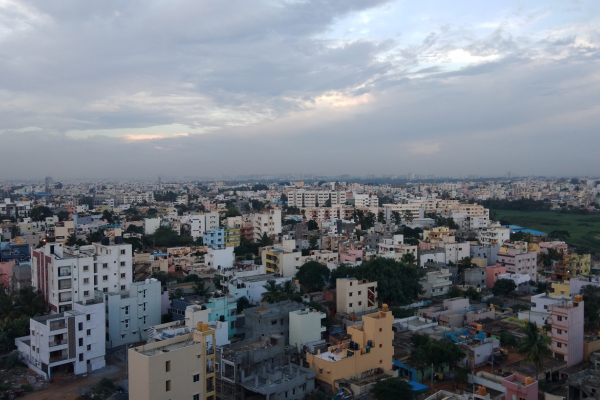
For decades, many professionals living in Meerut viewed relocating to Delhi, Noida or Ghaziabad as the only practical option for better employment opportunities. Lengthy and unpredictable daily commutes often outweighed the financial advantages of remaining in their hometown. That equation is now changing as a series of large-scale infrastructure projects significantly improve regional connectivity and strengthen Meerut's integration with the National Capital Region (NCR).
Rather than functioning solely as a satellite city, Meerut is gradually evolving into a residential market supported by improved mobility, planned urban expansion and growing economic activity. Together, these developments are reshaping housing demand and encouraging developers to expand their presence in the city.
Namo Bharat is redefining regional connectivity
The fully operational 82-km Delhi–Ghaziabad–Meerut Namo Bharat corridor has become one of the most significant infrastructure developments influencing Meerut's residential market. Connecting 23 stations across the corridor, India's first semi-high-speed regional rail system has reduced travel time between Meerut and Delhi to less than one hour.
With more than 1.25 lakh commuters using the service every day, the corridor has established itself as a dependable mode of transport linking residential neighbourhoods with employment centres, educational institutions, healthcare facilities and commercial districts across the NCR. Faster and more predictable commuting is allowing residents to remain in Meerut while accessing opportunities across the wider region.
Transit-Oriented Development is reshaping urban planning
The impact of the Namo Bharat corridor extends beyond transport infrastructure. It is also influencing how the city is planned through Transit-Oriented Development (TOD), which promotes higher-density, mixed-use neighbourhoods around public transport stations.
Delhi's TOD policy encourages development within a radius of 500 to 800 metres from transit stations, while Uttar Pradesh has adopted a broader planning framework extending up to 1.5 kilometres around Regional Rapid Transit System (RRTS) stations and designated Special Development Areas.
These planning principles have already been incorporated into the Meerut and Ghaziabad Master Plans 2031. A proposed 295-hectare township near Meerut South is expected to become Uttar Pradesh's first large-scale TOD development, creating an integrated urban environment centred on public transport accessibility.
Expressways are expanding the city's growth corridors
Road infrastructure is complementing the benefits created by regional rail connectivity. The Delhi–Meerut Expressway has significantly reduced travel time to the capital while improving the reliability of road transport for commuters and businesses alike.
The under-development 594-km Ganga Expressway is expected to further strengthen connectivity with central Uttar Pradesh by improving passenger and freight movement. Together, these corridors are increasing the attractiveness of peripheral locations for residential, commercial and logistics development, extending Meerut's urban expansion beyond its traditional boundaries.
Industrial development is strengthening housing demand
Infrastructure-led growth is also being reinforced by new industrial investment, which remains one of the key drivers of long-term residential demand.
The proposed 1,250-acre Integrated Manufacturing and Logistics Cluster (IMLC) at Kharkhauda, being developed by the Uttar Pradesh Expressways Industrial Development Authority (UPEIDA), is expected to attract manufacturing, warehousing and logistics businesses while creating substantial employment opportunities across western Uttar Pradesh.
Modipuram is also strengthening its position as an industrial and logistics destination owing to its proximity to the Namo Bharat corridor, expressways and major freight routes. As employment centres expand, demand for owner-occupied housing, rental accommodation and supporting commercial infrastructure is expected to increase in surrounding areas.
Ring Road to improve intra-city mobility
While regional connectivity has improved considerably, the proposed Meerut Ring Road is expected to address movement within the city itself. The planned 34.28-km, 45-metre-wide corridor will connect Hapur Road, Delhi Road and the Delhi–Dehradun Bypass, improving access between residential neighbourhoods, industrial areas and commercial centres.
In addition to reducing traffic congestion, the Ring Road is expected to improve access to the Namo Bharat corridor and national highways while opening new land parcels for planned urban development. Better internal connectivity is likely to support more balanced expansion as the city continues to grow.
Infrastructure is redefining Meerut's residential market
The convergence of regional rail connectivity, expressways, transit-oriented planning, industrial investment and improved urban mobility is reshaping Meerut's position within the NCR. Rather than relying on a single infrastructure project, the city's transformation is being driven by multiple initiatives that collectively enhance accessibility, employment potential and urban liveability.
As these projects progress, residential demand is increasingly shifting towards locations with strong connectivity and planned infrastructure. This reflects a broader trend across India's emerging urban centres, where infrastructure investment is becoming a primary catalyst for organised residential development and long-term real estate growth.
Advertisement













 Facebook
 Whatsapp
