Advertisement






What really powers the cloud? Behind every Google search, A...
A lot of what defines a home isn’t visible at handover. I...
Private equity has played a significant role in shaping Indi...
Luxury real estate is one of the most talked-about segments ...
Airports play a much bigger role than just enabling travel -...
Wellness-focused design is expected to become a defining feature of Dubai's luxury residential market as developers increasingly incorporate health-oriented planning into new projects. According to the Global Wellness Institute (GWI), the next phase of the sector will see wellness transition from a premium differentiator to a standard component of residential development. Dubai-based luxury developer Keturah has endorsed the findings, calling for greater collaboration among developers, planners, architects and public health experts to advance wellness real estate. GWI projects the global wellness real estate market will exceed USD 1 trillion by 2029, while the UAE continues to rank among the world's fastest-growing wellness property markets.
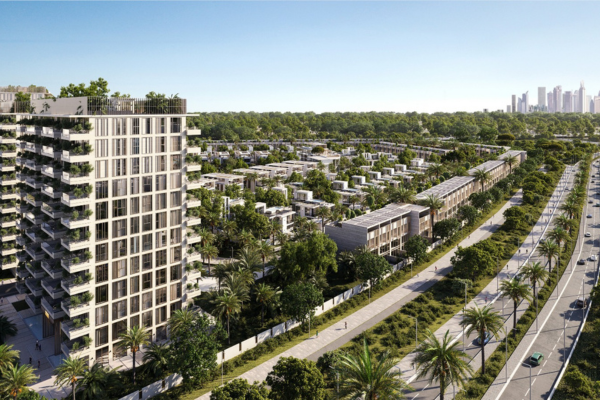
The Global Wellness Institute (GWI) has called on luxury residential developers to make wellness-focused design a standard feature of future housing projects, as global demand for healthier living environments continues to grow. The institute believes the next stage of the wellness real estate sector will be characterised by health-supportive design becoming an industry baseline rather than a premium offering.
According to GWI, greater collaboration between urban planners, architects, developers, public health professionals and wellness experts will be essential to creating residential communities that actively promote long-term health and wellbeing.
Dubai-based luxury developer Keturah has supported the institute's findings, stating that the evolving market presents an opportunity for the wider industry to work collectively in raising development standards and strengthening Dubai's position as a global wellness real estate destination.
Talal M. Al Gaddah, Chief Executive Officer and Founder of Keturah, said the sector's future depends on collaboration rather than competition. He noted that developers, planners, architects and public health professionals need to work together to create healthier residential environments, adding that Dubai already possesses both the government-led vision and market momentum to establish itself as a global leader in wellness real estate.
In its latest Initiative Trends report, GWI forecasts that the global wellness real estate market will exceed USD 1 trillion by 2029, reflecting the growing integration of evidence-based health principles into residential and mixed-use developments.
The institute had earlier identified the United Arab Emirates as one of the fastest-growing wellness real estate markets globally. According to GWI, wellness-focused developments now account for more than 12 per cent of all construction activity in the UAE, with the market expanding from USD 3.3 billion in 2017 to USD 14.6 billion in 2025.
GWI also estimates that more than 555,000 wellness-oriented residential units are currently planned across the UAE and Saudi Arabia. Projects cited by the institute include Keturah Reserve, a AED 5.7 billion bio-living community in Mohammed Bin Rashid City's District 7, and The Ritz-Carlton Residences at Keturah Resort near Dubai Creek, which is planned as the region's first wellness-certified waterfront residential community.
The report identifies four emerging trends that are expected to influence future residential design. These include primal architecture, which incorporates natural materials, softer lighting and intuitive spatial layouts to create calmer living environments; and neuroarchitecture, which applies neuroscience research to understand how lighting, acoustics and building design affect mood, cognitive performance and long-term health.
GWI also highlights the increasing use of natural construction materials to reduce exposure to microplastics by replacing synthetic finishes with alternatives such as stone, wool and solid wood. According to the institute, this reflects a broader recognition of the built environment's role in preventive healthcare.
Another trend identified in the report is the growing emphasis on creating healthier, walkable communities that support mobility, independence and healthy ageing. The institute notes that well-designed neighbourhoods can contribute to improved physical activity, social interaction and overall wellbeing throughout residents' lives.
Advertisement













 Facebook
 Whatsapp
