Advertisement






What really powers the cloud? Behind every Google search, A...
A lot of what defines a home isn’t visible at handover. I...
Private equity has played a significant role in shaping Indi...
Luxury real estate is one of the most talked-about segments ...
Airports play a much bigger role than just enabling travel -...
The National Highways Authority of India (NHAI) plans to award 54 highway and expressway projects covering 2,442 km during the current financial year, with an estimated capital cost of INR 1.80 lakh crore. The proposed projects are spread across 13 states and will be executed under EPC, HAM and BOT models. The planned project pipeline is smaller than the previous financial year's target, reflecting a more selective approach. NHAI continues to play a major role in India's national highway development programme, contributing nearly half of the country's highway construction under the Ministry of Road Transport and Highways.
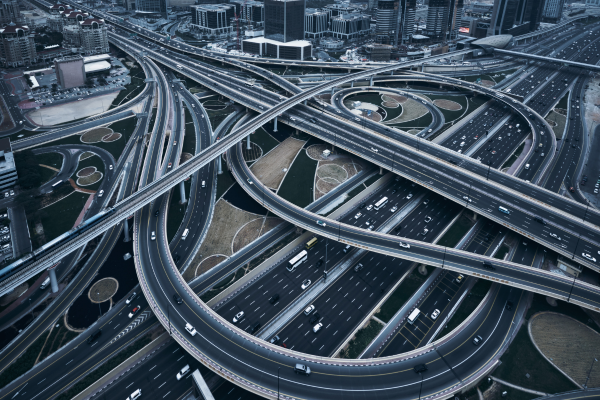
The National Highways Authority of India (NHAI) is planning to award 54 highway and expressway projects covering a total length of 2,442 km during the current financial year. According to an official document, these projects involve an estimated capital investment of around INR 1.80 lakh crore.
The planned project pipeline is lower than the previous financial year's identified list, when NHAI had planned to award 124 highway projects covering 6,376 km with an estimated capital cost of INR 3,45,466 crore. The reduced number of projects indicates a comparatively smaller award programme for the current year.
The identified projects are spread across Andhra Pradesh, Bihar, Delhi, Gujarat, Jharkhand, Karnataka, Kerala, Madhya Pradesh, Maharashtra, Odisha, Punjab, Tamil Nadu and Telangana. These projects are expected to support the expansion and improvement of the national highway network across multiple regions.
As per the tentative project list, 26 highway projects are proposed to be awarded under the Engineering, Procurement and Construction (EPC) model. Another 21 projects are expected to be awarded through the Hybrid Annuity Model (HAM), while the remaining seven projects are planned under the Build-Operate-Transfer (BOT) model.
The EPC model involves the government funding the entire project, while the contractor is responsible for designing and constructing the road within the agreed timeline. Under the HAM model, the project cost is shared between the government and the private developer, reducing financial risk for private participants. In the BOT model, private concessionaires finance, construct, operate and maintain the highway for a fixed concession period before transferring it back to the government.
NHAI continues to account for nearly 45 per cent to 50 per cent of the total national highway construction undertaken under the Ministry of Road Transport and Highways (MoRTH). The remaining highway construction work is carried out by agencies such as the National Highways and Infrastructure Development Corporation (NHIDCL), the Border Roads Organisation (BRO) and various State Public Works Departments (PWDs).
Highway projects executed under the BOT model generally have concession periods ranging from 15 to 20 years, including maintenance responsibilities. Projects developed under the HAM model typically have a concession period of around 15 years, during which the concessionaire is responsible for maintaining the respective highway stretches.
Source PTI
Advertisement













 Facebook
 Whatsapp
