Advertisement






The Gulf conflict has disrupted global supply chains, pushed...
REITs have changed the way commercial real estate is owned a...

What does it take to preserve a real estate legacy while bui...
What really powers the cloud? Behind every Google search, A...
A lot of what defines a home isn’t visible at handover. I...
The Union Cabinet has approved a revised policy for awarding waterfront and associated land to port-dependent industries at major ports, replacing key provisions of the 2016 framework. The policy allows concession renewals of up to 30 years for eligible existing operators, creates a structured process for capacity expansion, and introduces a framework for government organisations to receive waterfront land without competitive bidding under specified conditions. It also includes provisions to address regulatory changes and unforeseen events, with the government expecting the reforms to improve cargo handling, strengthen supply chains and encourage fresh investment in port-led industrial development.
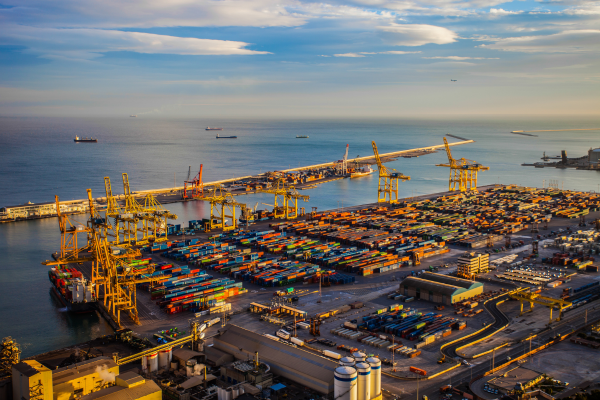
The Union Cabinet has approved a revised policy for the award of waterfront and associated land to Port Dependent Industries (PDIs) at major ports, introducing changes aimed at improving long-term investment certainty, supporting capacity expansion and addressing evolving business and regulatory requirements.
The revised policy updates the framework introduced in 2016 and allows existing captive users to develop additional berths, jetties, terminals or Single Buoy Moorings (SBMs) to meet enhanced captive requirements. Government entities will be eligible for concession periods of up to 30 years for such facilities, subject to the policy provisions.
Union Minister for Ports, Shipping and Waterways Sarbananda Sonowal said the revised policy demonstrates the government's focus on creating a predictable, transparent and investor-friendly framework for port-led industrial growth. He stated that the reforms balance investor confidence with public interest by providing long-term certainty to existing operators, supporting capacity expansion and creating a transparent system for future investments.
According to the government, the policy is expected to improve ease of doing business in the port sector, encourage capacity augmentation and provide greater certainty to investors without creating any financial burden for the government.
One of the key changes allows major port authorities to renew or extend concession agreements of existing Port Dependent Industries for up to 30 years without conducting a fresh tender process. The renewal will be based on either the prevailing market rate or the indexed revenue payable under the existing concession agreement, whichever is higher. The government said this approach is intended to safeguard port revenues while providing long-term operational certainty to concessionaires.
The revised framework also establishes a structured mechanism for capacity expansion by existing captive users. Under this process, major port authorities will carry out price discovery through competitive bidding, while giving the existing concessionaire the Right of First Refusal (RoFR) to match the highest bid. Participation will be limited to eligible Port Dependent Industries handling the same type of cargo, ensuring competitive pricing while maintaining operational continuity.
To prevent misuse of the expansion route as a means of extending concession periods, the policy specifies that any additional berth or terminal developed under an expansion proposal will have a concession period that ends along with the maximum permissible concession period of the existing facility.
For the first time, the policy also introduces a framework for awarding waterfront and associated land to eligible government organisations without competitive bidding, subject to land availability and prescribed safeguards. These concessions will be granted at the notified floor price.
Eligible organisations include Central and State Government departments, statutory authorities, autonomous bodies, Central and State Public Sector Undertakings (CPSUs and SPSUs), as well as government-controlled joint ventures operating in sectors such as fertilisers, food, petroleum, oil and gas, coal, steel and other sectors notified by the Ministry of Ports, Shipping and Waterways.
Recognising changing global trade patterns, the revised policy introduces provisions for Change in Law and Unforeseen Events. These provisions allow business plans and cargo profiles to be revised if regulatory changes or unforeseen circumstances affect the viability of projects.
The updated framework also permits captive facilities to change their cargo profile after the prescribed lock-in period. Where required because of a change in law, such changes can be made immediately, helping businesses maintain continuity in changing market conditions.
The government said the revised policy addresses gaps identified in the 2016 framework by providing greater long-term certainty for investors, enabling infrastructure expansion in line with industrial demand and introducing more operational flexibility for captive port facilities.
The reforms are expected to encourage fresh investment in port infrastructure, strengthen supply chains, reduce logistics-related risks for industries dependent on ports and generate employment through increased port-led industrial activity.
The policy will be implemented across all major ports in India. The government expects it to improve cargo throughput, optimise the utilisation of waterfront assets and create sustained revenue for ports without any financial implication for the Government of India.
Source PTI
Advertisement













 Facebook
 Whatsapp
