Advertisement






The Gulf conflict has disrupted global supply chains, pushed...
REITs have changed the way commercial real estate is owned a...

What does it take to preserve a real estate legacy while bui...
What really powers the cloud? Behind every Google search, A...
A lot of what defines a home isn’t visible at handover. I...
The Union Cabinet has approved the Pradhan Mantri Surya Sarovar Yojana (PM-SSY) with a total outlay of INR 5,070 crore to develop 5,000 MW of floating solar photovoltaic projects integrated with energy storage systems. The scheme aims to utilise reservoirs and inland water bodies for clean energy generation while reducing dependence on land-based solar projects. It will provide financial assistance for project development and feasibility studies, strengthen grid reliability, support domestic manufacturing, generate employment, and contribute to India's renewable energy and climate goals over the coming years.
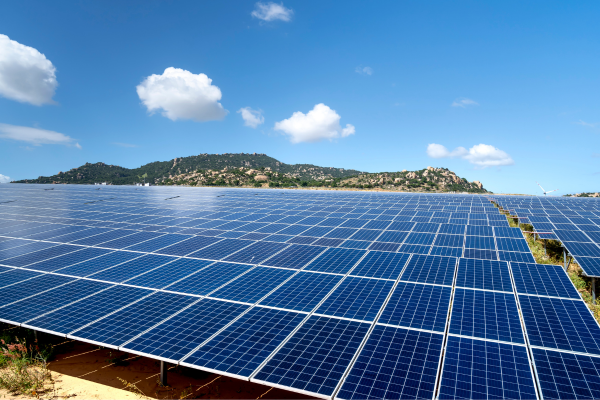
The Union Cabinet has approved the Pradhan Mantri Surya Sarovar Yojana (PM-SSY), a new scheme with a total outlay of INR 5,070 crore for the development of 5,000 MW of floating solar photovoltaic (FSPV) projects integrated with energy storage systems (ESS). The decision is aimed at expanding India's renewable energy capacity by making use of reservoirs and other inland water bodies for solar power generation while reducing pressure on land resources.
Under the scheme, floating solar projects with co-located energy storage systems will be developed with a minimum storage capacity of two hours, translating to 10,000 MWh of energy storage. The projects are scheduled to be sanctioned between FY 2026-27 and FY 2030-31, while financial assistance under the scheme will continue to be disbursed until FY 2032-33.
The Cabinet's approval follows a recent assessment by the National Institute of Solar Energy (NISE), which estimated that India has a floating solar potential of around 102.18 GWp across reservoirs and other suitable inland water bodies. The assessment highlighted the significant opportunity to expand renewable energy generation without increasing pressure on scarce land resources.
The government will provide Central Financial Assistance (CFA) of INR 1 crore per MW for eligible floating solar photovoltaic projects after they are successfully commissioned. In addition, up to INR 50 lakh per project will be provided for feasibility studies, including bathymetry and hydrography assessments, environmental studies and other preparatory work required to reduce project risks before implementation.
The scheme will be available to all States and Union Territories. It is expected to increase India's floating solar capacity to 5,700 MW, compared with the current installed capacity of around 700 MW, marking a significant expansion of this segment of the renewable energy sector.
The government said the projects would make productive use of existing reservoirs, lakes and industrial ponds while avoiding competition for land that could otherwise be used for agriculture, housing or industrial development. The inclusion of energy storage systems is also expected to improve grid stability by helping balance renewable power generation and electricity demand.
According to the government, the scheme is expected to reduce nearly 10 million tonnes of carbon dioxide emissions every year. It is also projected to generate approximately 16,000 to 17,000 full-time equivalent employment opportunities across project development, manufacturing, installation, operations and maintenance.
The initiative is also expected to support domestic manufacturing by encouraging production across the floating solar ecosystem, including flotation systems, photovoltaic cells, solar modules and energy storage systems. The government believes this will strengthen the domestic renewable energy supply chain and support the country's goal of building greater manufacturing self-reliance.
Floating solar has been identified as an important part of India's clean energy strategy as it enables electricity generation on existing water bodies while reducing evaporation losses and improving the efficiency of solar panels through the natural cooling effect of water. In recent years, both central and state agencies have been expanding pilot and commercial-scale floating solar projects to diversify the country's renewable energy portfolio.
Source PTI
Advertisement













 Facebook
 Whatsapp
