Advertisement






The Gulf conflict has disrupted global supply chains, pushed...
REITs have changed the way commercial real estate is owned a...
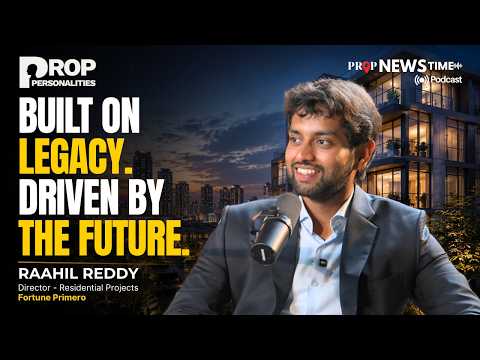
What does it take to preserve a real estate legacy while bui...
What really powers the cloud? Behind every Google search, A...
A lot of what defines a home isn’t visible at handover. I...
India’s hospitality market is seeing greater interest in experiences that extend beyond conventional luxury, with travellers increasingly seeking privacy, local identity, cultural connections and closer engagement with nature. Harkaran Singh Grewal (Gary), Co-Founder and Director of EuMo DesignIntelligence, and its spatial design practice EuMo Spatial, advocates an environment-first approach that integrates natural surroundings into hospitality projects rather than removing them to accommodate development. The firm also works with collapsible infrastructure, allowing resorts and associated elements to be dismantled, transported and reassembled in different locations. EuMo’s approach covers architecture, interiors, individual design elements and environmental evaluation, while its work in luxury tenting has sought to reduce heavy construction. Industry growth, however, will also depend on government infrastructure, civic environments and the wider destination experience beyond individual resorts.

India’s hospitality sector is witnessing a shift in traveller preferences, with demand increasingly extending beyond conventional luxury towards experiences that connect guests with local identity, culture and nature. Harkaran Singh Grewal (Gary), Co-Founder and Director of EuMo DesignIntelligence, and its spatial design practice EuMo Spatial, works on hospitality projects based on an environment-first design approach that seeks to integrate natural surroundings rather than remove them when they conflict with development plans.
The approach is rooted in the view that design can influence how guests experience a destination. EuMo uses behavioural science as part of its design methodology to understand human behaviour and reduce distractions, with the objective of creating environments where the design and surrounding setting contribute to the overall experience.
Privacy has also become an important consideration in hospitality design, particularly following the COVID-19 pandemic. Grewal identifies a growing preference for decentralised resorts over conventional high-rise hotels with rows of rooms, as independent accommodation formats can provide greater separation and individual experiences while naturally facilitating social distancing and privacy.
EuMo differentiates its approach from conventional architecture and interior design practices through what it describes as an environment-first process. Its capabilities extend from architecture and interiors to individual design elements and environmental evaluation. The design process begins with an assessment of the client’s land and its surrounding environment to establish what is best suited to the particular site, rather than imposing a predetermined architectural style.
The firm’s work also includes luxury tenting, which uses high-end tented structures as an alternative to heavy concrete construction in hospitality projects. According to EuMo, the model allows structures to integrate more closely with natural surroundings and has contributed to the development of a distinct hospitality segment in India.
Sustainability forms another component of the approach, with EuMo working on collapsible infrastructure designed to reduce permanent intervention on a site. Entire resorts, including accommodation, guest areas, restaurants and lounges, can be dismantled under this model. Furniture can also be custom-designed to collapse and be packed into boxes for storage or transportation.
The portability of such infrastructure allows facilities used in one location, such as Ladakh, to potentially be dismantled and reassembled in another, such as Nagaland. In seasonal destinations such as Andhra Pradesh, structures can be stored after the operating season, allowing the site to remain free from permanent infrastructure.
Grewal maintains that India’s hospitality design and thinking are comparable with leading international destinations, while the country’s geographical and cultural diversity provides a wide range of settings for experiential projects. However, competing with global destinations over the next decade will require improvements beyond individual hospitality developments.
Government-supported infrastructure and the quality of external civic environments will be important to the wider destination experience. Guests typically spend time outside resorts as well, meaning poorly maintained or overcrowded surroundings can affect the overall experience created within a property. The quality of roads, public infrastructure, civic maintenance and the surrounding environment therefore remains relevant to the development of India’s experiential hospitality market.
EuMo’s approach positions hospitality design as a combination of architecture, environment and human behaviour, with the wider destination forming an important part of the experience delivered by a project.
Advertisement













 Facebook
 Whatsapp
