Advertisement






The Gulf conflict has disrupted global supply chains, pushed...
REITs have changed the way commercial real estate is owned a...

What does it take to preserve a real estate legacy while bui...
What really powers the cloud? Behind every Google search, A...
A lot of what defines a home isn’t visible at handover. I...
Pune’s worsening traffic congestion is being linked to rapid urban expansion, rising vehicle ownership and infrastructure that has not kept pace with growth. The city’s built-up area has expanded by about 330% since 1990, while around 1,300 new vehicles are added each day. Traffic authorities have identified 65 congested junctions, with several operating beyond their capacity. Pune’s public transport network has also struggled to match the city’s expansion, while multiple committees and mobility plans have produced limited relief. Authorities are now examining measures including flyovers, junction improvements and efforts to raise average traffic speeds.
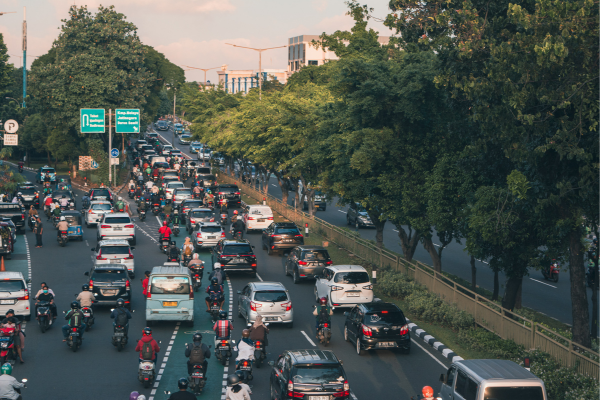
Pune’s traffic crisis is increasingly being attributed to a mismatch between rapid urban growth and the pace of infrastructure development, with expansion of the city’s built-up area, rising vehicle ownership and limited public transport capacity putting sustained pressure on its road network. The city’s built-up area has grown by about 330% since 1990, while approximately 1,300 vehicles are added to Pune’s roads every day, according to data cited in recent assessments of the city’s mobility situation.
The expansion has significantly increased travel demand across Pune and its surrounding areas. Traffic authorities have identified 65 junctions facing severe congestion, with several key intersections operating beyond their designed capacity. The growing number of vehicles has placed additional pressure on arterial roads, while bottlenecks at major junctions continue to affect movement across the city.
Pune’s vehicle growth has also outpaced the development of public transport infrastructure. The city has expanded towards peripheral areas and new residential and commercial districts, increasing the distance between employment centres and housing. This has contributed to greater dependence on private vehicles, adding to congestion on existing road corridors.
The city’s planning response has involved several committees, mobility plans and proposed infrastructure measures over the years. However, the continuing congestion indicates that implementation has not kept pace with the scale and speed of urban expansion. Different agencies responsible for roads, traffic management, public transport and urban development have also had to coordinate their responses to a problem extending across municipal and metropolitan boundaries.
Traffic police and civic authorities are now examining targeted measures at some of the worst-affected junctions. A proposal under consideration involves identifying around 30 junctions for interventions, including the possible construction of flyovers. Authorities are also seeking to improve traffic flow and have set a target of raising Pune’s average vehicle speed to about 30 kmph.
The proposed measures form part of a broader effort to address bottlenecks rather than relying only on road widening. Junction redesign, grade separation and improvements to traffic management are being considered alongside measures aimed at improving the efficiency of existing roads. The identification of specific congestion points is intended to allow interventions to be prioritised according to traffic volumes and operational requirements.
The traffic situation also highlights the pressure created by Pune’s continued economic and residential expansion. The city has emerged as a major employment centre, attracting businesses, professionals and new residents, while development has spread well beyond its traditional urban core. Infrastructure expansion, however, has faced difficulties in keeping pace with this growth.
Public transport remains a key part of the mobility challenge. Authorities have recognised that increasing road capacity alone cannot address sustained growth in private vehicle use. Improving public transport connectivity and ensuring that new growth areas are adequately served are therefore important components of the wider mobility response.
With congestion affecting an increasing number of junctions and daily travel, Pune’s immediate challenge is to implement infrastructure and mobility measures while addressing longer-term planning gaps. The authorities’ focus on critical junctions, average speeds and public transport capacity indicates an attempt to address both existing bottlenecks and the infrastructure deficit created by decades of rapid urban expansion.
Advertisement













 Facebook
 Whatsapp
