Advertisement






The Gulf conflict has disrupted global supply chains, pushed...
REITs have changed the way commercial real estate is owned a...

What does it take to preserve a real estate legacy while bui...
What really powers the cloud? Behind every Google search, A...
A lot of what defines a home isn’t visible at handover. I...
The National Highways Authority of India's rollout of Multi-Lane Free Flow (MLFF) barrier-less tolling has led to a marked decline in electronic notices issued for unpaid tolls, as road users increasingly maintain active, sufficiently funded FASTags to avoid penalties. The system, first launched at Chorayasi toll plaza on NH-48 in Gujarat on 1 May 2026, has since been extended to plazas including Mundka Bakkarwala, Gharaunda, Daulatpura and Shahjahanpur, using ANPR camera technology to deduct tolls without requiring vehicles to stop.
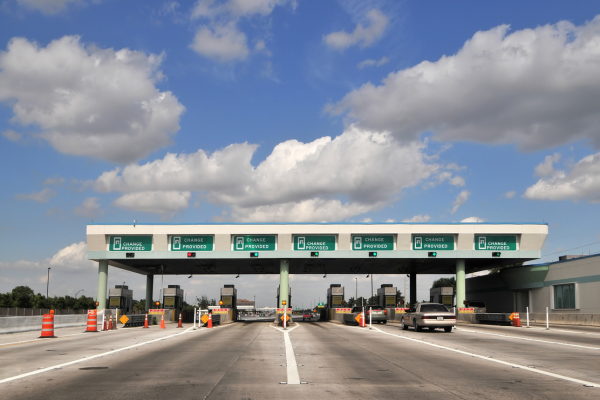
Road users on National Highway stretches equipped with barrier-less tolling are increasingly falling in line with payment requirements, with the National Highways Authority of India (NHAI) reporting a decline in the number of electronic notices, or e-notices, issued to motorists for unpaid tolls since the rollout of the Multi-Lane Free Flow (MLFF) system began earlier this year. The trend suggests that commuters are adapting to the new tolling framework by ensuring their FASTags remain active and adequately funded.
The MLFF system dispenses with physical toll barriers altogether, relying instead on Automatic Number Plate Recognition (ANPR) technology combined with the existing FASTag-based Electronic Toll Collection framework. High-performance sensors and cameras mounted on overhead gantries identify vehicles as they pass through toll points at highway speed and automatically deduct the applicable toll from the linked FASTag account, eliminating the need for vehicles to stop or slow down. The Union Minister of Road Transport and Highways, Shri Nitin Gadkari, announced the launch of the country's first such installation at the Chorayasi toll plaza on the Surat-Bharuch section of NH-48 in Gujarat on 1 May 2026, with around 41,500 vehicles passing through the location on the first day of implementation.
Since then, the NHAI has extended MLFF tolling to several other locations, including the Mundka Bakkarwala toll plaza on the Urban Extension Road-II in Delhi, the Gharaunda toll plaza on the Panipat-Jalandhar section of NH-44, and, more recently, the Daulatpura and Shahjahanpur toll plazas on the Delhi-Jaipur section of NH-48, making the entire corridor barrier-free across all three of its plazas. The authority has stated that these implementations have led to substantial improvements in traffic flow, eliminating waiting times at toll points while also contributing to fuel savings and reduced vehicular emissions along the affected stretches.
Under the system, an e-notice is issued whenever a toll payment cannot be successfully processed through FASTag, including instances involving an invalid or inactive tag, or insufficient account balance. Motorists served such notices are required to clear the applicable toll within 72 hours, failing which the amount payable doubles for the relevant vehicle category. Road users can check and settle e-notices through the Parivahan website by entering their vehicle registration number and authenticating via a one-time password sent to the mobile number registered in the VAHAN database, or alternatively through the Rajmargyatra mobile application. Motorists who believe a notice has been issued in error may raise a grievance through the National Informatics Centre portal within the same 72-hour window.
To support enforcement on MLFF stretches, the NHAI has deployed Route Patrol Vehicles and local enforcement agencies to monitor for violations such as wrong-side driving, number plate tampering and toll evasion, aimed at safeguarding revenue while preserving the convenience the barrier-less system is designed to offer. The authority has also flagged that continued non-payment of e-notices could result in the blacklisting of a vehicle's FASTag and restrictions on other vehicle-related services accessible through the VAHAN platform, and has recommended that vehicle owners ensure their vehicles carry High-Security Registration Plates to enable accurate identification by ANPR-enabled cameras.
The initiative forms part of the government's broader push to modernise India's national highway toll infrastructure, with the country currently operating close to 855 toll plazas, of which around 675 are government-funded and the remainder managed by private concessionaires. Officials have indicated that the pace and scale of further MLFF rollouts across the network will be determined based on the performance, efficiency and user response observed at plazas where the system has already been implemented, with additional locations expected to be transitioned in phases in the coming months.
Advertisement













 Facebook
 Whatsapp
