Advertisement






The Gulf conflict has disrupted global supply chains, pushed...
REITs have changed the way commercial real estate is owned a...

What does it take to preserve a real estate legacy while bui...
What really powers the cloud? Behind every Google search, A...
A lot of what defines a home isn’t visible at handover. I...
India’s security infrastructure is increasingly relying on connected surveillance systems that combine cameras with power backup, communications, connectivity, monitoring and maintenance. Brihaspathi Technologies has worked on surveillance projects for the Border Security Force (BSF) across sensitive border locations as well as for the Visakhapatnam City Police Commissionerate. The BSF deployment covered Berhampore, Malda and Jaisalmer and involved IP-based CCTV systems supported by power and communication infrastructure. The Visakhapatnam project focused on CCTV coverage at strategic locations within the Steel Plant Police Station jurisdiction under the RINL-CSR initiative.
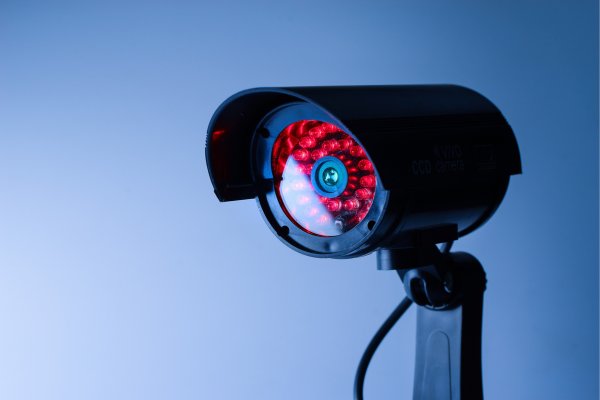
India’s surveillance requirements are becoming more dependent on systems that can operate across different environments, rather than on standalone camera installations. This is particularly relevant for government and law-enforcement agencies working across remote border areas, industrial zones and urban locations.
Brihaspathi Technologies has undertaken surveillance and security projects in these different operating conditions, including a deployment for the Border Security Force (BSF) across sensitive international border locations and a CCTV surveillance project for the Visakhapatnam City Police Commissionerate.
The two projects involved different requirements. The BSF deployment had to address challenges related to remote terrain, electricity availability and connectivity, while the Visakhapatnam project focused on establishing CCTV coverage at strategically identified locations within an industrial-policing jurisdiction.
The BSF operates across India's international borders, where surveillance systems often have to function in areas with difficult terrain and limited infrastructure.
Brihaspathi Technologies' published case study covers deployments at Berhampore, Malda and Jaisalmer, including areas along the Bangladesh and Pakistan borders. The project used IP-based CCTV systems and supporting communication infrastructure to enable real-time surveillance.
The company's more recent corporate material states that 674 surveillance cameras were installed across sensitive international border locations as part of the BSF project. The deployment included PTZ and static bullet cameras, with the published case study detailing different camera configurations across Berhampore, Malda and Jaisalmer.
The project also had to deal with practical infrastructure limitations. Brihaspathi's case study notes that some locations had limited access to electricity during the daytime, while remote terrain made civil work, pole installation and conventional cable laying difficult. Certain sites also lacked the infrastructure needed for wired connectivity, while maintaining communication across river bodies added another challenge.
To address these conditions, the surveillance deployment incorporated infrastructure beyond the cameras. The case study records the use of inverter-based backup systems, solar-powered solutions and wireless communication infrastructure at locations where conventional connectivity was difficult to establish.
This makes the BSF project an example of how surveillance networks in remote areas need to be planned around power availability, communication links and physical access, in addition to camera placement.
Brihaspathi Technologies has also worked on a surveillance project for the Visakhapatnam City Police Commissionerate, where the operating environment was different from a remote border location.
According to the company's project records, Brihaspathi undertook the supply, installation and maintenance of CCTV surveillance cameras at strategic locations within the limits of the Steel Plant Police Station under the RINL-CSR initiative. The project was intended to strengthen security infrastructure and provide visual coverage across critical areas within the jurisdiction.
The company's project material identifies the Visakhapatnam initiative as a 2020 project. Its earlier project documentation also describes the CCTV system as part of the security infrastructure developed in association with Rashtriya Ispat Nigam Ltd and the Visakhapatnam Police Department at the Vizag Steel Plant.
Unlike border surveillance, an industrial policing environment requires camera locations to be determined according to the area's movement patterns, critical points and operational requirements. The project therefore reflects a location-specific approach to CCTV deployment rather than using the same model across different environments.
The two projects show why surveillance systems increasingly involve more than the installation of cameras. At remote border locations, the supporting infrastructure has to address electricity availability, communication, terrain and accessibility. At the Visakhapatnam Steel Plant area, the focus was on identifying strategic locations and creating visual coverage across the designated police jurisdiction.
The difference between the two projects also highlights the importance of system planning. Cameras are the most visible component of a surveillance network, but their usefulness depends on whether video can be transmitted reliably, systems can remain operational during power interruptions and the infrastructure can be maintained over time.
Brihaspathi's current portfolio reflects this wider approach. The company lists integrated command and control centre engineering, IT and network infrastructure, AI and video analytics, platform integration, programme management and operations and maintenance among its technology capabilities.
Brihaspathi Technologies, founded in 2006, currently describes its work as covering intelligent surveillance, AI-driven analytics, smart mobility and secure digital infrastructure for governments, enterprises and smart cities. The company says it has operations in India, Dubai and the US.
Its government project portfolio includes surveillance and technology assignments in addition to the BSF and Visakhapatnam projects. The company lists work for organisations and government bodies including the Telangana High Court, DRDO, Atomic Minerals Directorate, Raj Bhavan Hyderabad and election-related surveillance projects.
The company's more recent government work also includes surveillance systems for elections. Its website states that 2,132 cameras were deployed for the Andhra Pradesh Graduate Constituency elections across Srikakulam, Vizianagaram, Visakhapatnam, Kakinada, Guntur and Krishna to support real-time monitoring.
Brihaspathi has also highlighted AI-based video analytics and integrated surveillance as part of its current technology offering. Its solutions include video management system integration, AI-based analytics and command and control centre infrastructure.
Rajasekhar Papolu is the Chairman and Managing Director of Brihaspathi Technologies. The company's profile states that he has a background in computer science engineering and has worked across areas including artificial intelligence, software development, security systems and digital transformation.
The company's board information identifies Papolu as its Managing Director and promoter, with more than 13 years of experience in the information technology industry. It states that his work has included digital transformation, e-governance, enterprise solutions and emerging technologies.
Under this broader technology focus, surveillance forms one part of the company's work across government and enterprise infrastructure. Its current solutions also cover IoT, AI-based analytics, secure networks and integrated monitoring systems.
The BSF and Visakhapatnam projects show how surveillance requirements can vary substantially depending on geography and the purpose of the system. For the BSF, the deployment covered Berhampore, Malda and Jaisalmer and involved IP-based CCTV cameras along with supporting power and communication infrastructure. The challenges included remote locations, limited electricity availability, difficult terrain and connectivity constraints.
For Visakhapatnam City Police, the project centred on CCTV installation and maintenance at strategic locations within the Steel Plant Police Station jurisdiction under the RINL-CSR initiative.
These projects point to a wider shift in the way surveillance infrastructure is planned. The focus is not limited to the number of cameras installed but also includes their location, connectivity, power supply, monitoring arrangements and long-term maintenance.
Source PTI
Advertisement













 Facebook
 Whatsapp
