Advertisement






The Gulf conflict has disrupted global supply chains, pushed...
REITs have changed the way commercial real estate is owned a...

What does it take to preserve a real estate legacy while bui...
What really powers the cloud? Behind every Google search, A...
A lot of what defines a home isn’t visible at handover. I...
The Supreme Court has asked all states and Union territories to consider a representation seeking policies governing the regularisation and demolition of long-standing unauthorised constructions. The direction came while the court declined to entertain a public interest litigation seeking a uniform framework to protect unauthorised dwelling units occupied by economically vulnerable people. A bench headed by Chief Justice Surya Kant said conditions and ground realities vary across states, making a single framework impractical. The court instead said the issues raised could be considered by competent authorities while framing new policies or reviewing existing ones. The petition highlighted differing approaches to unauthorised colonies, including cases involving demolition without adequate notice or rehabilitation, while the court reiterated existing safeguards governing demolition proceedings.
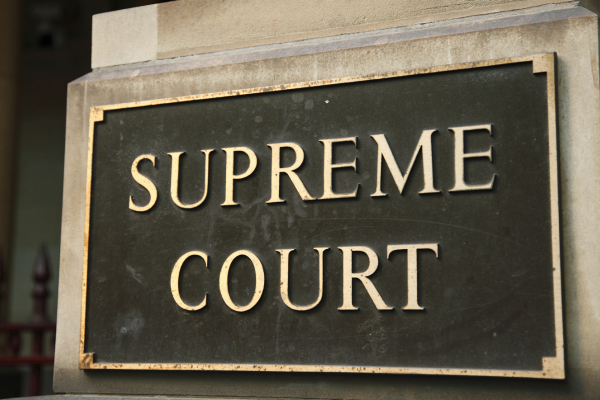
The Supreme Court on Wednesday asked all states and Union territories to consider framing or reviewing policies governing the regularisation and demolition of long-standing unauthorised constructions, while declining to direct the Centre and states to adopt a uniform framework for such structures.
A bench comprising Chief Justice Surya Kant and Justices Joymalya Bagchi and V Mohana was hearing a public interest litigation filed by the Centre for Law and Good Governance. The petition had sought directions for a policy that could protect unauthorised dwelling units occupied by economically weaker sections. The court held that the matter largely falls within the policy domain of state governments and local authorities.
The bench said a single policy framework could not readily be applied across the country because circumstances and ground realities differ between states. It therefore declined to prescribe a uniform policy but said states and Union territories could examine the issues raised in the petition while formulating new policies or revisiting their existing frameworks.
The petition pointed to regularisation and settlement schemes introduced in Andhra Pradesh, Telangana and Delhi. It alleged that unauthorised colonies and structures in several instances had been demolished suddenly, sometimes without sufficient notice and without rehabilitation or welfare measures for affected families.
The petitioner argued that demolition was an extreme and irreversible measure and should therefore be governed by a policy balancing enforcement of planning and land-use regulations with constitutional protections relating to shelter, livelihood and dignity under Article 21. The counsel also submitted that state governments had adopted inconsistent approaches towards unauthorised construction, with some demolitions allegedly being carried out in a hurried or unsystematic manner.
The plea further highlighted cases where residents were allegedly told that unauthorised structures could eventually be regularised, while municipal and property taxes were collected and civic services such as electricity were provided. It argued that residents could subsequently face demolition after several decades without an assessment of whether alternative accommodation was available.
The counsel urged the court to consider the issue from a human-rights perspective, particularly where families had remained in possession of properties or colonies for 40 to 50 years. The petition also referred to differing judicial observations on the issue, including an earlier three-judge bench ruling recognising the right to shelter as part of the right to live with human dignity and a July 14 judgment stating that the long-standing existence of a colony alone does not establish a legal right or cure an illegality.
The Chief Justice noted that the Supreme Court had already prescribed safeguards against illegal and unauthorised demolitions. He reiterated that the court's jurisprudence requires due process before dispossessing a person in settled possession and that even a rank unauthorised occupant should ordinarily receive at least 15 days' notice before demolition.
Justice Bagchi said the issues would need to be assessed on a case-by-case basis and that the court-appointed committee proposed in the petition could not replace powers vested in state governments and municipalities. The bench also noted that unauthorised construction does not invariably involve economically vulnerable residents, as some structures may have been built for commercial or profit-making purposes.
The court observed that cases involving economically marginalised groups occupying large tracts of land and requiring alternative accommodation called for policy decisions by the competent authorities rather than a blanket judicial framework.
Source - PTI
Advertisement













 Facebook
 Whatsapp
