Advertisement






The Gulf conflict has disrupted global supply chains, pushed...
REITs have changed the way commercial real estate is owned a...

What does it take to preserve a real estate legacy while bui...
What really powers the cloud? Behind every Google search, A...
A lot of what defines a home isn’t visible at handover. I...
A Bailey bridge over the Tamak drain in Uttarakhand’s Chamoli district was washed away by floodwaters on Monday evening, disrupting road connectivity between Jyotirmath and the Niti Valley and cutting off around a dozen villages, including Jumma and Niti, as well as the border area. The bridge formed part of the Malari-Niti National Highway, which connects Jyotirmath with the border region. A Border Roads Organisation (BRO) driver, identified as Pankaj and a resident of Pithoragarh district, went missing after being swept away when the bridge collapsed while he was observing the rising floodwaters. A vehicle was also swept away. Relief and rescue teams from the district administration, SDRF and NDRF were deployed. The BRO has begun alternative arrangements, with traffic expected to resume within a day or two.
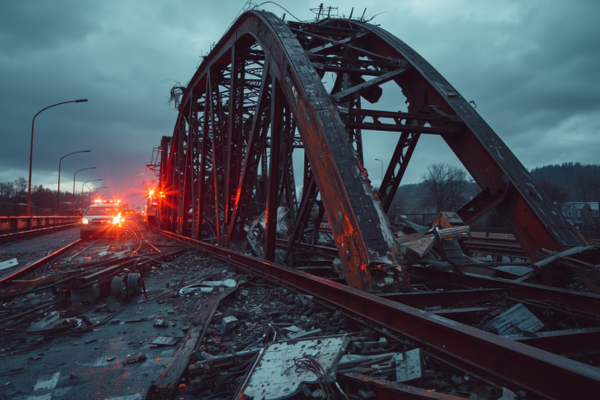
A Bailey bridge over the Tamak drain in Uttarakhand’s Niti Valley was washed away by floodwaters on Monday evening, cutting road connectivity to around a dozen villages and the border area in Chamoli district. The incident occurred following a sudden rise in the water level of the Tamak drain.
The bridge is located on the Malari-Niti National Highway, which connects Jyotirmath, formerly known as Joshimath, with the border area. The collapse disrupted access to villages including Jumma and Niti, while vehicular movement from Malari was suspended as a precautionary measure.
A Border Roads Organisation (BRO) driver, identified as Pankaj and a resident of Pithoragarh district, went missing after being swept away by the strong current. According to Jyotirmath Tehsildar Mahendra Arya, the driver was observing the floodwaters when the bridge suddenly collapsed. A vehicle was also swept away in the flooded drain.
Following the incident, relief and rescue teams from the district administration, State Disaster Response Force (SDRF) and National Disaster Response Force (NDRF) were dispatched to the affected area. Administrative teams were also assessing the situation and the extent of the disruption.
The BRO has started work on alternative arrangements to restore connectivity. Officials said traffic was expected to resume within a day or two, subject to the conditions at the site.
The disruption comes against a recurring backdrop of flood and landslide-related damage along the Joshimath-Niti road. The Tamak drain has caused repeated disruptions over the past several years, while flood debris has also repeatedly blocked the nearby Dhauli Ganga.
Uttarakhand Chief Minister Pushkar Singh Dhami directed officials to undertake relief and rescue operations and take precautionary measures in lower-lying areas following the flooding. He also instructed authorities to ensure that supplies of ration, food, medicines and other essential commodities to surrounding villages were not affected by the bridge collapse.
Authorities issued further precautions amid the possibility of increased water flow into the Alaknanda River, advising residents along riverbanks and in low-lying areas to remain vigilant. Police also made announcements asking people to stay away from rivers and drains.
The Flash Flood Guidance Cell of the Meteorological Department’s Hydrometeorological Division issued a flash-flood risk bulletin for Uttarakhand following the incident. The bulletin warned of the possibility of mild to moderate flash floods in catchment and surrounding areas across 12 districts, including Chamoli, Pithoragarh, Dehradun, Rudraprayag, Uttarkashi and Pauri Garhwal.
State Disaster Management Secretary Vinod Kumar Suman said the state’s disaster management system remained on full alert based on advance warnings from the Meteorological Department and other technical agencies. Residents and tourists were advised to avoid unnecessary travel during adverse weather and stay away from rivers, streams, ravines and rainwater channels.
Source - PTI
Advertisement













 Facebook
 Whatsapp
