Advertisement






The Gulf conflict has disrupted global supply chains, pushed...
REITs have changed the way commercial real estate is owned a...

What does it take to preserve a real estate legacy while bui...
What really powers the cloud? Behind every Google search, A...
A lot of what defines a home isn’t visible at handover. I...
Australia is struggling to build homes fast enough to meet its target of 1.2 million new dwellings by 2029, with construction activity currently below the required pace. Official data shows completed home construction is 27% below the quarterly rate needed to achieve the target, while industry forecasts suggest the country could fall short by about 15%. Rising construction costs, worker shortages, longer project timelines, higher financing costs and stalled apartment projects are putting further pressure on supply. Builders in major cities are also facing competition for labour from large infrastructure projects, including preparations for the 2032 Brisbane Olympics.
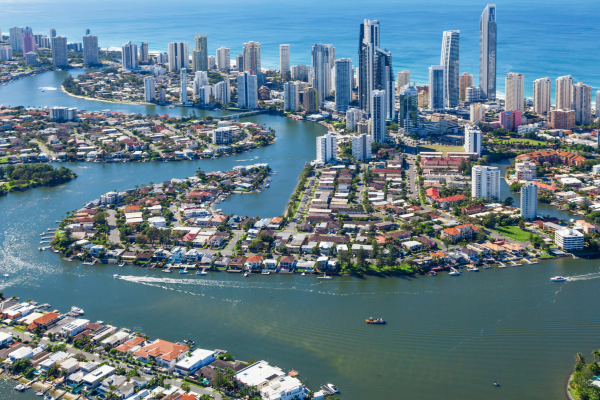
Australia’s housing construction sector is facing growing pressure as builders struggle with labour shortages, higher material costs and longer project timelines, raising concerns over the country’s ability to deliver 1.2 million new homes by 2029.
In Brisbane, construction manager Jay Perham of Axiom Construction has had to carry out concrete pours at night because workers were unavailable during the day. He said several of the company’s recent concrete pours had been completed under head torches and lamps, creating concerns over visibility and quality during the work.
Brisbane is already facing additional demand for construction workers as the city prepares to host the 2032 Olympic Games. Around A$7 billion, or about USD 4.93 billion, of Olympic-related construction is expected to take place in the city, adding to existing pressure on the workforce.
The shortage of labour is occurring as Australia tries to increase housing supply through the National Housing Accord. The five-year programme, agreed upon by the federal and state governments along with the industry, aims to deliver 1.2 million new homes by 2029. The plan includes federal funding as well as state-level measures to speed up approvals, rezoning and land releases.
However, official figures show that completed housing construction is currently 27% below the average quarterly pace of 60,000 dwellings required to stay on track for the target.
Hal Pawson, emeritus professor of housing at the University of New South Wales, said annual housing construction remained insufficient to meet the 1.2 million-home goal. He also pointed to the construction industry's limited capacity, particularly in markets such as Sydney.
Sydney, Australia's largest city, continues to face severe housing affordability pressures, while builders are dealing with rising costs and a shortage of workers.
The office of Australian housing minister Clare O'Neil acknowledged the difficulties surrounding what it described as an ambitious target. The government, however, maintained that the response should be to continue efforts to increase construction rather than reduce the target.
Apartment construction is proving to be one of the weakest parts of Australia's housing pipeline. Almost 70% of apartments approved across the country since 2020 have not yet moved into construction, according to Urbis data shared with Reuters.
The situation is particularly pronounced on the Gold Coast in Queensland, where 83% of approved apartment projects had yet to begin construction. The corresponding figures were 64% in Sydney and 62% in Melbourne.
Mark Dawson, Urbis's housing sector lead, said apartment project feasibility had been affected by higher construction costs, labour availability and financing expenses.
The delay in apartment construction is also reflected in the time required to complete projects. According to Master Builders Australia, completing a new apartment now takes around 33 months, compared with 21 months a decade ago. Construction of a house takes about 11.5 months, compared with 8.6 months during the same period.
Official data showed that new dwelling commencements declined 11.2% in the first quarter of 2026 from the previous quarter. Annual growth also slowed sharply to 0.2%, compared with 26.1% previously.
Apartment commencements recorded the largest decline, falling 20.7% during the quarter, while house construction declined 3.5%.
The Housing Industry Association expects Australia to miss its 2029 housing target by around 15%, highlighting the gap between government ambitions and the industry's current construction capacity.
Builders are also dealing with substantial increases in material prices. In Brisbane, Perham said the cost of concrete had increased by nearly 150% over the past six years. Plasterboard prices had risen 46%, while pine frames had become about 35% more expensive.
In Sydney, builder Rami Issa, director at Roar Constructions, said rising costs were reducing construction margins, with some companies struggling to break even. He said he had increasingly returned to carrying out physical construction work himself, rather than focusing only on managing sites, to reduce labour costs.
The financial pressure has also been reflected in construction company insolvencies. In the financial year that ended in June, 3,472 construction companies entered insolvency proceedings and appointed external administrators for the first time. Although this was slightly lower than the 3,596 recorded a year earlier, it remained considerably higher than the 2,977 recorded two years ago, according to Australia's corporate regulator.
Australia's property market has also experienced weaker conditions following major tax reforms introduced earlier this year that removed property investment tax concessions that had frequently been criticised for contributing to higher house prices.
Property auction clearance rates have fallen to six-year lows, while average property prices declined by around 2% over four months, according to property consultant Cotality.
Builders, however, argue that softer demand has not resolved the underlying supply constraints. Michael Hopkins, deputy chief executive at Master Builders Queensland, said the focus should remain on increasing the construction workforce and reducing regulatory and approval-related delays rather than concentrating mainly on taxation.
The broader problem is that lower property demand can also discourage developers from starting new projects. This creates another challenge for Australia's housing supply, particularly when demand eventually strengthens again.
Australia's official cash rate currently stands at 4.35% after three increases this year. The possibility of another rate increase later in the year is adding to uncertainty for builders and developers, as higher borrowing costs can affect both project feasibility and buyer demand.
Kenan Yazici, general manager of Betacon Construction in Sydney, said higher interest rates could lead developers to postpone projects, reducing the number of new homes entering the pipeline. When borrowing conditions improve and buyers return to the market, the shortage of completed homes can then become more visible.
The situation leaves Australia's housing sector facing a difficult balance. Construction needs to accelerate to meet the government's target, but builders are already dealing with limited labour, higher material prices, longer construction periods, financing costs and weaker project feasibility. Without improvements in construction capacity and the delivery of approved projects, the gap between Australia's housing target and actual supply could continue to widen.
Source Reuters
Advertisement













 Facebook
 Whatsapp
