Advertisement






The Gulf conflict has disrupted global supply chains, pushed...
REITs have changed the way commercial real estate is owned a...

What does it take to preserve a real estate legacy while bui...
What really powers the cloud? Behind every Google search, A...
A lot of what defines a home isn’t visible at handover. I...
The Andhra Pradesh government has offered rent-free land and subsidised electricity to support the installation of mobile towers in remote and currently unconnected areas, as part of efforts to achieve universal mobile connectivity across the state. The initiative is intended to address the infrastructure and operating challenges involved in extending telecom networks to villages where commercial deployment can be difficult. The move comes as the state continues to work with central government programmes aimed at expanding 4G coverage across rural and underserved regions.
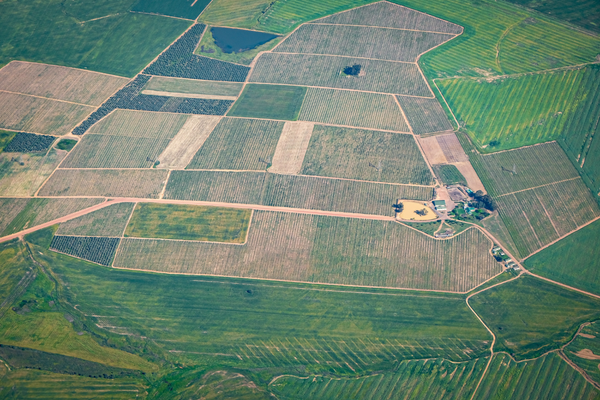
The Andhra Pradesh government is offering support to telecom operators to accelerate mobile network expansion in remote and unconnected parts of the state, including the provision of rent-free land and subsidised power for new mobile tower installations.
The initiative is aimed at addressing two of the practical challenges involved in extending telecom infrastructure into sparsely populated and difficult-to-reach areas: securing suitable sites for towers and managing the cost of electricity required to operate them. By reducing these costs, the state government hopes to make network deployment more viable in locations that may otherwise have limited commercial attractiveness.
The move is part of Andhra Pradesh's wider effort to achieve 100% mobile connectivity across its villages. Government data presented in Parliament earlier this year showed that 16,349 of the state's 17,328 villages had mobile connectivity as of January 2025, leaving a significant number of villages still requiring coverage.
The Centre is already implementing several Digital Bharat Nidhi-funded programmes to improve connectivity in rural, tribal and remote areas of Andhra Pradesh. Under the state's ongoing projects, 3,615 villages were targeted for 4G coverage, with 3,202 having received coverage by February 28, 2026. This includes 913 of 1,019 villages under the Aspirational Project and 2,289 of 2,596 villages under the 4G Saturation Project.
The Andhra Pradesh government's latest support is intended to complement these programmes by making it easier for telecom companies to establish the physical infrastructure required for network expansion. In remote locations, where population density and commercial returns can be lower, access to land and reliable electricity can determine whether a tower is financially feasible.
Providing government land without rent can reduce the recurring cost associated with tower sites, while subsidised electricity can lower operating expenses. Together, these measures could help telecom service providers extend their networks into areas where private investment alone may take longer to materialise.
The approach also builds on earlier efforts by the state and central governments to address connectivity gaps through infrastructure support. The GatiShakti Sanchar platform, for example, has been used to streamline Right of Way approvals for telecom infrastructure, including optical fibre cables and mobile towers.
The scale of the remaining challenge is reflected in the state's earlier connectivity figures. As of February 2025, 1,668 mobile towers had been commissioned in Andhra Pradesh under Digital Bharat Nidhi-funded mobile schemes, providing 4G coverage to 2,846 villages.
With the latest incentives for tower deployment, Andhra Pradesh is seeking to bridge the remaining gaps by reducing the cost and administrative barriers associated with rural network expansion. If implemented effectively, the measures could improve access to mobile communication and digital services in remote communities while supporting the state's broader objective of achieving universal connectivity.
Source PTI
Advertisement













 Facebook
 Whatsapp
