Advertisement






What really powers the cloud? Behind every Google search, A...
A lot of what defines a home isn’t visible at handover. I...
Private equity has played a significant role in shaping Indi...
Luxury real estate is one of the most talked-about segments ...
Airports play a much bigger role than just enabling travel -...
Air India Group expects to induct around 50-60 new aircraft over the next 18 months as it continues with its transformation programme despite delays in aircraft deliveries, supply chain disruptions and geopolitical challenges. The Tata Group-owned airline said fleet modernisation, aircraft retrofits and investments in maintenance infrastructure remain on track. While some operational disruptions affected services in recent months, the airline is gradually restoring its network and expects aircraft deliveries to accelerate from the end of this year. Air India also continues to invest in improving customer experience and operational reliability.
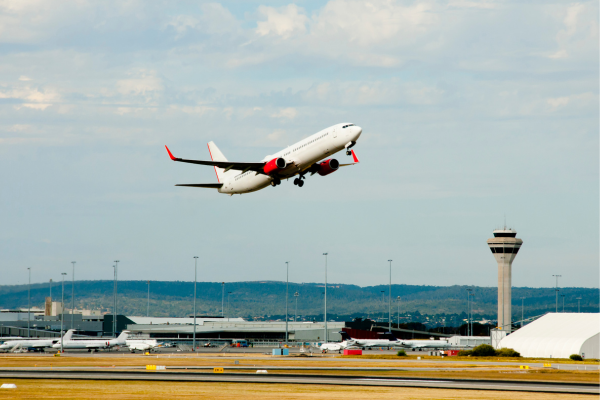
Air India Group expects to receive around 50-60 new aircraft over the next 18 months as it continues to execute its long-term transformation programme despite facing supply chain constraints, aircraft delivery delays and global geopolitical challenges.
The airline, which was acquired by Tata Group in January 2022 after decades under government ownership, is implementing a five-year transformation plan aimed at modernising its fleet, improving customer experience, upgrading operations and strengthening its engineering capabilities.
Speaking after a panel discussion in Abu Dhabi earlier this week, Air India's Chief Commercial Officer and Air India Express Chairman, Nipun Aggarwal, said the airline's transformation journey had involved significant learning over the past few years and remained a complex and challenging exercise.
He said the aviation industry had been affected by several unforeseen events, including global supply chain disruptions, airspace restrictions, volatile oil prices and geopolitical tensions. According to him, these external factors had created challenges that were difficult to predict when the transformation programme began, but the airline continued to remain on course with its plans.
Air India and Air India Express together currently operate a fleet of more than 290 aircraft.
The airline has also faced additional operational pressures over the past year, including the fatal crash involving one of its Boeing 787 Dreamliner aircraft last month that claimed 260 lives. The incident came at a time when the carrier was already dealing with delays in aircraft deliveries and fleet retrofitting.
Despite these setbacks, Aggarwal said key initiatives under the transformation programme, including fleet modernisation and investments in Maintenance, Repair and Overhaul (MRO) infrastructure, are progressing as planned. He acknowledged that aircraft delivery schedules and retrofit programmes have been delayed because of external factors but indicated that the airline remains optimistic about achieving its long-term goals, even if some milestones take slightly longer than originally planned.
His remarks also come amid recent reports suggesting that Air India's transformation programme could face delays.
The Air India Group has placed orders for nearly 600 aircraft, one of the largest aircraft procurement programmes by any airline globally. So far, less than 10 per cent of these aircraft have been delivered, while the remaining deliveries are scheduled over the coming years until the middle of the next decade.
Aggarwal said aircraft deliveries are expected to accelerate from the end of this year. From next year onwards, the airline expects to receive a steady flow of both narrow-body and wide-body aircraft every year, including around 10-15 wide-body aircraft and 45-50 narrow-body aircraft annually.
Over the next 18 months alone, the group expects to induct approximately 50-60 aircraft into its fleet.
Fleet harmonisation is also progressing within Air India Express, where all aircraft are expected to be retrofitted into a single standardised configuration by March next year. At Air India, retrofitting of wide-body aircraft is expected to continue over the next two to three years.
According to Aggarwal, refurbishment of the Boeing 787 Dreamliner fleet is expected to be completed by the middle of next year, while the retrofit programme for Boeing 777 aircraft will require additional time.
He also said deliveries of the Boeing 737 MAX 8 aircraft are continuing as scheduled. Air India expects to be among the first airlines to receive the Boeing 737 MAX 10 once the aircraft receives regulatory certification, which is expected early next year.
Air India has also been managing operational challenges involving its older wide-body aircraft. Aggarwal indicated that maintaining ageing aircraft and older cabin interiors had been a difficult phase for the airline, but added that fleet upgrades are now gaining momentum. He expects the airline to be in a significantly stronger operational position by the beginning of the next financial year.
In recent months, Air India temporarily reduced services on certain international routes because of elevated fuel prices, airspace restrictions and operational challenges arising from the West Asia conflict.
Aggarwal said the airline has already started restoring its network during the second half of this year. Services across the Middle East have recovered to around 90 per cent of previous levels, while flights to Europe and the United States that had been reduced are gradually returning to schedule. Most of these services have already been put back on sale, and the airline expects its network to return to pre-conflict levels within the next few months.
Alongside fleet expansion, Air India is also investing heavily in improving customer experience across multiple touchpoints. The airline is introducing new service standards for cabin crew and airport staff while strengthening internal systems, processes and workforce capabilities.
Aggarwal said the airline believes that modern aircraft alone are not enough to deliver a better travel experience. He indicated that equal emphasis is being placed on improving systems, operational processes and employee capabilities to ensure passengers receive a safe, reliable and consistent service.
Source PTI
Advertisement













 Facebook
 Whatsapp
