Advertisement






What really powers the cloud? Behind every Google search, A...
A lot of what defines a home isn’t visible at handover. I...
Private equity has played a significant role in shaping Indi...
Luxury real estate is one of the most talked-about segments ...
Airports play a much bigger role than just enabling travel -...
India's industrial and warehousing sector recorded approximately 21.9 million sq ft of Grade A leasing across the top eight cities during the first half of 2026, reflecting a 12% year-on-year increase, according to Colliers. Delhi NCR and Chennai together contributed more than 45% of the total absorption, while third-party logistics (3PL) companies remained the largest occupier segment, accounting for 30% of leasing activity. Engineering and e-commerce firms also recorded strong demand. New Grade A supply reached 24.7 million sq ft during the period, surpassing leasing activity and resulting in a marginal increase in vacancy levels to 17.2%. Despite global supply chain disruptions during the second quarter, occupier demand remained resilient, supported by domestic manufacturing growth and infrastructure-led development.
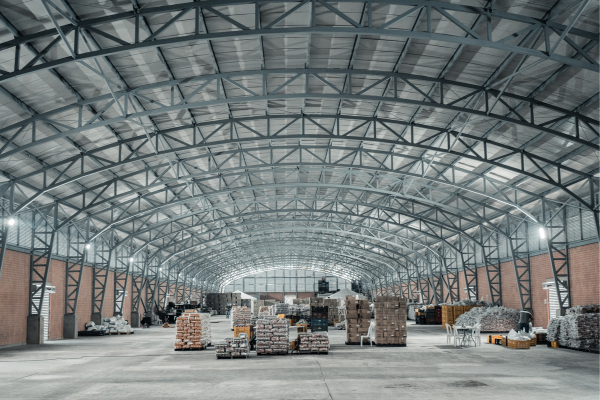
India's industrial and warehousing market recorded approximately 21.9 million sq ft of Grade A leasing across the top eight cities during the first half of 2026, marking a 12% year-on-year increase, according to Colliers. Delhi NCR and Chennai continued to dominate occupier activity, jointly accounting for more than 45% of total leasing, while demand remained robust across several other major logistics markets.
The report noted that Delhi NCR led absorption with 5.9 million sq ft during H1 2026, followed by Chennai with 4.1 million sq ft. Bengaluru and Pune each recorded 2.5 million sq ft of leasing, while Mumbai registered 2.7 million sq ft. Ahmedabad, Hyderabad and Kolkata also witnessed healthy occupier activity, with Ahmedabad, Pune and Kolkata posting annual growth of 33%, 39% and 30%, respectively.
Leasing activity moderated slightly during the second quarter, with Grade A absorption of 10.9 million sq ft, representing a marginal 1% decline compared with the preceding quarter. Colliers attributed the moderation to supply chain disruptions arising from the ongoing conflict in West Asia. However, quarterly leasing remained 4% higher than the corresponding period last year, indicating continued resilience in occupier demand.
Third-party logistics (3PL) companies retained their position as the largest occupier group, contributing around 30% of total leasing during H1 2026. Engineering companies accounted for 21% of overall absorption, followed by e-commerce firms with a 16% share. The electronics sector also witnessed significant growth, recording approximately 1.4 million sq ft of leasing during the first half, almost doubling its absorption compared with the previous year.
Demand remained concentrated within established logistics hubs. Bhiwandi in the Mumbai Metropolitan Region, along with Farukh Nagar and the NH-48 corridor in Delhi NCR, together accounted for more than one-third of total leasing during the period. Large transactions exceeding 200,000 sq ft represented around 40% of total absorption, with e-commerce companies accounting for more than 30% of these large-format deals. Automobile manufacturers and 3PL operators each contributed over 20% of large transactions.
On the supply side, developers delivered approximately 24.7 million sq ft of Grade A industrial and warehousing space during H1 2026, reflecting a 27% year-on-year increase. Delhi NCR and Mumbai together accounted for more than 40% of total completions, while Bengaluru and Pune each added over 3 million sq ft of new supply, almost doubling their delivery volumes compared with the corresponding period last year.
Quarterly completions reached 12.2 million sq ft in the second quarter, representing a 22% increase over the same period last year. Despite supply outpacing demand, developers continued to introduce modern Grade A facilities equipped with advanced specifications and technology-enabled infrastructure, reflecting confidence in the sector's long-term fundamentals.
According to Vijay Ganesh, Managing Director, Industrial & Logistics Services at Colliers India, the market demonstrated resilience despite global supply chain challenges during the second quarter. He said infrastructure-led development, expanding domestic manufacturing capabilities and easing global headwinds were expected to support sustained demand through the remainder of 2026.
Vimal Nadar, National Director and Head of Research at Colliers India, said continued demand from 3PL operators, engineering companies and e-commerce firms highlighted the strength of India's manufacturing and consumption-driven economy. He added that the strong development pipeline and positive investor sentiment are expected to drive Grade A industrial and warehousing supply to between 45 million sq ft and 50 million sq ft by the end of 2026.
At the end of H1 2026, overall vacancy across the top eight cities stood at 17.2%, reflecting the pace of new completions. However, average rentals continued to rise across several key logistics micro-markets, supported by the increasing share of premium industrial and warehousing developments entering the market.
Advertisement













 Facebook
 Whatsapp
