Advertisement






What really powers the cloud? Behind every Google search, A...
A lot of what defines a home isn’t visible at handover. I...
Private equity has played a significant role in shaping Indi...
Luxury real estate is one of the most talked-about segments ...
Airports play a much bigger role than just enabling travel -...
India's luxury residential market is expanding rapidly as rising wealth, improving economic conditions and changing buyer expectations reshape demand for premium housing. Affluent purchasers are increasingly prioritising lifestyle, wellness, sustainability, technology and investment potential over conventional status-driven ownership. Growth in high-net-worth individuals, strong participation from non-resident Indians and sustained demand across cities including Gurugram, Mumbai and Hyderabad have strengthened the segment. Supported by favourable demographics, infrastructure development and increasing investor confidence, luxury housing is emerging as a resilient asset class that combines capital appreciation with long-term wealth preservation.
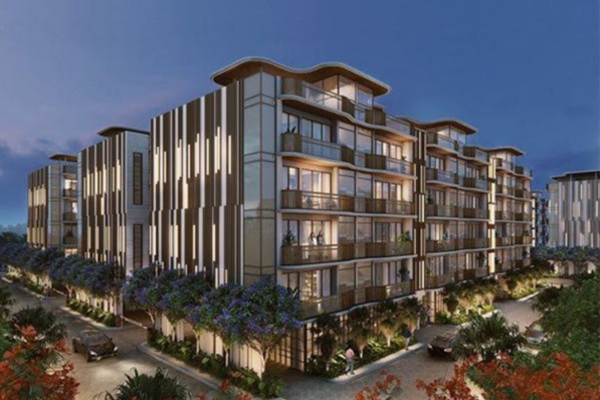
India's luxury residential market is undergoing a significant transformation as affluent buyers increasingly seek homes that deliver more than premium addresses or large living spaces. Rising disposable incomes, wealth creation and evolving lifestyle preferences have shifted demand towards developments that combine design quality, wellness, sustainability, privacy and long-term investment value.
The country's expanding base of High Net Worth Individuals (HNIs) and Ultra High Net Worth Individuals (UHNIs) has supported sustained growth in the premium housing segment. Luxury residential property is also gaining prominence as an investment asset, with buyers viewing it as a means of preserving wealth while benefiting from capital appreciation.
According to Mordor Intelligence, India's luxury housing market is projected to expand from USD 38.02 billion in 2024 to USD 101.92 billion by 2029. Market activity has reflected this growth trajectory, with nearly 28,020 luxury homes launched across the country's leading cities during the first quarter of 2024. Homes priced above INR 1.5 crore accounted for around 21 per cent of residential sales during the quarter, with approximately 27,070 units sold despite continuing global economic uncertainty.
Buyer preferences have evolved considerably over recent years. While location and property size remain important considerations, purchasers increasingly value integrated communities offering wellness facilities, landscaped open spaces, concierge services, smart home technology and environmentally conscious design. High-end apartments and condominiums have also gained momentum, with their share of quarterly residential sales increasing from 5 per cent in the first quarter of 2022 to 11 per cent in the corresponding period of 2024.
Non-resident Indians (NRIs) continue to play a growing role in India's luxury housing market. Their investments in Indian real estate reached approximately USD 13.1 billion in 2023, and they are expected to account for nearly one-quarter of total real estate investments by 2025. Branded residential developments, professional property management and future-ready communities remain key attractions for overseas buyers.
Demand at the upper end of the market has also strengthened. During the first eight months of 2024, 25 homes priced above INR 40 crore were sold across India, generating transactions worth INR 2,443 crore. Mumbai accounted for 21 of these sales, while Gurugram also recorded notable activity in the ultra-luxury segment.
Data from Anarock indicates that properties priced above INR 40 crore registered 2 per cent appreciation, while homes valued above INR 100 crore recorded a 14 per cent increase in prices. This reflects continued demand among ultra-high-net-worth buyers for exclusive residences offering limited supply, privacy and long-term investment potential.
Luxury housing demand is also extending beyond primary residences. Holiday homes, farmhouses and luxury villas are attracting increasing interest as buyers diversify their property portfolios and seek larger living environments suited to flexible working arrangements. Around one-quarter of luxury buyers are investing in holiday homes, while nearly one-fifth favour farmhouses.
The geographical spread of luxury housing has broadened beyond traditional markets. Gurugram has strengthened its position through corporate demand, expanding infrastructure, strong connectivity and a growing pipeline of premium developments. The city also recorded one of the country's highest-value residential transactions during 2024, with a deal valued at nearly INR 95 crore. Mumbai continues to account for almost half of India's luxury housing inventory, led by established locations such as Altamount Road and Bandra. Hyderabad is also emerging as a significant premium residential destination, particularly in Jubilee Hills and Banjara Hills, while Goa and Alibaug continue to attract buyers seeking second homes and luxury villas.
Developers are responding to these changing expectations by focusing on design quality, wellness-oriented amenities, sustainability and customer experience. Projects such as MRG Crown illustrate this shift by emphasising thoughtfully planned living environments, premium facilities and strategically located developments that cater to evolving buyer preferences.
As India's economy continues to expand, supported by infrastructure investment, entrepreneurial wealth creation and favourable demographic trends, luxury housing is expected to remain a resilient and attractive segment. Increasingly, premium homes are being viewed not only as symbols of affluence but also as long-term assets capable of delivering financial security, lifestyle benefits and intergenerational value.
Advertisement













 Facebook
 Whatsapp
