Advertisement






What really powers the cloud? Behind every Google search, A...
A lot of what defines a home isn’t visible at handover. I...
Private equity has played a significant role in shaping Indi...
Luxury real estate is one of the most talked-about segments ...
Airports play a much bigger role than just enabling travel -...
The Navi Mumbai Municipal Corporation (NMMC) has instructed its engineering and civic departments to undertake immediate road repairs, inspect all manhole covers and strengthen monsoon preparedness following continuous heavy rainfall recorded during the first week of the month. Municipal Commissioner Dr Kailas Shinde directed officials to prioritise pothole repairs, prevent waterlogging, improve drainage infrastructure, ensure electrical safety, maintain water supply and sewerage systems, and intensify cleanliness drives. The civic body has also asked officials to promote rainwater harvesting and urged residents to adopt preventive measures against waterborne and vector-borne diseases during the monsoon season.
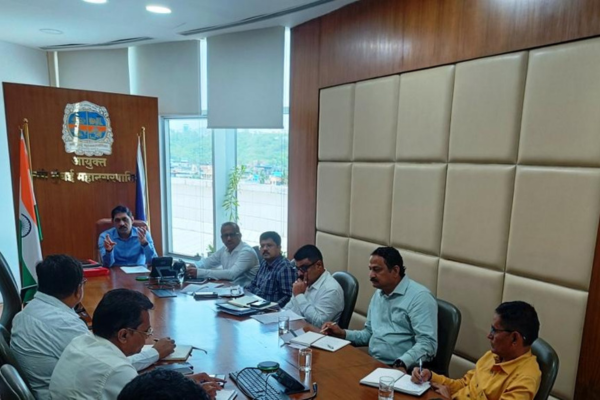
The Navi Mumbai Municipal Corporation (NMMC) has directed its engineering and civic departments to intensify post-monsoon maintenance works across the city after continuous heavy rainfall between 1 and 8 July exposed pressure points in public infrastructure. During a special review meeting held in the past week, Municipal Commissioner Dr Kailas Shinde instructed officials to undertake immediate repairs to roads, inspect all manholes and strengthen preventive measures to ensure public safety throughout the monsoon season.
The meeting was attended by City Engineer Shirish Ardawad and executive engineers representing the civil engineering, water supply, sewerage, electrical, mechanical and environment departments. The commissioner instructed officials to complete pothole repairs on a priority basis and recommended greater use of asphalt and concrete surfacing instead of paver blocks to improve road durability.
Dr Shinde also directed the engineering department to identify locations prone to waterlogging, investigate the causes of persistent flooding and implement corrective measures without delay. Officials were asked to examine roadside drainage structures where drain openings are positioned above road level and modify them to improve surface water discharge. In low-lying areas, departments have been instructed to arrange additional dewatering pumps and identify suitable drainage channels for the safe disposal of accumulated rainwater.
Highlighting recent accidents reported in neighbouring cities due to uncovered manholes, the commissioner directed officials to inspect every manhole across Navi Mumbai and ensure that all are fitted with secure covers. He cautioned that any negligence in this regard would not be tolerated and also instructed the engineering department to examine the feasibility of installing protective wire mesh beneath manhole covers as an additional safety measure.
The civic body has also ordered an extensive cleanliness drive to remove silt, sand and debris deposited along highways and major roads following heavy rainfall. Departments have been asked to clear construction debris and other obstructions that may impede the free flow of stormwater through roadside drains.
Addressing electrical safety, Dr Shinde noted that power lines belonging to the Maharashtra State Electricity Distribution Company Limited (MSEDCL) have been observed passing through drainage channels at several locations. The electrical department has been instructed to formally notify the utility and expedite the relocation of such lines wherever necessary to minimise the risk of accidents during the monsoon.
The commissioner further directed all engineering departments to work in close coordination to ensure civic services are delivered without causing inconvenience to residents. Officials were instructed to promptly address public complaints related to water supply, ensure equitable distribution across all areas and regularly monitor water quality. The sewerage department has also been directed to closely monitor sewage treatment plants and prevent sewer lines from overflowing during periods of heavy rainfall.
In addition to infrastructure measures, the civic body has decided to promote the Centre's 'Catch the Rain' campaign by encouraging housing societies and residential communities to install rooftop rainwater harvesting systems for storing rainwater. The commissioner also appealed to residents to prevent water stagnation within residential premises, observe a weekly dry day to control mosquito breeding, and regularly clean overhead and underground water storage tanks to reduce the risk of seasonal diseases during the monsoon.
Advertisement













 Facebook
 Whatsapp
