Advertisement






The Gulf conflict has disrupted global supply chains, pushed...
REITs have changed the way commercial real estate is owned a...

What does it take to preserve a real estate legacy while bui...
What really powers the cloud? Behind every Google search, A...
A lot of what defines a home isn’t visible at handover. I...
• The Lucknow Development Authority (LDA) will prepare a GIS-based Master Plan 2051 for the Uttar Pradesh State Capital Region (SCR).
• The comprehensive plan will guide long-term urban growth, infrastructure expansion, land use and environmental conservation across the region.
• Advanced geospatial technology will be used to create a digital planning framework, improving decision-making and project implementation.
• The initiative is expected to support coordinated development across districts while accommodating future population and economic growth.
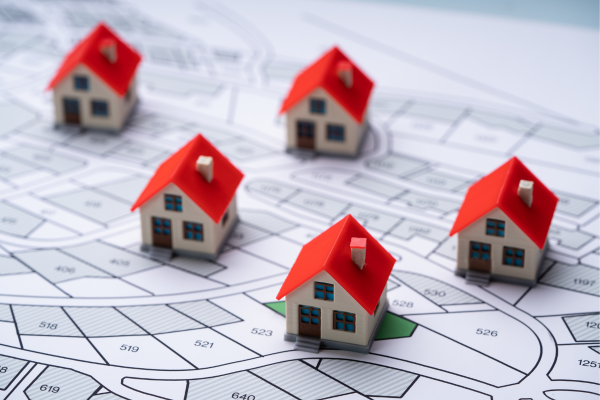
The Lucknow Development Authority (LDA) has initiated the process of preparing a Geographic Information System (GIS)-based Master Plan 2051 for the Uttar Pradesh State Capital Region (SCR), marking a significant step towards integrated regional planning. The proposed master plan aims to provide a long-term development framework that balances urban expansion with infrastructure, environmental protection and economic growth.
The State Capital Region, which was constituted to promote planned development around Lucknow, is envisioned as a multi-district growth zone with improved connectivity and coordinated infrastructure planning. The new master plan will serve as the primary planning document to guide development over the coming decades by identifying suitable land uses, transport corridors, industrial areas, residential zones and public infrastructure requirements. The vision for the SCR is to promote balanced regional development through coordinated planning across participating districts.
Unlike conventional planning exercises, the Master Plan 2051 will be prepared using GIS technology, allowing planners to integrate satellite imagery, digital mapping and spatial data into a single planning platform. The technology is expected to improve the accuracy of land-use analysis, infrastructure planning and environmental assessments while enabling authorities to monitor development more efficiently.
Officials expect the GIS-based approach to create a dynamic planning system that can be updated as cities expand and infrastructure projects progress. Digital mapping is also likely to support faster approvals, better coordination among government departments and improved transparency in urban planning decisions.
The master plan is expected to address several critical aspects of regional development, including transportation networks, housing demand, industrial and commercial growth, green spaces, public utilities and disaster resilience. It will also consider demographic projections and economic trends to ensure that future infrastructure keeps pace with population growth.
The State Capital Region has been identified as a strategic planning area intended to strengthen economic integration between Lucknow and surrounding districts. Improved road connectivity, logistics infrastructure, industrial investment and planned urban expansion are expected to play an important role in achieving this objective.
Environmental sustainability is also expected to be a key component of the Master Plan 2051. Planning authorities are likely to identify environmentally sensitive areas, water bodies and green corridors while incorporating measures to protect natural resources alongside urban development.
Urban planners believe that GIS-enabled master planning can significantly improve implementation by providing real-time spatial information, reducing planning conflicts and enabling evidence-based policy decisions. The digital platform can also help local bodies coordinate infrastructure investments more effectively across administrative boundaries.
Once completed, the GIS-based Master Plan 2051 is expected to become the blueprint for the future development of the Uttar Pradesh State Capital Region, supporting orderly urbanisation while enhancing infrastructure, investment opportunities and the overall quality of life for residents across the region.
Advertisement













 Facebook
 Whatsapp
