Advertisement






What really powers the cloud? Behind every Google search, A...
A lot of what defines a home isn’t visible at handover. I...
Private equity has played a significant role in shaping Indi...
Luxury real estate is one of the most talked-about segments ...
Airports play a much bigger role than just enabling travel -...
The National Highways Authority of India (NHAI) has initiated the preparation of a Detailed Project Report (DPR) to address congestion at the Sarai Kale Khan Loop in Delhi, a key interchange on the upcoming DND–Sohna National Highway corridor. The study will identify engineering and traffic management solutions to improve capacity, reduce travel time and ensure smoother traffic movement before the new highway becomes operational.
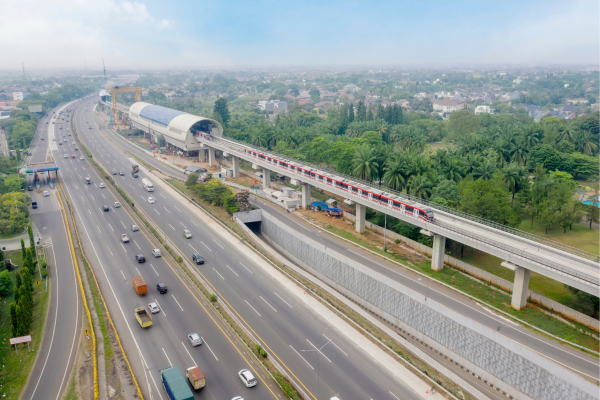
The National Highways Authority of India (NHAI) has begun preparing a Detailed Project Report (DPR) to decongest the Sarai Kale Khan Loop, one of Delhi's busiest traffic junctions, in anticipation of increased vehicle movement following the commissioning of the DND–Sohna National Highway corridor. The initiative is aimed at ensuring the new expressway functions efficiently from the outset.
Sarai Kale Khan serves as a major convergence point for traffic from Ashram, Noida and other parts of the National Capital Region. With the DND–Sohna corridor nearing completion, authorities expect traffic volumes at the interchange to rise significantly, making infrastructure improvements essential to prevent bottlenecks and maintain smooth traffic flow.
The DPR will examine a range of engineering and traffic management measures designed to enhance the junction's capacity and improve vehicle circulation. The study is expected to assess options such as redesigned road geometry, improved merging points, additional carriageways, grade-separated structures and other interventions that can support higher traffic volumes while improving road safety.
According to NHAI, the objective is not only to ease congestion but also to maximise the operational benefits of the DND–Sohna National Highway by ensuring seamless connectivity at one of its most critical interchanges. The proposed improvements are expected to reduce travel time, minimise traffic conflicts and provide a more efficient commuting experience for motorists using the corridor.
The DND–Sohna corridor is a key component of the National Capital Region's expanding road infrastructure, providing faster connectivity between Delhi, Faridabad, Gurugram and southern Haryana. Once operational, the highway is expected to improve regional mobility, support freight movement and ease pressure on existing urban road networks.
The proposed revamp of the Sarai Kale Khan Loop reflects NHAI's broader strategy of addressing potential traffic bottlenecks alongside new highway projects rather than after congestion emerges. Following completion of the DPR, the authority is expected to finalise the preferred engineering solution before moving ahead with implementation, subject to the necessary approvals.
The Sarai Kale Khan interchange has emerged as one of the most critical transport hubs in Delhi due to its proximity to major road corridors, the Hazrat Nizamuddin railway station, the Delhi–Meerut Namo Bharat corridor and the upcoming multimodal transit facilities. Improving traffic flow at this junction is expected to benefit not only private vehicles but also buses, commercial transport and regional commuters who use the corridor daily.
Transport planners believe that addressing congestion at key junctions before new expressways become operational can significantly improve the overall efficiency of the highway network. Instead of relying solely on widening roads after traffic volumes increase, authorities are increasingly focusing on scientific traffic studies, predictive modelling and infrastructure planning to create long-term mobility solutions.
The proposed DPR is also expected to evaluate future traffic demand arising from rapid urbanisation in Delhi-NCR and the expansion of expressway connectivity across neighbouring states. With several highway and regional transit projects under development, ensuring smooth integration between existing and upcoming transport infrastructure will be essential for reducing travel delays and supporting economic activity across the National Capital Region.
Source PIB
Advertisement













 Facebook
 Whatsapp
