Advertisement






What really powers the cloud? Behind every Google search, A...
A lot of what defines a home isn’t visible at handover. I...
Private equity has played a significant role in shaping Indi...
Luxury real estate is one of the most talked-about segments ...
Airports play a much bigger role than just enabling travel -...
The Mumbai Metropolitan Region Development Authority (MMRDA) has completed and opened the final Bharat Diamond Bourse (BKC)-Vakola arm of the Santacruz-Chembur Link Road (SCLR), creating a continuous 10.88-km signal-free east-west corridor across Mumbai. The project integrates multiple elevated connectors, bridges and carriageways linking the Eastern and Western Express Highways through key commercial and residential hubs. The completed corridor is expected to reduce congestion, improve travel efficiency and strengthen connectivity across the Mumbai Metropolitan Region.
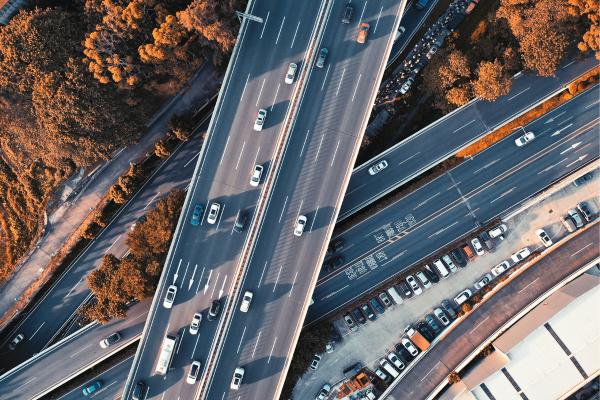
Mumbai's east-west transport network has received a major boost with the commissioning of the final Bharat Diamond Bourse (BKC)-Vakola arm of the Santacruz-Chembur Link Road (SCLR), completing a continuous 10.88-km signal-free corridor connecting the Eastern Express Highway (EEH) and the Western Express Highway (WEH). The milestone marks the culmination of a multi-phase infrastructure project that has been developed over several years to improve cross-city mobility and ease congestion on some of Mumbai's busiest roads.
The newly opened section serves as the final missing link in the SCLR network, connecting previously completed elevated roads, flyovers and bridges into a seamless corridor. Although comparatively shorter than other stretches, the BKC-Vakola arm plays a strategic role by integrating multiple transport links and allowing uninterrupted movement between the city's eastern and western suburbs. With its opening, commuters can now access a continuous east-west route without encountering multiple traffic signals or major bottlenecks.
Constructing the final segment required sophisticated engineering solutions because of the highly constrained urban environment around Vakola. Engineers executed the project over the existing Vakola Nallah bridge, where conventional construction methods were not feasible. The work involved installing large composite steel girders using specialised heavy-duty cranes through a carefully phased launching process while ensuring that traffic movement and nearby infrastructure remained largely unaffected during construction.
The completed corridor links several important locations, including Santacruz, Vakola, Kalina, Kurla, Chembur and Bandra Kurla Complex (BKC), one of Mumbai's principal commercial districts. By creating a direct connection between these areas, the project is expected to significantly improve accessibility for commuters travelling between residential neighbourhoods, business centres and industrial zones. The corridor also strengthens connectivity to both national highways through the Eastern and Western Express Highways, improving regional mobility across the Mumbai Metropolitan Region.
Urban planners expect the project to reduce pressure on several congested surface roads that currently handle a substantial share of east-west traffic. By distributing vehicles across multiple elevated connectors instead of concentrating movement on a few arterial routes, the corridor is likely to improve traffic flow, shorten travel time and enhance journey reliability during peak hours. The signal-free alignment is also expected to reduce vehicle idling, contributing to improved fuel efficiency and lower emissions.
Beyond easing daily commuting, the project is expected to generate wider economic benefits by improving connectivity between commercial hubs and residential catchments. Better transport infrastructure can support business activity, enhance logistics efficiency and improve access to employment opportunities across different parts of the city. The completed corridor also complements Mumbai's broader infrastructure expansion programme, which includes metro rail lines, coastal roads, trans-harbour connectivity and other strategic mobility projects.
The completion of the SCLR network represents a significant milestone in Mumbai's ongoing urban transport transformation. Rather than functioning as isolated stretches of elevated road, the various phases of the project now operate as an integrated mobility corridor capable of supporting smoother east-west movement across the city. As traffic volumes continue to grow, the fully operational SCLR is expected to play an increasingly important role in improving connectivity, reducing congestion and strengthening Mumbai's long-term transportation infrastructure.
Source- MMRDA
Advertisement













 Facebook
 Whatsapp
