Advertisement






The Gulf conflict has disrupted global supply chains, pushed...
REITs have changed the way commercial real estate is owned a...

What does it take to preserve a real estate legacy while bui...
What really powers the cloud? Behind every Google search, A...
A lot of what defines a home isn’t visible at handover. I...
The Brihanmumbai Municipal Corporation (BMC) is set to begin tunnel excavation for the Goregaon-Mulund Link Road (GMLR), marking a major construction milestone for one of Mumbai's largest transport infrastructure projects. The underground work will create twin tunnels beneath the Sanjay Gandhi National Park, forming the core of the east-west corridor. Once completed, the project is expected to improve connectivity between the city's eastern and western suburbs, reduce travel time and support long-term urban development.
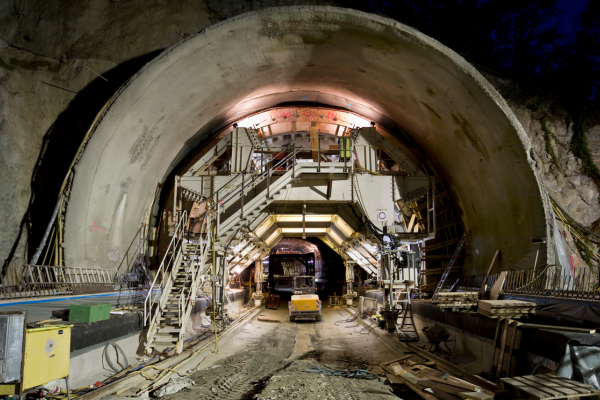
The Brihanmumbai Municipal Corporation (BMC) is preparing to commence underground tunnelling for the Goregaon-Mulund Link Road (GMLR), signalling the start of one of the most technically demanding phases of the project. The launch of tunnel excavation will mark significant progress in the construction of a transport corridor designed to improve east-west connectivity across Mumbai while reducing pressure on some of the city's busiest arterial roads.
The Goregaon-Mulund Link Road has been conceived as a strategic transport corridor connecting the Western Express Highway at Goregaon with the Eastern Express Highway at Mulund. At present, commuters travelling between the two regions rely primarily on routes such as the Jogeshwari-Vikhroli Link Road and other heavily congested roads. The new corridor is expected to provide a faster and more direct alternative, reducing travel time and improving overall traffic distribution across Mumbai's suburban transport network.
The project's most significant engineering component is the construction of twin underground tunnels beneath the Sanjay Gandhi National Park. Instead of relying on conventional excavation methods, authorities will use Tunnel Boring Machines (TBMs), which enable continuous underground excavation with minimal disturbance to the surface environment. The technology is widely used in complex urban infrastructure projects because it enhances construction precision while reducing disruption to nearby ecological and residential areas.
The tunnelling phase represents a major engineering milestone, requiring detailed geological investigations, continuous monitoring and specialised construction techniques. Engineers will closely monitor rock conditions, groundwater movement and tunnel alignment throughout the excavation process to ensure structural stability and operational safety. Once completed, the tunnels will form the central section of the GMLR corridor, linking elevated roads and interchanges being developed at both ends of the project.
Beyond improving mobility, the project is expected to generate broader economic and urban development benefits. Improved accessibility between Mumbai's eastern and western suburbs is likely to reduce travel costs for commuters, improve connectivity to commercial and industrial districts and support more balanced urban expansion. Better transport infrastructure may also enhance the attractiveness of residential and commercial developments located along the corridor by improving access to employment centres and civic amenities.
Environmental considerations have also played a significant role in the project's design. Since the alignment passes beneath an ecologically sensitive area, the underground route was selected to minimise surface disturbance while preserving the surrounding natural landscape. Authorities have incorporated environmental safeguards and modern construction practices to ensure that tunnelling activities comply with regulatory requirements throughout the execution period.
Urban planners view the Goregaon-Mulund Link Road as an important addition to Mumbai's expanding network of transport infrastructure, complementing ongoing investments in metro rail, coastal roads and other major road projects. Together, these initiatives are intended to create a more integrated mobility system capable of supporting the city's growing population and increasing travel demand over the coming decades.
The commencement of tunnelling marks the transition from preparatory works to core infrastructure construction. As excavation progresses, work on associated flyovers, approach roads and interchanges will continue simultaneously, bringing the project closer to completion. Once operational, the Goregaon-Mulund Link Road is expected to become one of Mumbai's most important east-west transport corridors, improving daily commuting, strengthening regional connectivity and supporting the city's long-term infrastructure development objectives.
Advertisement













 Facebook
 Whatsapp
