Advertisement






What really powers the cloud? Behind every Google search, A...
A lot of what defines a home isn’t visible at handover. I...
Private equity has played a significant role in shaping Indi...
Luxury real estate is one of the most talked-about segments ...
Airports play a much bigger role than just enabling travel -...
Fresh supply of retail space in shopping malls across India's seven major cities declined 57 per cent during the first half of 2026, mainly due to construction delays, rising land costs and approval-related challenges, according to Anarock. Despite lower new completions, leasing activity remained strong, reflecting sustained retailer demand for Grade A mall spaces. Vacancy levels also continued to decline, indicating limited availability of quality retail assets. The consultancy noted that supply has consistently lagged demand over the past few years, highlighting the structural challenges involved in developing large-format shopping malls.
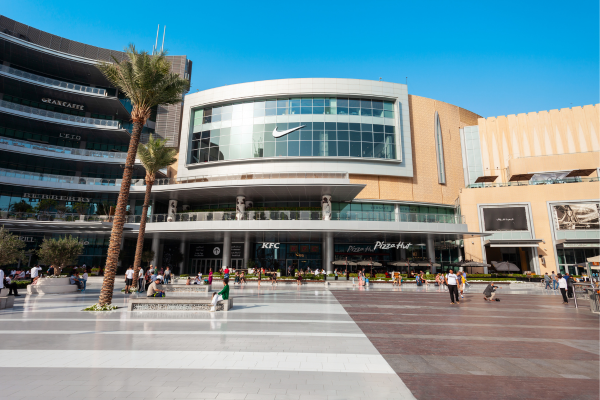
Fresh supply of retail space in shopping malls across India's seven major cities declined sharply during the first half of 2026, with only 0.9 million square feet of new Grade A retail space becoming operational, according to Anarock. The new supply was down 57 per cent from 2.8 million square feet recorded during the corresponding period last year.
The seven major cities covered in the report include Mumbai, Delhi-NCR, Bengaluru, Pune, Hyderabad, Chennai and Kolkata.
Retail leasing activity also moderated during the period. Gross leasing in shopping malls stood at around 4.1 million square feet in the first half of 2026, registering a 24 per cent decline compared to the same period a year earlier. Despite this fall, leasing remained significantly higher than fresh supply, indicating that retailer demand continued to exceed the availability of quality retail spaces.
According to Anarock, the limited addition of new mall space is the result of several long-standing challenges, including limited availability of large land parcels, rising land prices, higher capital expenditure requirements compared to residential developments, delays in obtaining government approvals and extended construction timelines.
Anuj Kejriwal, CEO – Retail and CEO – Europe, Middle East & Africa at Anarock Group, said the supply shortage has been building over many years. Referring to data from the past 16 years across the top seven cities, he noted that there has been a consistent mismatch between the supply of Grade A retail space and leasing demand. He added that although new mall completions have fluctuated from year to year, retailers have continued to absorb available Grade A space, leading to a steady decline in vacancy levels.
He further stated that the market has become increasingly supply-constrained, with retailers now finding it more difficult to secure suitable spaces rather than attract shoppers.
The consultancy also highlighted the demand-supply trend over the last three calendar years. In 2023, developers added 5.3 million square feet of new Grade A retail space, while gross leasing reached 6.5 million square feet. During 2024, new supply dropped significantly to just 1.1 million square feet, even as leasing remained stable at 6.5 million square feet.
The imbalance continued in 2025. Although new mall completions recovered to 5.2 million square feet, leasing activity touched a record 13 million square feet, more than double the fresh supply. This widening gap has further reduced the availability of premium retail space across major markets.
Anarock noted that the shortage of Grade A mall space is not merely due to developers failing to respond to market demand. It explained that developing a successful large-format shopping mall is considerably more complex than many other real estate asset classes. Such projects require large, contiguous land parcels in strategically located catchment areas, which are increasingly difficult to secure in established urban centres.
The consultancy further pointed out that escalating land prices, financing conditions, lengthy approval processes and construction-related delays continue to affect the pace of new project deliveries, restricting the addition of fresh retail stock despite sustained demand from domestic and international brands.
Reflecting the tight market conditions, vacancy levels across Grade A shopping malls in the top seven cities declined further to 6.7 per cent during the first half of 2026, indicating continued absorption of quality retail spaces and limited availability of new inventory.
Source PTI
Advertisement













 Facebook
 Whatsapp
