Advertisement






What really powers the cloud? Behind every Google search, A...
A lot of what defines a home isn’t visible at handover. I...
Private equity has played a significant role in shaping Indi...
Luxury real estate is one of the most talked-about segments ...
Airports play a much bigger role than just enabling travel -...
Poland's modernist port city of Gdynia has been added to UNESCO's World Heritage List during its centenary year, recognising its unique urban planning and architectural heritage. Developed almost entirely from scratch between the two World Wars, the city symbolised Poland's efforts to establish a major seaport after regaining independence. The recognition highlights Gdynia's well-preserved modernist architecture, maritime identity and historical significance. The listing also places the city among more than 1,270 UNESCO World Heritage Sites worldwide and follows recent additions such as the D-Day landing beaches in Normandy.
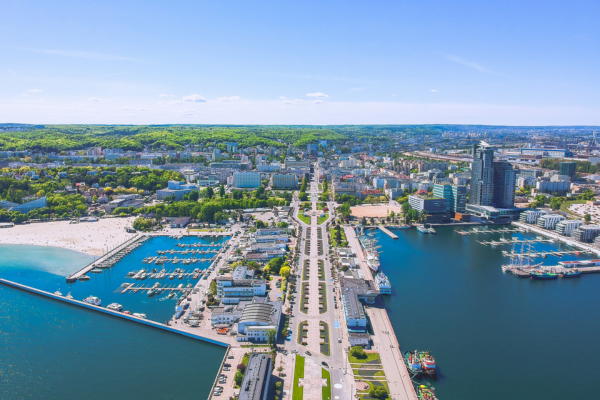
Poland's Baltic port city of Gdynia has been added to UNESCO's World Heritage List, marking a major international recognition for one of Europe's best-preserved examples of interwar modernist urban planning. The recognition comes as the city celebrates its 100th anniversary and places its historic centre among more than 1,270 cultural and natural sites protected for their outstanding value to humanity.
Located north of Gdansk and close to the seaside resort of Sopot, Gdynia was built almost entirely from the ground up during the two decades between the First and Second World Wars. While it has often remained in the shadow of its neighbouring cities, the UNESCO recognition acknowledges the city's distinctive architectural identity and its role in Poland's modern history.
The city emerged as a symbol of Poland's ambitions after the country regained independence in 1918 following 123 years of partition between Russia, Prussia and Austria-Hungary. With only a limited Baltic coastline and no major seaport, Poland selected the small fishing village of Gdynia to develop a new maritime gateway. The village, which had around 1,200 residents in 1920, witnessed rapid growth and its population increased nearly 100-fold by 1939 as people from across the country moved there for employment and new opportunities.
Poland's Culture Minister Marta Cienkowska said on social media platform X that the recognition was an honour for a city that chose to look towards the future and was built on ambition, courage and the belief that Poland could create extraordinary achievements.
Architecture experts have often compared Gdynia with other centres of interwar modernism, including Tel Aviv's White City and functionalist districts in Rotterdam and Brno. However, unlike those cities, Gdynia was developed almost entirely around a newly created seaport, resulting in a remarkably consistent urban layout and making it one of Europe's most complete examples of a modernist city developed within a single generation.
The city's central district is known for its streamlined buildings featuring flat roofs, rounded corners, long horizontal windows and balconies designed to resemble ocean liners. These architectural elements reflect Gdynia's maritime character and the optimism surrounding technology and progress during the interwar period.
The inscription was approved by UNESCO's 21-member World Heritage Committee during its ongoing session in Busan, South Korea. The committee is responsible for evaluating new nominations and overseeing the conservation of existing World Heritage Sites. The recognition follows recent additions to the list, including the D-Day landing beaches in Normandy.
Source Reuters
Advertisement













 Facebook
 Whatsapp
