Advertisement






What really powers the cloud? Behind every Google search, A...
A lot of what defines a home isn’t visible at handover. I...
Private equity has played a significant role in shaping Indi...
Luxury real estate is one of the most talked-about segments ...
Airports play a much bigger role than just enabling travel -...
India is moving ahead with the second phase of its Strategic Petroleum Reserve (SPR) programme with an estimated investment of INR 14,527 crore under a public-private partnership (PPP) model. The expansion will create 6.5 million tonnes of additional crude oil storage capacity across Odisha and Karnataka, while government viability gap funding will be capped at 60% of the project cost. Alongside expanding storage infrastructure, the government is assessing new locations for future reserves and has diversified crude oil and LNG sourcing to strengthen the country's energy security and reduce supply-related risks.
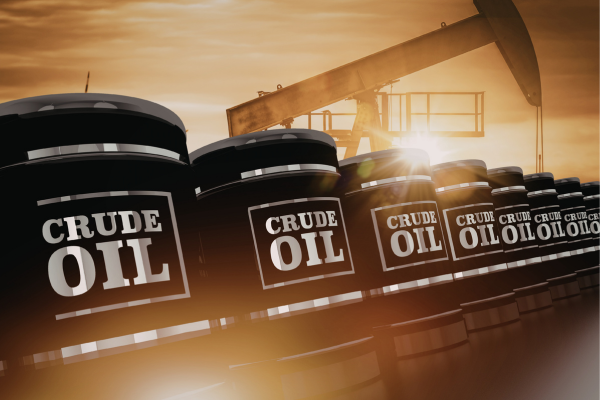
The Central Government is moving ahead with the second phase of its Strategic Petroleum Reserve (SPR) programme at an estimated cost of INR 14,527 crore under a public-private partnership (PPP) model. The government will provide viability gap funding (VGF) of up to 60% of the total project cost, according to information shared in the Lok Sabha by Minister of State for Petroleum and Natural Gas Suresh Gopi.
The Phase-II expansion, which received approval in 2021, will add 6.5 million tonnes of commercial-cum-strategic crude oil storage capacity. The new facilities will be developed in Odisha, with a storage capacity of 4 million tonnes, and Karnataka, with 2.5 million tonnes.
The minister also informed Parliament that the government continues to assess new locations for setting up additional strategic petroleum reserves as part of its long-term energy security planning.
India completed the first phase of its Strategic Petroleum Reserve programme through Indian Strategic Petroleum Reserve Ltd (ISPRL) by developing underground storage facilities with a combined capacity of 5.33 million tonnes. These facilities are located at Visakhapatnam (1.33 million tonnes), Mangaluru (1.5 million tonnes) and Padur (2.5 million tonnes). They were commissioned between 2016 and 2018, and the quantity of crude oil stored in these caverns is adjusted depending on prevailing market conditions.
Providing details of the funding model, Gopi said that no government budgetary support had been provided for the development and construction of the Phase-I facilities. For Phase-II, however, the government has adopted the PPP route, with total project cost estimated at INR 14,527 crore and government viability gap funding capped at 60%.
He further stated that identifying new sites for future strategic petroleum reserves remains an ongoing process as the country continues to strengthen its energy infrastructure.
The minister also said that ISPRL has signed an agreement with the Abu Dhabi National Oil Company (ADNOC), allowing the company to utilise a 750,000-tonne storage cavern at Mangaluru. In addition, both sides have signed a non-binding memorandum of understanding for strategic collaboration, although further details were not disclosed.
According to the minister, the government continuously evaluates risks that could disrupt energy supplies and has adopted multiple measures to strengthen India's energy security. As part of this strategy, India has expanded its crude oil sourcing network from 27 countries to 41 countries, while LNG imports are now sourced from 15 countries, compared with six countries earlier. This broader sourcing base has reduced dependence on any single country, region or transit route and improved India's ability to respond to supply disruptions and market volatility.
He added that strategic petroleum reserve facilities serve as a buffer during short-term disruptions in crude oil supplies, helping maintain energy security during emergencies.
The government has also adopted a broader strategy to reduce dependence on crude oil imports by promoting greater use of natural gas as a fuel and feedstock, expanding the adoption of Compressed Natural Gas (CNG), Piped Natural Gas (PNG), ethanol, compressed biogas and biodiesel, improving refinery processes, encouraging energy efficiency and conservation, and implementing policy measures aimed at increasing domestic production of crude oil and natural gas.
In recent years, India has accelerated efforts to strengthen its energy security through a combination of expanding strategic crude storage, diversifying import sources and increasing domestic exploration. The Phase-II expansion is expected to further enhance the country's emergency crude oil storage capacity while also enabling greater participation from private sector partners through the PPP framework.
Source PTI
Advertisement













 Facebook
 Whatsapp
