Advertisement






What really powers the cloud? Behind every Google search, A...
A lot of what defines a home isn’t visible at handover. I...
Private equity has played a significant role in shaping Indi...
Luxury real estate is one of the most talked-about segments ...
Airports play a much bigger role than just enabling travel -...
Decentralised solar power systems designed for rural communities could generate electricity at costs lower than the average power procurement expenses incurred by several state distribution companies, according to a study by the International Institute for Sustainable Development (IISD). The assessment highlights that locally planned solar projects, aligned with village-level demand and supported by suitable policy and grid integration, can improve electricity affordability while strengthening energy access. The findings underscore the growing role of decentralised renewable energy in meeting India's rural power requirements.
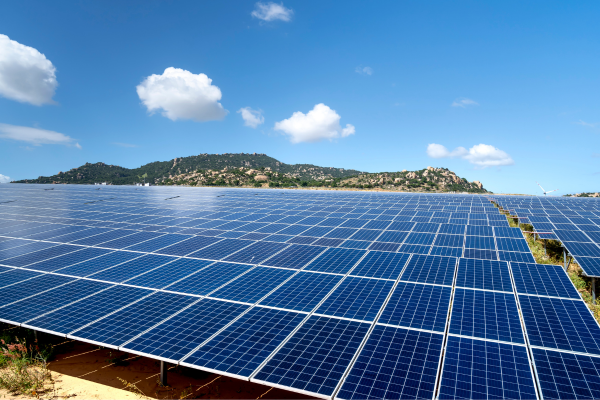
Decentralised renewable energy systems could play a larger role in India's rural electricity network as falling solar generation costs make village-level projects increasingly competitive with conventional power procurement. A recent study by the International Institute for Sustainable Development (IISD) indicates that carefully designed local solar systems have the potential to deliver electricity at a lower cost than the average rates at which many state distribution companies purchase power, offering an alternative model for expanding reliable energy access in rural areas.
The assessment focuses on decentralised solar installations that generate electricity close to the point of consumption rather than depending entirely on power transmitted from distant generating stations. According to the study, the financial viability of such systems depends on several local factors, including electricity demand, consumption patterns, system design and the extent to which renewable generation can be integrated with the existing grid. When these elements are appropriately aligned, village-scale solar projects can provide electricity at an estimated cost of INR 3-4 per unit, making them competitive with conventional power procurement.
Researchers observed that rural communities do not follow a uniform pattern of electricity consumption, making location-specific planning essential for successful project implementation. Demand varies across villages depending on household requirements, agricultural activity, commercial establishments and seasonal usage. The study therefore suggests that decentralised energy projects should be designed around local consumption profiles rather than adopting a standard model across different regions.
The report also points to the importance of supporting infrastructure in improving the long-term performance of decentralised systems. Grid connectivity, energy storage, operational management and maintenance arrangements are identified as critical factors influencing project efficiency and financial sustainability. The study notes that integrating locally generated solar power with the existing electricity network can improve supply reliability while enabling excess generation to be utilised more effectively.
Beyond reducing electricity supply costs, decentralised solar systems may also contribute to lowering transmission losses associated with long-distance power delivery and improve energy availability in areas where extending conventional infrastructure may be less economical. The findings suggest that these systems can complement the existing grid rather than replace it, creating a more diversified and resilient rural power network.
The study recommends that policymakers, electricity distribution companies and project developers adopt a coordinated planning approach while expanding decentralised renewable energy. Aligning technical design with local demand, regulatory support and utility operations could improve project outcomes and encourage wider deployment across rural India.
As India continues to pursue its renewable energy and rural development objectives, the assessment indicates that decentralised solar projects can become an important component of the country's evolving electricity landscape. By combining local generation with efficient planning and grid integration, such systems have the potential to provide affordable, reliable and cleaner electricity to rural households while easing the financial burden on state power utilities.
Source- IISD
Advertisement













 Facebook
 Whatsapp
