Advertisement






What really powers the cloud? Behind every Google search, A...
A lot of what defines a home isn’t visible at handover. I...
Private equity has played a significant role in shaping Indi...
Luxury real estate is one of the most talked-about segments ...
Airports play a much bigger role than just enabling travel -...
The Uttarakhand government has suspended tree felling linked to the proposed Rishikesh–Bhaniyawala road expansion following concerns raised by residents, environmental groups and public representatives. Chief Minister Pushkar Singh Dhami has directed officials to halt the exercise and hold consultations with stakeholders before taking any further decision. The road project is intended to improve connectivity between Dehradun, Rishikesh and Jolly Grant Airport, but has sparked debate over its environmental impact due to the number of trees proposed for removal. The state has said infrastructure development must proceed alongside ecological conservation.
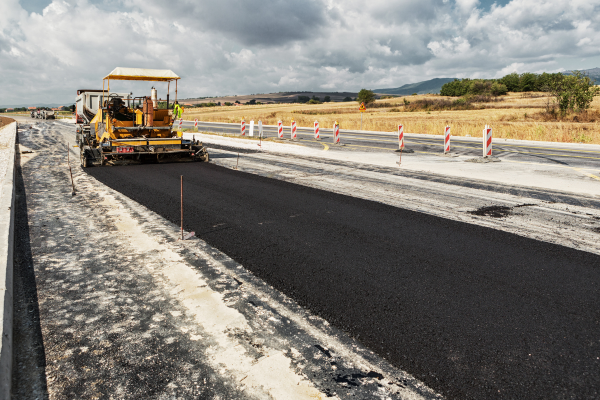
The Uttarakhand government has temporarily halted tree felling for the proposed widening of the Rishikesh–Bhaniyawala road after public concerns over the project's environmental impact gathered momentum. Chief Minister Pushkar Singh Dhami directed officials to suspend the activity and initiate discussions with all stakeholders before work progresses further.
The road expansion project has been planned to improve connectivity between Dehradun, Rishikesh and Jolly Grant Airport, a corridor that experiences heavy traffic throughout the year. The upgraded route is expected to ease congestion, reduce travel time and strengthen transport infrastructure connecting major religious, tourism and urban centres in the state.
However, the proposal has generated widespread concern because it requires the removal of a large number of trees along a forested stretch that forms part of an ecologically sensitive landscape. Residents, environmental organisations and conservation activists have argued that large-scale tree felling could adversely affect biodiversity, reduce green cover and disturb wildlife movement in the region.
Taking note of these concerns, the Chief Minister instructed officials to stop tree-cutting operations until consultations are held with environmental experts, local communities, public representatives and other stakeholders. The government has indicated that future decisions on the project will be taken after examining all viewpoints and assessing whether suitable alternatives or mitigation measures can be incorporated.
Officials have maintained that the highway project is important for meeting rising traffic demand and improving regional connectivity. The proposed widening is expected to enhance road safety, facilitate smoother movement of passengers and goods, and support the state's tourism and economic activities. At the same time, the government has emphasised that environmental considerations will remain an integral part of the decision-making process.
The project has reignited the broader debate over balancing infrastructure development with ecological preservation in Uttarakhand, where several road and transport projects pass through environmentally sensitive areas. Experts have increasingly called for planning approaches that minimise ecological disruption while allowing essential public infrastructure to be developed.
Environmental groups have urged the government to examine alternative alignments, engineering solutions and compensatory measures that could reduce the number of trees requiring removal without compromising the project's objectives. They have also sought greater public consultation before major infrastructure works are undertaken in forested regions.
For now, the suspension of tree felling provides time for a comprehensive review of the proposal. The outcome of the stakeholder consultations is expected to determine the future course of the Rishikesh–Bhaniyawala road project and could influence how similar infrastructure projects are planned and executed in environmentally sensitive parts of Uttarakhand.
Source PTI
Advertisement













 Facebook
 Whatsapp
