Advertisement






What really powers the cloud? Behind every Google search, A...
A lot of what defines a home isn’t visible at handover. I...
Private equity has played a significant role in shaping Indi...
Luxury real estate is one of the most talked-about segments ...
Airports play a much bigger role than just enabling travel -...
The Maharashtra government has approved INR 45 crore for an eco-tourism and bird park project at Bhandup, to be developed along the Thane Creek shoreline within the Ramsar-designated Thane Creek Flamingo Sanctuary. Mumbai Suburban Guardian Minister Ashish Shelar inspected the proposed site and said the project will feature India's first AI-powered bird detection and monitoring system at an eco-tourism destination, alongside a mangrove nature trail, observation towers and a nature interpretation centre. The project has already secured clearances from multiple state and central authorities and is expected to be developed with minimal disturbance to the surrounding ecology.
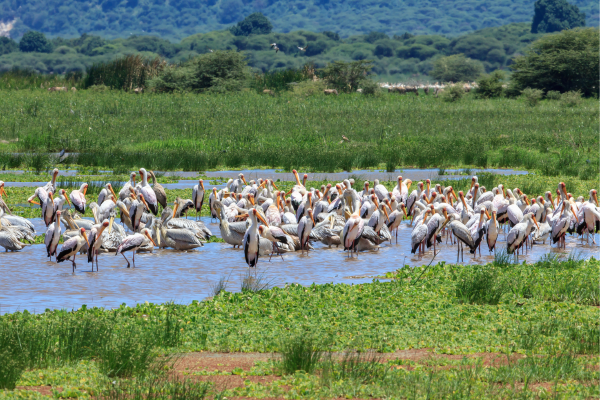
The Maharashtra government is moving ahead with a INR 45-crore eco-tourism and bird park project at Bhandup, to be developed within the Thane Creek Flamingo Sanctuary, a wetland recognised as a Ramsar site of international importance. The funds have been allocated through the District Planning Committee's Suburban Special Fund, and the project is expected to include India's first AI-powered bird detection and monitoring system at an eco-tourism destination.
Mumbai Suburban Guardian Minister Ashish Shelar inspected the proposed project site near the Bhandup Pumping Station, along with local MLA Mihir Kotecha, corporators and senior officials. He said the Bhandup Bird Park would be a landmark initiative aimed at promoting environmental conservation, biodiversity protection and sustainable tourism in the city.
The park is planned across approximately 20.09 hectares along the Thane Creek shoreline, though physical infrastructure and tourist amenities will be limited to just 0.35 hectares in order to minimise the human footprint on the surrounding ecosystem. The site currently supports mangrove ecosystems and mudflats that are home to an estimated 250 native and migratory bird species. Proposed facilities include a 2.16-kilometre mangrove nature trail, multi-storey observation towers, viewing decks, a nature interpretation centre, a lecture hall, a butterfly garden, a boat jetty and off-site parking, along with birdwatching centres designed to accommodate tourists, researchers and ornithologists.
The centrepiece of the project is expected to be its AI-based bird tracking and identification system, which will operate across a 1.5-kilometre radius to provide real-time, automated tracking and identification of bird species. Officials said the system would also support biodiversity documentation, digital analytics and interactive visitor experiences through centralised data management and live synchronisation.
According to the minister, the project has already received approvals from the Maharashtra Nature Tourism Development Board's executive committee, the Maharashtra Eco-Tourism Board, Coastal Regulation Zone (CRZ) clearance from the Ministry of Environment, Forest and Climate Change, and technical approval from the Mumbai Metropolitan Region Development Authority.
The Bhandup project marks the latest attempt by civic and state authorities to establish a dedicated bird park in Mumbai's suburbs, an idea that has seen several false starts over the past decade. An earlier proposal from 2013, estimated at INR 150 crore, had identified a 25-acre plot in Powai but was eventually abandoned after repeated delays, despite the BMC exploring a collaboration with Singapore's Jurong Bird Park in 2019 to assess feasibility. A separate plan for a 10-acre site at Pramod Mahajan Kala Park in Dadar also did not materialise. More recently, the BMC had invited bids for a INR 166-crore exotic bird park at a civic plot in Nahur, Mulund West, envisioned as an extension of the Byculla zoo, though that project has continued to face scrutiny over cost escalations.
With clearances from multiple state and central authorities already in place, the Bhandup project appears better positioned than the city's earlier bird park attempts to move from approval to execution. Its location within a protected Ramsar wetland, combined with the proposed AI-based monitoring system, sets it apart as much a conservation and research initiative as a tourism destination. Whether the project can avoid the delays that stalled similar proposals in Powai, Dadar and Nahur will likely depend on how quickly the state translates this funding approval into on-ground construction.
Advertisement













 Facebook
 Whatsapp
