Advertisement






What really powers the cloud? Behind every Google search, A...
A lot of what defines a home isn’t visible at handover. I...
Private equity has played a significant role in shaping Indi...
Luxury real estate is one of the most talked-about segments ...
Airports play a much bigger role than just enabling travel -...
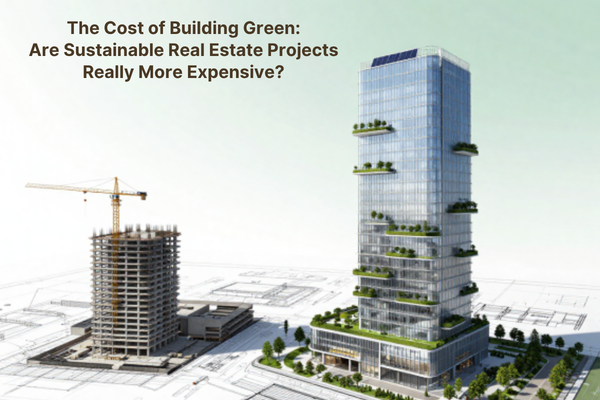
One of the most persistent assumptions in real estate is that sustainability comes at a significant cost. From energy-efficient systems and renewable energy installations to green certifications and low-carbon materials, sustainable developments are often perceived as being substantially more expensive than conventional projects. Yet as operating costs rise and occupiers place greater emphasis on environmental performance, developers are increasingly evaluating sustainability through a long-term value lens rather than upfront expenditure alone. The debate is no longer limited to how much green buildings cost to construct, but whether developers can afford not to build them.
For years, sustainability has been promoted as the future of real estate. Developers, consultants and policymakers have highlighted the environmental benefits of green buildings, while occupiers have increasingly prioritised energy-efficient and resource-conscious workplaces.
Despite this growing momentum, one question continues to surface in boardrooms and project planning meetings: how much does it actually cost to build sustainably
The answer is more nuanced than many assume.
While sustainable developments generally require higher upfront investment, the premium varies significantly depending on the level of sustainability being targeted, the technologies being deployed and the certification standards being pursued. More importantly, developers are increasingly finding that many of these additional costs can be recovered through operational savings, stronger occupier demand and higher asset values.
The myth of the prohibitively expensive green building
A common perception within the industry is that sustainable buildings are dramatically more expensive than conventional developments.
In reality, the premium is often lower than expected.
Projects incorporating basic green measures such as energy-efficient glazing, LED lighting and passive design features typically involve an additional cost of around 3-5% compared with conventional developments. More advanced sustainability interventions, including solar installations, sewage treatment plants and rainwater harvesting systems, can increase project costs by approximately 10-15%.
Developments targeting ambitious sustainability goals such as net-zero energy performance may see premiums rise to between 15% and 30%, depending on the scale of renewable energy generation, battery storage systems and smart building technologies being deployed.
Akash Pharande, Managing Director of a real estate company, notes that developers generally allocate an additional 10-15% of project costs for moderate green building features, while more advanced sustainability measures can push premiums towards the 20-30% range. However, he argues that sustainability should be viewed as an opportunity rather than a burden, particularly as wider adoption helps reduce the cost of green materials and technologies over time.
Where does the additional cost come from?
The perception that sustainability is expensive often stems from visible investments such as solar panels or advanced building management systems. However, the cost structure is spread across multiple components.
Energy-efficient HVAC systems, variable refrigerant flow technologies, high-performance glazing, smart lighting controls and renewable energy infrastructure typically account for a significant share of the additional expenditure.
Water management systems also contribute to costs. Rainwater harvesting infrastructure, sewage treatment plants, water recycling systems and smart metering technologies require upfront capital investment but are increasingly becoming standard features in large developments.
Material selection represents another important factor. While some sustainable materials command a premium, others can reduce construction costs. Fly ash bricks, for instance, are often cheaper than conventional clay bricks, while GGBS can reduce both material costs and carbon emissions compared with traditional cement-heavy mixes.
The reality is that sustainability does not always mean spending more. In some cases, it involves spending differently.
The certification question
For many developers, sustainability is closely linked to certification.
Programmes such as IGBC, LEED, GRIHA and EDGE provide independent verification of environmental performance and have become increasingly important in attracting institutional investors and corporate occupiers.
Certification itself carries costs. Depending on the programme and project size, registration fees, certification charges and consultancy expenses can range from a few lakhs to several tens of lakhs.
Among the major systems, IGBC generally remains the most widely adopted certification route in India, while LEED often involves higher costs due to its international framework and review process.
Yet certification expenses typically represent only a small fraction of overall project costs. For large commercial developments, the financial impact of certification is often outweighed by the potential benefits associated with occupier demand, market positioning and asset valuation.
Looking beyond construction costs
Focusing exclusively on upfront expenditure can sometimes obscure the larger financial picture.
Sustainable buildings are designed to consume fewer resources throughout their operational life. This translates into measurable savings across energy, water and maintenance costs.
Industry estimates suggest that green buildings can reduce operating expenses by approximately 14%, while energy consumption may decline by 30-35% compared with conventional assets. Water conservation measures can further reduce consumption by 25-30%.
These savings accumulate over decades rather than years.
As a result, many developers increasingly evaluate sustainability using lifecycle cost analysis rather than construction budgets alone.
The revenue side of the equation
The economics of sustainable real estate are influenced not only by lower operating costs but also by stronger revenue potential.
Across several office markets, green-certified buildings have demonstrated rental premiums ranging from 6% to 10%. In Bengaluru, some studies have reported rental advantages exceeding 20% for high-performing sustainable assets. Similar trends have emerged in Hyderabad and Chennai, where occupiers are increasingly prioritising environmentally certified office space.
Vacancy performance can also improve.
Large multinational occupiers, global capability centres and technology firms often have corporate sustainability targets that influence leasing decisions. With GCCs and ITeS companies accounting for a substantial share of office leasing activity, sustainability credentials are becoming an increasingly important differentiator.
This is one reason why nearly all REIT-owned office stock and approximately 95% of CRISIL-rated Grade A office assets in India now carry green certifications.
A case study in long-term economics
Mahindra Eden offers an example of how the economics of sustainability can work in practice.
The project reportedly involved an additional construction cost of around 5% compared with conventional development. However, the building is expected to generate annual electricity savings of approximately 18 lakh kWh while reducing water demand by nearly 74%.
The example illustrates a broader shift in how developers are approaching sustainability. Rather than viewing green features as compliance-driven expenses, many are increasingly treating them as investments capable of generating operational and financial returns over the lifecycle of an asset.
Can sustainability become cheaper?
As adoption increases, many industry participants believe the cost gap between sustainable and conventional construction will continue to narrow.
Rishad Khergamwala, a real estate director, points to the growing availability of responsibly manufactured materials that are approaching price parity with traditional alternatives. Products such as recycled plastic lumber and wood-plastic composites, once considered niche solutions, are becoming more commercially viable as production scales increase.
At the same time, developers are finding ways to reduce costs through passive design, local sourcing of materials, recycled formwork systems and lower-carbon construction techniques.
These approaches not only improve environmental performance but can also reduce construction expenditure.
From cost centre to value driver
The conversation around sustainable real estate is gradually changing.
A decade ago, developers largely viewed sustainability through the lens of additional expenditure. Today, the discussion increasingly centres on lifecycle savings, tenant demand, operational efficiency and long-term asset performance.
Upfront costs remain a legitimate consideration, particularly in price-sensitive markets. However, as green technologies become more accessible and occupier expectations continue to evolve, sustainability is increasingly being evaluated not as a premium feature but as part of the business case for real estate development itself.
The question facing developers is no longer whether sustainable buildings cost more on day one. It is whether the long-term benefits justify the initial investment, and for a growing number of projects, the answer appears to be yes.
Advertisement













 Facebook
 Whatsapp
