Advertisement






What really powers the cloud? Behind every Google search, A...
A lot of what defines a home isn’t visible at handover. I...
Private equity has played a significant role in shaping Indi...
Luxury real estate is one of the most talked-about segments ...
Airports play a much bigger role than just enabling travel -...
Kerala's traditional architecture is celebrated for its sloping roofs, intricate woodwork and deep connection with nature. At the heart of many historic homes lies another defining feature the courtyard. Known locally as the nadumuttam, these open-to-sky spaces were designed to improve ventilation, bring natural light indoors and serve as the social heart of the household. While some courtyard homes have become famous heritage landmarks, many remain relatively lesser known. Here are 10 lesser-known courtyard homes in Kerala that continue to preserve stories of culture, craftsmanship and community.
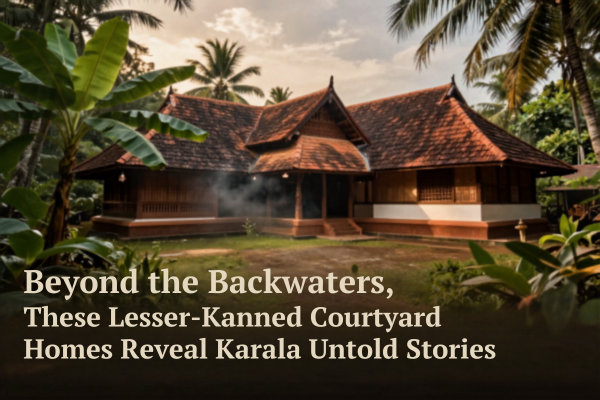
Kerala's traditional homes were designed long before air conditioners and modern ventilation systems became common. Architects relied on climate-responsive design, creating houses centred around open courtyards that allowed sunlight, airflow and family life to coexist naturally. Many of these homes still stand today, quietly preserving centuries of history, architecture and local traditions. While some have been converted into museums and heritage stays, others remain hidden gems waiting to be discovered.
Poomully Mana, Thrissur
Nestled in the village of Poomully near Thrissur, Poomully Mana is a centuries-old Brahmin household that showcases the elegance of Kerala's traditional nalukettu architecture. The house is organised around a central open courtyard that once served as the focal point for family gatherings, rituals and daily activities. The structure is known for its intricately carved wooden interiors, traditional roofing and strong connection to Kerala's Vedic heritage. Visitors often find themselves transported to a different era as they walk through corridors that have witnessed generations of cultural and religious traditions. The mana has also been associated with the preservation of ancient rituals and Sanskrit learning, giving it significance beyond its architectural value. Even today, its peaceful surroundings reflect the slower pace of life that once defined Kerala's rural communities.
Olappamanna Mana, Palakkad
Located in Palakkad district, Olappamanna Mana was once home to one of Kerala's most respected literary and cultural families. The sprawling residence features a classic courtyard layout that reflects the architectural principles of traditional Namboothiri homes. Beyond its architecture, the house is remembered for its role in promoting literature, Kathakali and classical arts. The central courtyard continues to embody the spirit of communal living that defined Kerala's traditional households. Several renowned cultural figures are believed to have visited the residence over the years, contributing to its rich artistic legacy. The property remains an important reminder of how homes once functioned as centres of cultural exchange and learning.
Valiya Veedu, Kollam
Hidden in the historic landscapes of Kollam, Valiya Veedu represents a lesser-known example of Kerala's courtyard-based residential design. The home combines local construction techniques with practical planning suited to the state's tropical climate.
Its open courtyard allows natural light and airflow to reach every section of the house. The structure also reflects how affluent families once balanced privacy, functionality and aesthetics within a single architectural framework. Traditional wooden elements and handcrafted detailing still survive in parts of the residence. These features offer valuable insight into the craftsmanship that characterised Kerala's domestic architecture centuries ago.
Kandath Tharavad, Malappuram
Kandath Tharavad offers a glimpse into the traditional ancestral homes once common across northern Kerala. Built around a spacious courtyard, the residence was designed to accommodate large joint families under one roof.
The home stands out for its wooden pillars, tiled roofing and climate-sensitive layout. Walking through the property reveals how architecture played an important role in fostering family interactions and preserving community traditions. The courtyard would often serve as the setting for celebrations, storytelling and seasonal gatherings. Such spaces helped strengthen social bonds at a time when multi-generational living was the norm.
Chittoor Mana, Palakkad
Situated near Chittoor in Palakkad, this heritage residence reflects Kerala's distinctive courtyard-house tradition. The open central space not only improved ventilation but also functioned as a venue for ceremonies, storytelling sessions and family gatherings.
The house continues to attract heritage enthusiasts interested in Kerala's architectural evolution. Its preserved design highlights how traditional homes seamlessly integrated practical living with cultural values. The residence also reflects the influence of Palakkad's unique cultural landscape, where Kerala and Tamil traditions often intersect. This blend of influences can still be seen in some of its architectural details.
Paliyam Nalukettu, Ernakulam
Often overshadowed by larger heritage attractions, Paliyam Nalukettu offers a fascinating look at aristocratic life in old Kerala. The structure revolves around a traditional courtyard and showcases the architectural style associated with influential noble families. Its wooden craftsmanship, spacious halls and carefully planned layout demonstrate the sophistication of Kerala's indigenous building techniques. The courtyard remains the defining feature of the entire residence. Historical records suggest that the home played an important role in the social and administrative life of the region. Today, it provides visitors with a rare opportunity to understand how Kerala's elite once lived and governed.
Kovilakam Residence, Kodungallur
Located in the historic town of Kodungallur, this lesser-known royal residence incorporates a traditional courtyard that once served as the centre of social and ceremonial life. The architecture reflects a blend of practicality and royal elegance. The open space was designed to regulate temperature while creating a gathering area for residents and guests. Today, the structure offers valuable insights into Kerala's royal architectural heritage. Kodungallur's long history as a trading centre adds another layer of significance to the residence. Its design reflects the influence of a region that was once connected to global maritime networks.
Mankavu Mana, Kozhikode
Mankavu Mana is one of Kozhikode's hidden architectural treasures. Built using traditional Kerala construction techniques, the residence centres around a courtyard that allows natural ventilation throughout the house.
The home's wooden detailing and traditional proportions highlight the craftsmanship of local artisans. It serves as a reminder of how Kerala's builders created sustainable homes long before environmental design became a global conversation. The property's understated elegance reflects the practical yet aesthetically refined approach of traditional Kerala architecture. Every corner of the house appears designed with climate and comfort in mind.
Neelamana, Thrissur
Located away from major tourist circuits, Neelamana preserves many features associated with traditional courtyard homes. Its nadumuttam remains an essential part of the structure, bringing natural light into the surrounding living spaces. The residence reflects the simplicity and functionality that characterised Kerala's domestic architecture. Every section of the house appears designed to strengthen the connection between indoor living and the natural environment. The layout also demonstrates how traditional builders maximised airflow without relying on modern technology. This timeless design philosophy continues to inspire architects even today.
Vengassery Mana, Palakkad
Vengassery Mana is among Palakkad's lesser-known heritage residences and offers an excellent example of Kerala's courtyard-centred planning. The house was built to support both family life and religious activities within a unified space.
Its expansive wooden interiors, sloping roofs and open central courtyard showcase architectural principles that have remained relevant for centuries. Even today, the property stands as a testament to Kerala's enduring design traditions. The residence also reflects the social importance of the mana system in shaping local customs and traditions. Its preservation helps keep alive a valuable chapter of Kerala's architectural and cultural history.
Kerala's courtyard homes are more than architectural landmarks—they are living records of how communities once lived, interacted and adapted to their environment. While modern homes increasingly embrace contemporary designs, these heritage residences continue to demonstrate the timeless appeal of climate-responsive architecture. For travellers interested in history, culture and design, these lesser-known courtyard homes offer a fascinating glimpse into a world where the courtyard was truly the heart of the home.
Sources- Kerala Tourism: Heritage and Traditional Architecture Resources, Indian National Trust for Art and Cultural Heritage (INTACH), Centre for Heritage Studies, Kerala
Advertisement













 Facebook
 Whatsapp
