Advertisement






What really powers the cloud? Behind every Google search, A...
A lot of what defines a home isn’t visible at handover. I...
Private equity has played a significant role in shaping Indi...
Luxury real estate is one of the most talked-about segments ...
Airports play a much bigger role than just enabling travel -...
The Adani Group has announced plans to enter the nuclear energy sector through Adani Atomic Energy, targeting 10 GW of nuclear power capacity by 2035. Chairman Gautam Adani said land has already been identified for the venture as the conglomerate seeks to strengthen its position across India’s energy value chain. The announcement forms part of a broader infrastructure and energy expansion strategy that includes thermal, renewable, hydro, gas and transmission assets, alongside significant investments in ports, airports, data centres and logistics infrastructure.
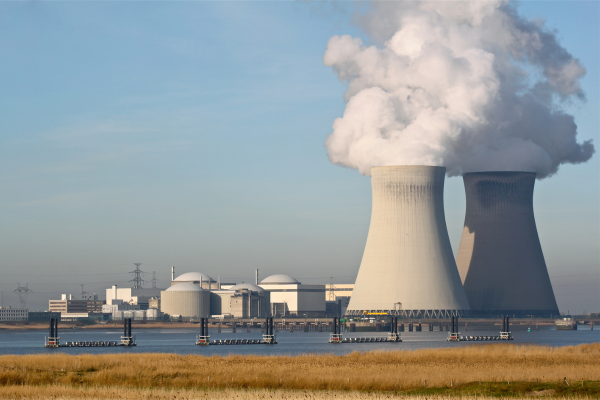
The Adani Group has unveiled plans to establish a 10 GW nuclear power portfolio by 2035, marking its entry into atomic energy as part of a wider strategy to support India’s long-term energy security and growing electricity demand.
Addressing shareholders at the group’s annual general meeting on June 24, Chairman Gautam Adani said the company had already identified land for the proposed venture, which will operate under the banner of Adani Atomic Energy. He described the move as a significant step towards securing reliable and clean round-the-clock power generation capacity for the country.
According to Adani, the group’s expansion into nuclear energy comes at a time when energy security has regained importance globally amid geopolitical uncertainties and rising power consumption. He stated that the company is positioning itself early to address future demand while reducing external dependencies through an integrated energy platform.
The nuclear initiative forms part of the conglomerate’s broader investments across the energy value chain. During FY26, the group invested more than INR 1.5 lakh crore in infrastructure projects, accounting for over 30% of India’s total new private-sector capital expenditure, according to Adani.
The group’s power generation business is being driven by Adani Power, which is currently executing what the company described as India’s largest private-sector power investment programme. The company plans to invest more than INR 2 lakh crore and expand its generation capacity to 45 GW within the next five years.
In the transmission segment, Adani Energy Solutions increased its order book to INR 72,000 crore during FY26. The company continues to strengthen its position in high-voltage direct current (HVDC) transmission projects, including the Khavda-South Olpad transmission corridor.
Alongside thermal and nuclear power, the conglomerate is also expanding its renewable energy portfolio. Adani announced a partnership with Bhutan’s Druk Green Power Corporation to jointly develop 5,000 MW of hydropower projects, adding renewable baseload capacity while strengthening regional energy cooperation.
The group also continued to expand its gas distribution business. Adani Total Gas surpassed 1.1 million piped natural gas household connections during the year and plans to further increase its network to cater to rising demand for cleaner fuel alternatives.
Beyond energy, Adani highlighted progress across its infrastructure businesses. Adani Ports handled more than 500 million tonnes of cargo during FY26 and remains on track to achieve a cargo-handling target of 1 billion tonnes by 2030. The company’s Vizhinjam Port also crossed 1 million TEUs in its first year of operations.
The group additionally inaugurated the Navi Mumbai International Airport and a new terminal at Guwahati Airport. In the digital infrastructure segment, Adani’s data centre business is targeting a 3 GW platform by 2030. The company also signed a binding agreement with Google for a gigawatt-scale data centre project in Visakhapatnam.
Across its mining services business, four new mine developer and operator agreements increased annual capacity to 145 million tonnes, supporting fuel and raw material security for industrial sectors.
For FY26, the Adani portfolio reported consolidated revenue of INR 2.92 lakh crore, representing a 7.4% increase year-on-year. EBITDA rose to INR 94,834 crore, while profit after tax increased 13.9% to INR 46,376 crore.
Adani said the group’s financial performance provides the liquidity and confidence required to continue investing across India’s core infrastructure sectors, with energy security remaining a central focus of its long-term growth strategy.
Source - PTI
Advertisement













 Facebook
 Whatsapp
