Advertisement






What really powers the cloud? Behind every Google search, A...
A lot of what defines a home isn’t visible at handover. I...
Private equity has played a significant role in shaping Indi...
Luxury real estate is one of the most talked-about segments ...
Airports play a much bigger role than just enabling travel -...
The US Supreme Court has ruled in favour of ExxonMobil in a long-running dispute over assets seized by Cuba following the 1959 revolution, making it easier for American companies to seek compensation under the Helms-Burton Act. The court held that Cuban state-owned entities cannot rely on sovereign immunity protections in such cases. The decision removes a major legal hurdle in Exxon's claim, now valued at more than USD 1 billion, and could influence several other lawsuits filed by US companies seeking compensation for property confiscated by the Cuban government decades ago.
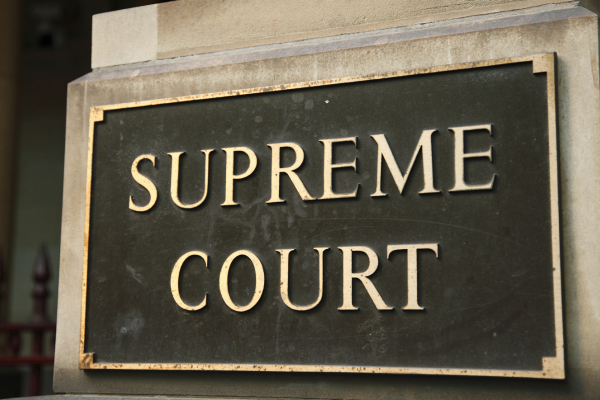
The US Supreme Court has delivered a significant ruling that strengthens ExxonMobil's efforts to seek compensation for assets confiscated by Cuba more than six decades ago. In a 6-3 decision, the court ruled that Cuban state-owned company Corporación CIMEX cannot rely on foreign sovereign immunity protections in a lawsuit brought by Exxon under the Helms-Burton Act.
The ruling centres on a legal dispute filed by Exxon in 2019, alleging that CIMEX unlawfully benefited from a refinery and service stations that originally belonged to Standard Oil, Exxon's corporate predecessor, before they were seized by Fidel Castro's government following the Cuban Revolution.
Writing for the majority, Justice Brett Kavanaugh stated that the Helms-Burton Act removes sovereign immunity protections for Cuban agencies and state-controlled entities in such cases. The court concluded that the legislation allows private lawsuits against Cuban government-linked organisations and that imposing the requirements of the Foreign Sovereign Immunities Act would largely undermine the purpose of those claims.
The decision overturns a lower court ruling issued in 2024 that had allowed CIMEX to invoke sovereign immunity as a defence. As a result, the case will now return to a lower court, where further proceedings will determine whether CIMEX can ultimately be held liable.
The court's three liberal justices dissented. Justice Elena Kagan argued that Congress had not clearly stated its intention to remove sovereign immunity protections through the Helms-Burton Act. According to the dissent, plaintiffs should still be required to demonstrate that their claims qualify for an exception under the Foreign Sovereign Immunities Act.
The dispute stems from Cuba's confiscation of Exxon's oil and gas assets in 1959. At the time, the losses were valued at approximately USD 70 million. Exxon now estimates its claim exceeds USD 1 billion after accounting for accrued interest and the possibility of enhanced damages under US law.
According to Exxon, the seized assets were later transferred to CIMEX, one of Cuba's largest state-owned business groups, which continues to profit from them. Following the ruling, an Exxon spokesperson welcomed the decision, describing it as an important step in the company's decades-long effort to obtain compensation for assets it believes were unlawfully taken by the Cuban government. The spokesperson also said the outcome reflected the strength of Exxon's legal arguments and the company's commitment to pursuing the matter for as long as necessary.
The judgment comes amid heightened tensions between the United States and Cuba. Relations between the two countries have deteriorated further under President Donald Trump's administration, which has taken a tougher stance on Havana through sanctions and legal actions.
Exxon's lawsuit is one of roughly 40 cases filed under the Helms-Burton Act during 2019 and 2020 after the Trump administration ended a long-standing suspension of Title III of the law. That provision allows US nationals to sue individuals or entities that benefit from property confiscated by Cuba after the revolution.
Although Congress created the Helms-Burton Act in 1996, successive US presidents had suspended the Title III provision for years to avoid diplomatic disputes with allies such as Canada and Spain, whose companies maintain investments in Cuba. The suspension ended during Trump's first term, triggering a wave of litigation.
Many of those lawsuits have struggled to advance because of jurisdictional and procedural challenges. The Supreme Court's latest ruling is expected to strengthen the position of claimants seeking compensation from Cuban entities and could influence the handling of similar cases currently moving through US courts.
The judgment also follows another Helms-Burton Act case considered by the Supreme Court this year. In that matter, the court revived claims against several major cruise operators, including Carnival, Norwegian Cruise Line Holdings, Royal Caribbean Cruises and MSC Cruises, in a dispute involving Havana Docks Corporation and the use of Cuban port facilities that had been seized by the Cuban government decades earlier.
Source Reuters
Advertisement













 Facebook
 Whatsapp
