Advertisement






What really powers the cloud? Behind every Google search, A...
A lot of what defines a home isn’t visible at handover. I...
Private equity has played a significant role in shaping Indi...
Luxury real estate is one of the most talked-about segments ...
Airports play a much bigger role than just enabling travel -...
The Centre is planning to establish seven defence manufacturing clusters across India with support from IITs to strengthen domestic industrial capabilities and research-led production. The proposed clusters will connect manufacturers, start-ups, research institutions and government agencies through dedicated innovation and manufacturing ecosystems. Aligned with the industrial strengths of individual states, the initiative aims to support product development, testing, technology transfer and skill creation. The programme forms part of the government's broader effort to expand indigenous defence manufacturing infrastructure and supply chains.
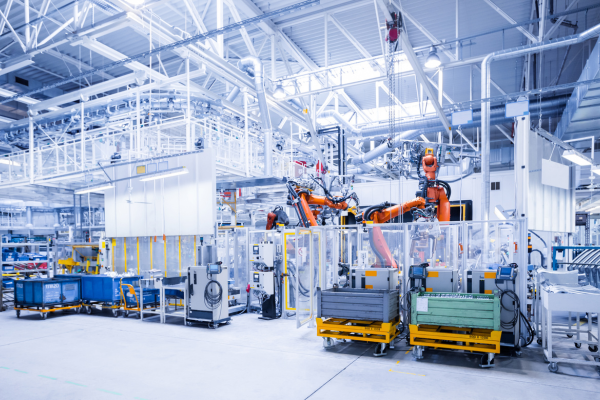
The Centre is planning to create seven state-level defence manufacturing clusters across India, backed by Indian Institutes of Technology (IITs), to strengthen domestic defence production capabilities and build a more integrated ecosystem for research, development and manufacturing. The proposal, currently being developed by the government, aims to bring together industry, academia and defence stakeholders to support indigenous technology development and reduce reliance on imported systems.
Under the proposed model, each cluster will be anchored by an IIT and will function as a collaborative platform linking manufacturers, start-ups, research institutions and government agencies. The clusters are expected to focus on product development, prototyping, testing, skill development and technology transfer, while supporting the commercialisation of defence-related innovations. The initiative is designed to create a structured framework that can accelerate the transition of research into deployable products and manufacturing programmes.
The proposed network builds on existing efforts to strengthen coordination between academia and the defence sector. Institutions such as IITs, the Indian Institute of Science and other technical universities have increasingly been involved in defence research through dedicated centres and collaborative programmes. Existing Defence Research and Development Organisation (DRDO) industry-academia centres have demonstrated the government's emphasis on creating stronger linkages between research institutions and strategic sectors.
Officials associated with the initiative have indicated that the clusters will be aligned with the industrial and technological strengths of individual states. This approach is intended to encourage specialisation across different segments of defence manufacturing, including aerospace, electronics, advanced materials, weapons systems and emerging technologies. The government is expected to leverage existing industrial infrastructure and supply chains while encouraging participation from private companies and micro, small and medium enterprises.
The proposal comes amid a broader policy focus on expanding India's domestic defence manufacturing base. Recent years have seen the development of defence industrial corridors, new manufacturing hubs and initiatives aimed at increasing indigenous content in defence procurement. The government has also sought greater participation from private industry alongside public sector enterprises in the production of military platforms and equipment.
Industry stakeholders are expected to play a significant role in the proposed cluster framework through investment, technology partnerships and manufacturing activity. The involvement of IITs is intended to provide research capabilities, access to specialised talent and support for innovation-led development. By integrating educational institutions with manufacturing ecosystems, the government aims to establish long-term capabilities across the defence value chain while supporting its broader objective of self-reliance in strategic sectors.
Advertisement













 Facebook
 Whatsapp
