Advertisement






The Gulf conflict has disrupted global supply chains, pushed...
REITs have changed the way commercial real estate is owned a...

What does it take to preserve a real estate legacy while bui...
What really powers the cloud? Behind every Google search, A...
A lot of what defines a home isn’t visible at handover. I...
Lok Sabha Speaker Om Birla has called upon IIT alumni to play a greater role in shaping reforms across sectors and contribute practical solutions to challenges faced by citizens. Speaking at the launch of the book IIT: The Story of India’s Most Prestigious Educational Ecosystem and the inauguration of the PanIIT Book Club at IIT Delhi, Birla said the experience and expertise of IIT graduates should be leveraged by Parliamentary Standing Committees. The event, organised by Pan IIT Alumni India to mark 75 years of the IIT ecosystem, brought together more than 400 alumni, policymakers, entrepreneurs and industry leaders. Discussions focused on innovation, self-reliance, technology development and the role of IITs in supporting India's vision of becoming a developed nation by 2047.
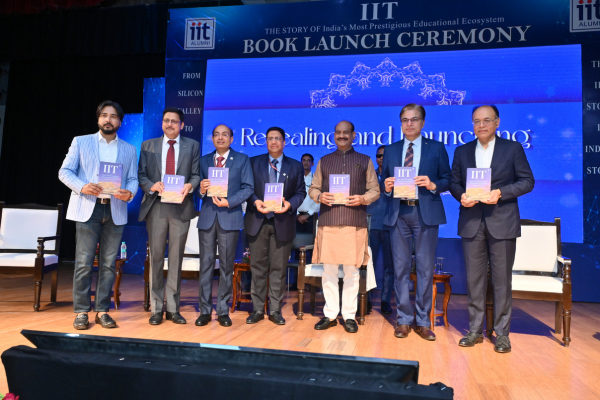
Lok Sabha Speaker Om Birla on June 21 urged IIT alumni to contribute policy recommendations and sectoral reforms that could help address challenges faced by citizens, while speaking at the launch of the PanIIT Book Club and a commemorative publication marking 75 years of the Indian Institutes of Technology ecosystem at IIT Delhi in New Delhi.
Addressing an audience comprising more than 400 IIT alumni, entrepreneurs, policymakers, academicians, students and industry leaders, Birla said the experience accumulated by IIT graduates across sectors could play an important role in shaping reforms and improving governance outcomes. He stated that Prime Minister Narendra Modi's vision of reform-oriented governance required contributions from experts and professionals capable of identifying solutions to practical challenges.
Birla said he would forward constructive recommendations received from IIT alumni to relevant Parliamentary Standing Committees for consideration and discussion. According to him, these committees could benefit from the professional expertise of IIT graduates, particularly in identifying areas requiring policy intervention and institutional reform.
Highlighting the contribution of IITs to nation-building, Birla noted that the country frequently looked towards the institutions for solutions during periods of crisis and transformation. He referred to challenges related to public health, infrastructure development, environmental management, scientific research, space technology, artificial intelligence, robotics and the digital economy, stating that IITs had consistently contributed to addressing such issues through research and innovation.
He also encouraged alumni to inspire younger generations to participate in solving everyday problems faced by citizens, including issues affecting rural communities and small farmers. During his address, Birla spoke about India's knowledge traditions, scientific capabilities, innovation ecosystem and the role of research and technology in achieving the country's development goals by 2047.
The event was organised by Pan IIT Alumni India, which represents more than 500,000 alumni from all 23 IITs worldwide. The organisation launched the PanIIT Book Club and unveiled its inaugural publication, IIT: The Story of India’s Most Prestigious Educational Ecosystem, authored by Prabhat Kumar, IRS, Chairman of Pan IIT Alumni India.
Pan IIT Alumni India described the publication as a chronicle of the evolution of the IIT ecosystem over the past 75 years and its contribution to India's economic, technological and educational development. The newly launched book club has been conceived as a platform to promote intellectual engagement and showcase literary contributions by IIT graduates.
Speaking at the event, Prabhat Kumar said the story of the IITs mirrored India's own development journey and described the publication as both a reflection on the ecosystem's achievements and an appeal for future generations to contribute to the country's growth. He emphasised the importance of building and scaling innovation-driven enterprises within India.
Rajendra Kumar, IAS, Secretary, Department of Border Management in the Ministry of Home Affairs, highlighted the importance of technological self-reliance. Referring to emerging developments in artificial intelligence and advanced technologies, he said India would need to strengthen its domestic capabilities to reach global technological frontiers and achieve its long-term digital economy ambitions.
The programme also featured keynote addresses from government officials, industry leaders and academics, alongside a panel discussion titled “Celebrating the IIT Legacy: Shaping the Future of Viksit Bharat”. Participants discussed entrepreneurship, innovation, technology development and the role of IIT alumni in supporting India's future economic growth.
Advertisement













 Facebook
 Whatsapp
