Advertisement






What really powers the cloud? Behind every Google search, A...
A lot of what defines a home isn’t visible at handover. I...
Private equity has played a significant role in shaping Indi...
Luxury real estate is one of the most talked-about segments ...
Airports play a much bigger role than just enabling travel -...
• CREDAI has supported the proposal to reclassify parts of Visakhapatnam's coastline from CRZ-III B to CRZ-II, citing rapid urbanisation and infrastructure growth in the region.
• The industry body believes the move could help planned real estate development, tourism projects, and investment activity along the coastal corridor.
• Andhra Pradesh authorities have argued that the existing CRZ classification no longer reflects the current development status of the Madhurawada-Bheemunipatnam stretch.
• Several major projects, including the Beach Corridor, Bhogapuram Airport connectivity plans, metro proposals and the Vizag Bay City initiative, have been cited in support of the reclassification.
• Environmental groups, however, have raised concerns over the possible impact on coastal ecosystems, erosion control, and climate resilience.
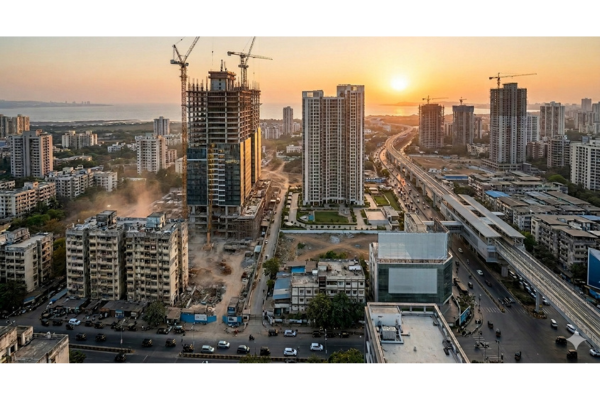
The Confederation of Real Estate Developers' Associations of India (CREDAI) has come out in support of the proposed Coastal Regulation Zone (CRZ) reclassification along parts of Visakhapatnam's coastline, saying the revision would better reflect the area's current urban character and support future development plans.
The proposal relates to the Madhurawada-Bheemunipatnam coastal stretch, where the Andhra Pradesh government has sought to upgrade the classification from CRZ-III B to CRZ-II. Under existing CRZ regulations, CRZ-II is generally applicable to substantially developed urban areas with established infrastructure, while CRZ-III covers comparatively less developed coastal regions where construction activities are subject to tighter restrictions.
According to CREDAI, the region has witnessed significant urban expansion over the past decade, with residential projects, road networks, commercial developments and civic infrastructure changing the character of the coastline. The association stated that planning regulations should reflect the current ground situation and support orderly growth rather than continue under classifications created when the area was far less developed.
State authorities have also argued that the proposed revision is backed by extensive development already visible along the corridor. Official assessments submitted to coastal regulatory authorities reportedly show a sharp reduction in vacant land and a corresponding increase in built-up areas, approved layouts and infrastructure facilities across the stretch.
The reclassification proposal is closely linked to several large-scale infrastructure and urban development plans being pursued in and around Visakhapatnam. These include the proposed Beach Corridor connecting Visakhapatnam Port and Bhogapuram International Airport, metro rail proposals, tourism infrastructure initiatives, the Visakhapatnam Economic Region Master Plan and the Vizag Bay City project. Officials believe these projects will play a key role in shaping the city's future growth and improving regional connectivity.
CREDAI has maintained that reclassification would not automatically mean unrestricted construction but could provide greater planning flexibility in areas that have already become urbanised. The industry body believes the move can help attract investments, encourage organised development, improve tourism-related infrastructure and support the city's emergence as a major economic and real estate destination on the east coast.
The issue has been under discussion for some time as part of revisions to coastal zone management plans. Local authorities and planning agencies have repeatedly highlighted the need to reassess zoning classifications in areas where development patterns have changed substantially over the years. Supporters of the proposal argue that updating classifications is necessary to ensure that regulatory frameworks remain aligned with present-day realities.
At the same time, the proposal has drawn criticism from environmental organisations and citizen groups. They have argued that CRZ-III areas act as important ecological buffers and help protect coastal regions from cyclones, storm surges, sea erosion and other climate-related risks. Several groups have urged authorities to proceed cautiously and ensure that environmental safeguards are not weakened in the process.
Concerns have also been raised regarding environmentally sensitive locations along the coastline, including areas near the Erra Matti Dibbalu red sand dunes, which are known for their geological significance. Environmental activists have called for detailed scientific studies and stronger assessments before any final decision is taken on the reclassification proposal.
The matter is currently under review by the concerned authorities, with stakeholder feedback, development data and environmental considerations expected to play an important role in determining the final outcome. The decision is being closely watched by the real estate sector, infrastructure developers and environmental groups alike because of its potential impact on future development across Visakhapatnam's coastal belt.
Advertisement













 Facebook
 Whatsapp
