Advertisement






The Gulf conflict has disrupted global supply chains, pushed...
REITs have changed the way commercial real estate is owned a...

What does it take to preserve a real estate legacy while bui...
What really powers the cloud? Behind every Google search, A...
A lot of what defines a home isn’t visible at handover. I...
Chandigarh Power Distribution Limited (CPDL) has advised residential and commercial electricity consumers to review their sanctioned electricity load and increase it if their actual power consumption has risen. The utility said the growing use of appliances such as air conditioners, electric vehicle chargers and induction cooktops has widened the gap between sanctioned and actual load for many consumers. It warned that exceeding the approved load may lead to penalty charges under existing regulations, while also affecting electrical safety and placing additional pressure on the city's power distribution network.
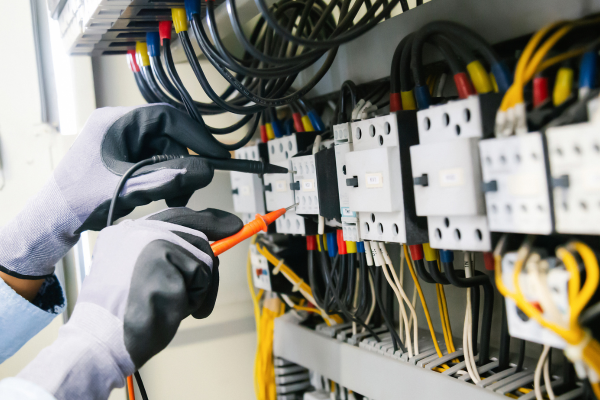
Chandigarh Power Distribution Limited (CPDL) has urged electricity consumers across Chandigarh to review their sanctioned electricity load and ensure that it matches their actual power consumption. The advisory comes as electricity usage has increased in many households and commercial establishments due to the addition of high-power electrical appliances over the years.
According to CPDL, many consumers have installed appliances such as air conditioners, geysers, induction cooktops, electric vehicle chargers and other high-consumption equipment without updating their sanctioned load or contract demand accordingly. The utility's assessment has found that, for a significant number of electricity connections, the actual load being used is now higher than the approved sanctioned load.
The company said many consumers may not be aware of this mismatch. However, using electricity beyond the sanctioned limit can increase pressure on the power distribution network and may also create safety risks within consumer premises by overloading electrical installations.
CPDL further stated that, under the tariff order approved by the Joint Electricity Regulatory Commission (JERC) in the past, consumers exceeding their sanctioned load may be liable to load violation charges. These include penalties on the excess demand as well as the electricity consumed against that excess demand.
The company explained the penalty through an example. If a consumer has a sanctioned load of 5 kilowatts (kW) but the maximum demand recorded by the electricity meter reaches 7 kW, the excess demand would be 2 kW. If the consumer records total electricity consumption of 700 units during the billing cycle, around 200 units would be considered attributable to the excess load. In such cases, both the additional 2 kW demand and the corresponding 200 units of electricity consumption would be billed at twice the applicable normal tariff under the prevailing regulations.
CPDL has encouraged consumers to assess their current electricity requirements and apply for a load enhancement wherever necessary. The utility said updating the sanctioned load would support safer electricity usage, improve supply reliability and help with better planning and management of the power distribution system as electricity demand continues to grow.
A CPDL spokesperson said Chandigarh's electricity requirements are steadily increasing and requested consumers to ensure that their sanctioned load accurately reflects their actual power usage. Consumers requiring a load enhancement can approach CPDL's customer service centres or use the company's digital platforms to complete the process and obtain assistance.
The advisory also aligns with recent guidance issued by the Central Electricity Authority (CEA), which has advised consumers to keep their connected load within the sanctioned limit and notify their electricity distribution utility whenever additional electrical load is added. The CEA has said this practice helps ensure the safe operation of electrical systems while reducing the risk of electrical accidents and network-related issues.
CPDL manages electricity distribution and retail power supply across the Union Territory of Chandigarh and operates as part of the power business of the RP-Sanjiv Goenka Group.
Source PTI
Advertisement













 Facebook
 Whatsapp
