Advertisement






What really powers the cloud? Behind every Google search, A...
A lot of what defines a home isn’t visible at handover. I...
Private equity has played a significant role in shaping Indi...
Luxury real estate is one of the most talked-about segments ...
Airports play a much bigger role than just enabling travel -...
A total of 174 families have been relocated to facilitate the construction of terminal stations for Mumbai's proposed Pod Taxi project in Bandra-Kurla Complex (BKC). The rehabilitation clears the way for implementing India's first large-scale automated personal rapid transit system, designed to improve last-mile connectivity within BKC. The project, estimated to cost INR 1,016.34 crore, will operate on a public-private partnership (PPP) model and is expected to serve the growing commuter base travelling between BKC and nearby railway stations. Construction is planned over three years, followed by a 30-year concession period.
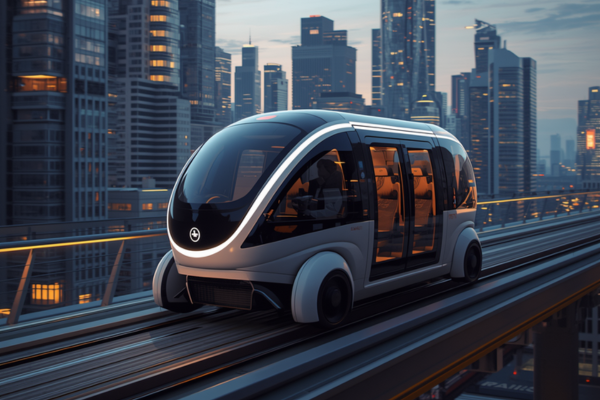
The Mumbai Metropolitan Region Development Authority (MMRDA) has cleared a major hurdle in implementing the proposed Pod Taxi system in the Bandra-Kurla Complex (BKC) after 174 families were relocated to make way for the construction of terminal stations. The rehabilitation exercise paves the way for work on India's first large-scale Personal Rapid Transit (PRT) system, which aims to transform last-mile connectivity in one of Mumbai's busiest commercial districts.
The Pod Taxi project is designed to address increasing commuter demand within BKC, where an estimated four to six lakh people travel daily for work. Passenger volumes are expected to rise further with the arrival of major infrastructure projects, including the Mumbai-Ahmedabad High-Speed Rail corridor and new commercial developments. The automated transport system is intended to provide seamless connectivity between BKC and nearby suburban railway stations at Bandra and Kurla while reducing dependence on road-based transport.
The project received approval from MMRDA after a comprehensive Techno-Economic Feasibility Study (TEFS) evaluated multiple transit technologies operating globally. The study, independently reviewed by Tata Consulting Engineers (TCE), concluded that the Pod Taxi system was the most suitable solution for BKC's traffic patterns, narrow approach roads and projected growth in commuter demand. The selected technology partner, Ultra PRT, has previously implemented a similar automated transit system at Heathrow Airport in London, providing operational experience for the Mumbai project.
The Pod Taxi network will operate with fully autonomous vehicles capable of arriving every 15 to 30 seconds, allowing passengers to travel directly between stations without intermediate stops. The system is expected to significantly improve travel efficiency, reduce waiting times and ease congestion on roads connecting Bandra and Kurla stations with BKC.
According to MMRDA, the project will be implemented through a Public-Private Partnership (PPP) model with an estimated investment of INR 1,016.34 crore. Sai Green Mobility Private Limited has been appointed as the concessionaire for the design, engineering, development, construction, testing, commissioning, operation and maintenance of the system on a Design, Finance, Build, Operate and Transfer (DFBOT) basis. The project has an estimated construction period of three years followed by a 30-year concession period, during which the operator will manage services while sharing revenue with MMRDA.
Fare estimates for the Pod Taxi have also been finalised through commuter preference surveys. The feasibility study recommended a fare of INR 21 per kilometre, with an annual escalation of 4% to account for inflation and operating costs. Survey findings indicated that a majority of existing auto-rickshaw users would be willing to shift to the service at this pricing level.
The relocation of affected families marks an important milestone in the project's implementation. With land now available for terminal construction, MMRDA is expected to move ahead with the next phase of execution. Once operational, the Pod Taxi system is expected to become a model for future urban mobility projects in India by offering a sustainable, technology-driven solution for last-mile connectivity in high-density business districts.
Source- MMRDA
Advertisement













 Facebook
 Whatsapp
