Advertisement






What really powers the cloud? Behind every Google search, A...
A lot of what defines a home isn’t visible at handover. I...
Private equity has played a significant role in shaping Indi...
Luxury real estate is one of the most talked-about segments ...
Airports play a much bigger role than just enabling travel -...
The National Highways Authority of India (NHAI) has introduced a multi-lane free-flow (MLFF) tolling system at the Manoharpura toll plaza on the Delhi–Jaipur section of National Highway-48 in Rajasthan, marking another step towards barrier-free electronic toll collection. The rollout follows the launch of Rajasthan's first MLFF system at the Daulatpura toll plaza in the past month. The authority also plans to extend the technology to the Shahjahanpur toll plaza on the same corridor. The MLFF system combines Automatic Number Plate Recognition (ANPR) technology with FASTag-based toll collection, allowing vehicles to pass through toll plazas without stopping while enabling automated user fee collection and reducing congestion.
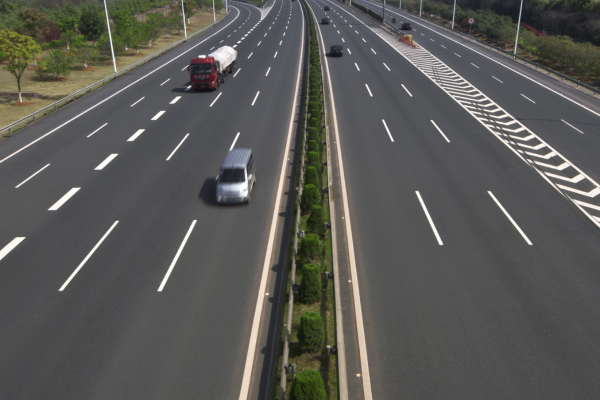
The National Highways Authority of India (NHAI) has launched a multi-lane free-flow (MLFF) tolling system at the Manoharpura toll plaza on the Delhi–Jaipur stretch of National Highway-48 (NH-48) in Rajasthan. Announced in the past week, the initiative forms part of the authority's efforts to modernise the country's electronic toll collection network by enabling barrier-free movement of vehicles through toll plazas with minimal human intervention.
The latest deployment follows the introduction of Rajasthan's first MLFF tolling system at the Daulatpura toll plaza on the same Delhi–Jaipur corridor, which became operational on June 19, 2026. NHAI stated that it also plans to convert the Shahjahanpur toll plaza to the MLFF system, further expanding seamless toll collection across one of the country's busiest national highway corridors.
Under the MLFF framework, vehicles can pass through toll locations without stopping, eliminating the need for physical barriers and reducing delays associated with conventional toll plazas. The system has been designed to improve traffic flow, minimise congestion and enhance operational efficiency while reducing dependence on manual toll collection.
The technology combines Automatic Number Plate Recognition (ANPR) with FASTag-based electronic toll collection. ANPR cameras identify vehicle registration numbers while the system simultaneously validates FASTag credentials to enable automatic deduction of user fees. This integrated approach facilitates electronic toll collection with minimal human involvement.
NHAI advised highway users to ensure that their FASTag accounts remain adequately funded to avoid payment-related issues when travelling through MLFF-enabled toll plazas. The authority said sufficient account balance is essential for uninterrupted toll collection under the barrier-free system.
In cases where a vehicle has an insufficient FASTag balance or carries an invalid or non-functional FASTag, the system generates an Electronic Notice (E-Notice) for non-payment of the applicable user fee. Motorists receiving such notices are required to pay the prescribed toll charges within 72 hours.
According to NHAI, users who fail to settle the applicable toll amount within the stipulated 72-hour period will be required to pay user fees at twice the normal rate applicable to their vehicle category. The authority stated that the provision is intended to ensure compliance with electronic toll collection requirements as it expands the implementation of multi-lane free-flow tolling across the national highway network.
Source - PTI
Advertisement













 Facebook
 Whatsapp
