Advertisement






What really powers the cloud? Behind every Google search, A...
A lot of what defines a home isn’t visible at handover. I...
Private equity has played a significant role in shaping Indi...
Luxury real estate is one of the most talked-about segments ...
Airports play a much bigger role than just enabling travel -...
Mumbai's Matunga-Sion corridor is witnessing renewed interest from developers, investors and homebuyers as redevelopment activity and major infrastructure upgrades strengthen its residential appeal. The micro-market, known for its established social infrastructure, educational institutions and central location, is transitioning from an ageing housing stock to modern residential developments. Industry executives say improved connectivity through the Sion-BKC elevated road, Mumbai Trans Harbour Link (Atal Setu), Coastal Road and Metro network, combined with limited land availability and sustained demand, is supporting long-term capital appreciation. The corridor's strategic location between South Mumbai, western suburbs and key commercial districts is also reinforcing its position as an emerging high-growth residential destination.
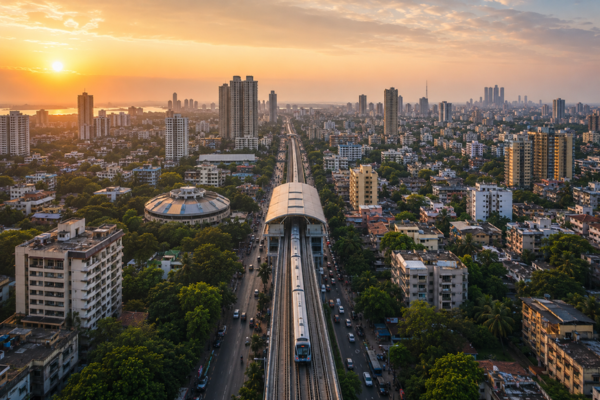
The Matunga-Sion corridor in Central Mumbai is emerging as one of the city's fastest-evolving residential micro-markets, with redevelopment projects and infrastructure improvements driving renewed interest among developers, investors and end-users. Long regarded as one of Mumbai's most established residential neighbourhoods, the corridor is witnessing a gradual transformation as ageing residential buildings make way for modern housing developments.
The area has traditionally been recognised for its educational institutions, established residential communities and central location. Industry stakeholders believe these characteristics, coupled with significant improvements in connectivity, are supporting sustained demand for residential properties while strengthening the corridor's long-term investment potential.
Unlike several emerging suburban markets that depend on proposed infrastructure projects, Matunga and Sion already benefit from mature social infrastructure and established civic amenities. Redevelopment of ageing residential buildings has become a key driver of market activity, with developers replacing older structures with larger homes featuring organised parking, contemporary layouts and lifestyle amenities.
Suhan Shetty, Founder of Rubics Group, said the corridor offers a combination of centrality, connectivity and neighbourhood character that has become increasingly difficult to find elsewhere in Mumbai. He noted that proximity to business districts, educational institutions, healthcare facilities, lifestyle destinations and major transport corridors has helped the locality retain its position as one of the city's preferred residential addresses.
According to Shetty, Matunga has preserved its cultural identity, tree-lined streets and community-oriented character while simultaneously attracting demand for premium residential developments. He added that the balance between heritage and modernisation has encouraged projects that place greater emphasis on design, sustainability and quality of life.
Developers also view redevelopment as one of the principal growth drivers in the corridor. Much of the existing housing stock is more than five decades old, creating opportunities for urban renewal through replacement projects designed to meet current residential preferences.
Chintan Sheth, Chairman and Managing Director of Sheth Realty, said the convergence of redevelopment opportunities, legacy value and infrastructure investment has strengthened confidence among both homebuyers and investors. He observed that the ongoing replacement of ageing residential buildings is contributing to stronger market demand and improving the area's long-term growth prospects.
Connectivity remains one of the corridor's key advantages. Matunga and Sion are served by the Central, Western and Harbour suburban railway networks, while recent infrastructure projects—including the Sion-BKC elevated connector, Mumbai Trans Harbour Link (Atal Setu), Coastal Road and the expanding Metro network—have improved access to commercial centres such as Bandra-Kurla Complex, Lower Parel, Worli, South Mumbai and Navi Mumbai.
Rajendra M Rajan, Founder of TransIndia Group, said the corridor benefits from a combination of infrastructure upgrades, commercial accessibility and limited housing supply. He added that improved connectivity to South Mumbai, BKC, Navi Mumbai, Jawaharlal Nehru Port (JNPT) and the Navi Mumbai International Airport has enhanced the area's attractiveness as a residential and investment destination.
According to Rajan, residential property values across the corridor increased by approximately 37% between 2021 and 2025, while rental demand has also strengthened in locations such as Sion. He attributed this performance to the area's mature neighbourhood ecosystem, constrained land availability and sustained occupier demand.
Beyond connectivity, the corridor continues to benefit from proximity to educational institutions including Don Bosco High School, SIES College, Ramnarain Ruia College, K J Somaiya College, healthcare facilities, recreational spaces such as Five Gardens and Shivaji Park, and convenient access to major employment centres. Industry participants believe these factors, together with ongoing redevelopment, are repositioning Matunga and Sion as one of Mumbai's most strategically located residential markets for long-term homeownership and investment.
Advertisement













 Facebook
 Whatsapp
